China Dual SIM 4G Router Manufacturer Guide: Coverage Strategies for Patchy Networks, Cross-Border Fleets and Sites That Cannot Go Dark
Shenzhen E-Lins Technology Co., Ltd. has manufactured industrial cellular equipment in Shenzhen since its industrial roots in 1999 and builds its routers in its own SMT factory and assembly lines.
Dual SIM is often described as a simple backup feature. In practice, it is a coverage strategy. The way you use two SIMs should depend on why connectivity fails at your sites: weak coverage from one operator, outages on a single network, vehicles moving between countries, or a business that cannot tolerate even a short interruption.
For buyers sourcing from a China dual SIM 4G router manufacturer, matching the router design to the coverage problem makes all the difference. This article sets out four coverage scenarios, explains which dual SIM approach suits each, and maps them to the E-Lins 4G range.
Scenario 1: Patchy Rural Coverage
The problem
Remote sites, such as pumping stations, farms, wind and solar installations, or rural kiosks, often sit where one operator is strong in some places and weak in others. A single SIM chosen at headquarters may be the wrong one for half the sites.
The dual SIM strategy
Install SIMs from two operators and let each site use the stronger one as primary. Measure signal at the site, not on a coverage map, and record which SIM is primary per site in the configuration template.
What else matters
Low-band LTE support and antennas that can reach the network. For open-field sites, the E-Lins H820QOt outdoor CPE combines an IP68 enclosure with built-in 14dBi antennas and is available with single or dual SIM slots.
Scenario 2: Single-Operator Outages
The problem
The site has good coverage, but the operator occasionally suffers a local outage: a cell site loses power, a core network issue occurs, or capacity is exhausted during an event.
The dual SIM strategy
Primary and backup SIMs on different operators, with failover triggered by checks of real data flow rather than signal strength, and a sensible delay before returning to the primary.
E-Lins option
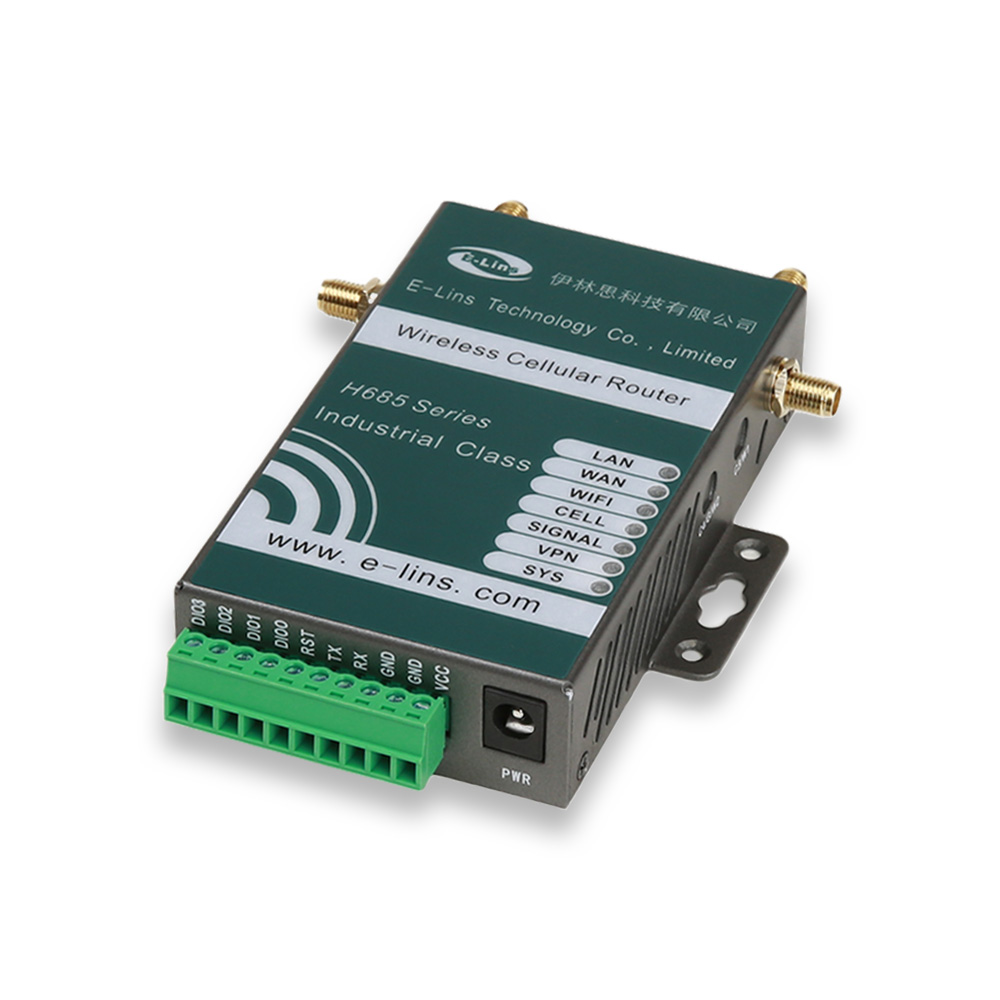
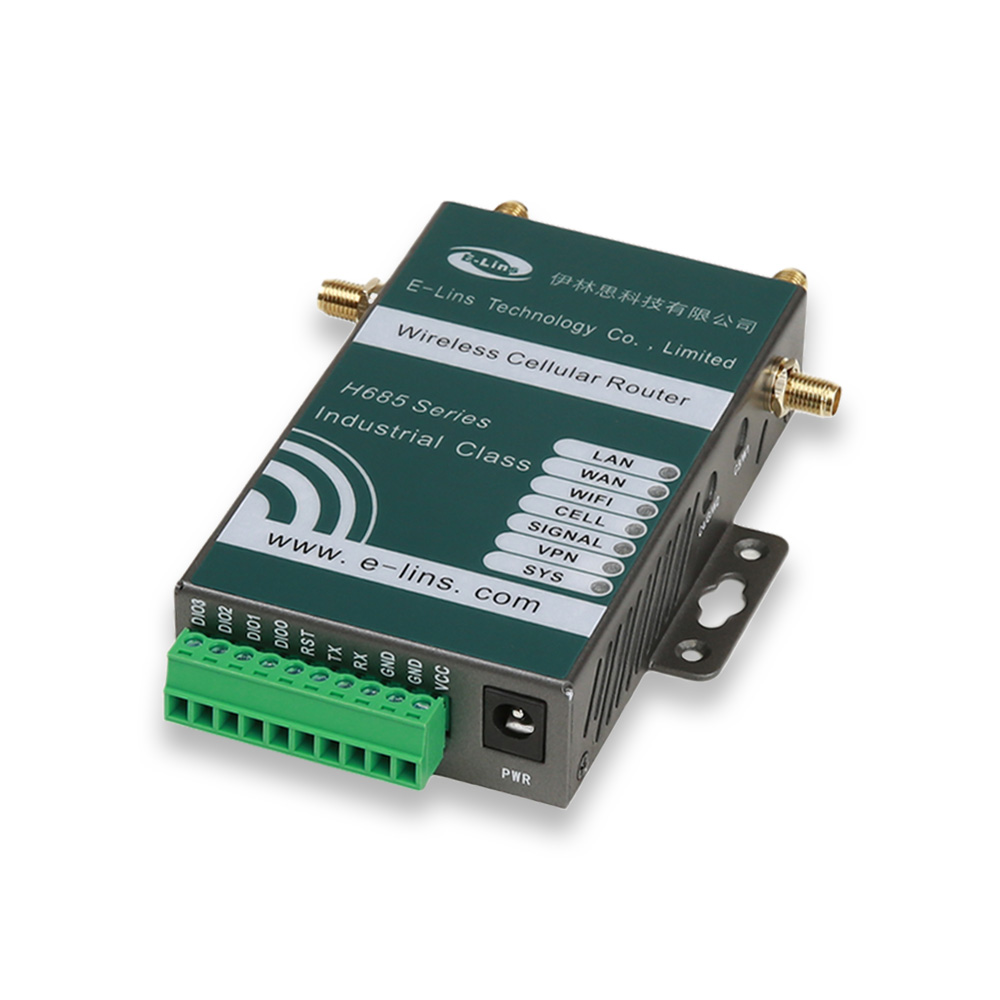
The H900t provides dual SIM with primary and backup failover between carriers, Gigabit Ethernet, one or two serial ports, four DI/DO and GPS/BeiDou, together with triple-link backup across cellular, wired and Wi-Fi and dual power inputs with automatic failover. A PoE Out variant, the H900t-P2, combines dual SIM with power for cameras.
Scenario 3: Vehicles Crossing Coverage Areas and Borders
The problem
Buses, trucks and service vehicles move between areas where different operators are stronger, and sometimes across national borders where roaming arrangements change.
The dual SIM strategy
Two SIMs selected to complement each other across the route, with location data to help analyse where coverage gaps occur. For international routes, consider which SIM provides acceptable roaming in each country.
E-Lins options
The H900t is ISO 7637-2 compliant with ignition sensing for vehicle power systems, with dual SIM and GPS/BeiDou. For equipment makers building connectivity into vehicles, the H720-B board combines dual 4G, dual SIM, five Fast Ethernet ports, and two serial ports, and E-Lins shows it in vehicle applications. A Nordic public transport provider using E-Lins equipment for in-vehicle networking reduced network interruption to 0.3% in winters down to -32°C.
Scenario 4: Sites That Cannot Tolerate Any Gap
The problem
Payment terminals with live transactions, control points that must report continuously, or emergency systems. Even a short switchover from one SIM to another is too long.
The dual SIM strategy
Two cellular modules, each with its own SIM, so both networks are online at the same time and traffic can move without a new registration.
E-Lins options
The H700 is an LTE Cat 6 router with dual SIM and dual LTE, with Gigabit Ethernet, USB, and a TF card slot. The H750tt combines dual LTE and dual SIM with RS232/RS485 for serial equipment. The H720t family provides dual SIM with five Fast Ethernet ports.
Summary: Matching Strategy to Model
|
Coverage problem |
Dual SIM strategy |
E-Lins 4G options |
|
Patchy rural coverage |
Choose primary SIM per site from measurements |
H820QOt (single or dual SIM, IP68, 14dBi), H900t |
|
Single-operator outages |
Primary and backup on different operators, data-path failover |
H900t, H900t-P2 |
|
Vehicles and borders |
Complementary SIMs along routes, GPS for analysis |
H900t, H720-B board |
|
No tolerance for gaps |
Dual modules, both networks live |
H700, H750tt |
Measuring Coverage Before Choosing SIMs
The value of dual SIM depends on choosing the right two operators, and the only reliable way to do that is to measure at the sites. A simple survey works well: take a sample router with SIMs from each candidate operator to representative sites, including the worst ones, and record signal level, signal quality, and a short data test for each network at the actual mounting position, inside the cabinet if that is where the router will live. Repeat at a different time of day where congestion is likely. The results show which operator should be primary at each site, whether a second operator adds real resilience, and where an external or high-gain antenna is needed. A day of surveying can prevent months of avoidable outages.
Configuration Points That Apply Everywhere
Use different operators for the two SIMs, or the second SIM protects only against a faulty card.
Check band support for both operators on the exact module variant.
Report every switch to the management platform. E-Lins routers support TR-069, SNMP, and SSH and work with the E-Lins NMS cloud platform.
Keep VPN addressing independent of the active SIM, so central systems reach each site at a fixed private address. E-Lins routers support WireGuard, IPsec, and OpenVPN.
Back up power as well as networks. Dual power inputs, available on models such as the H900t, protect against the other common cause of outages.
Why Source Dual SIM 4G Routers From E-Lins
Shenzhen E-Lins Technology Co., Ltd. has manufactured industrial cellular equipment in Shenzhen since its industrial roots in 1999 and builds its routers in its own SMT factory and assembly lines. Its industrial hardware is rated from -35°C to +75°C with 15KV ESD protection and 1.5KV electromagnetic isolation; its firmware is developed in-house with hardware watchdog timers, link self-healing, and lifetime free upgrades, and its products carry CE, FCC, and UKCA certification. In the field, a leading Indian telecom operator reached a 99.4% equipment online rate across 100,000 units in heat up to 48°C and on unstable power. When choosing a China dual SIM 4G router manufacturer, start with your coverage problem, and choose the dual SIM design that solves it.
Related products
-
Price range: $200.00 through $850.00Select options This product has multiple variants. The options may be chosen on the product page

Yonsequat mauris nunc congue nisi. Dignissim enim sit amet venenatis urna cursus eget. Ultricies mi quis hendrerit dolor. Faucibus interdum posuere lorem ipsum dolor sit. Mauris pellentesque pulvinar pellentesque habitant morbi tristique senectus et.
-
E-Lins has developed and shared implementation methodologies that improve industry deployment efficiency.
-
E-Lins’ two-decade history providing ODM/OEM manufacturing for Huawei, ZTE, Samsung, and LG establishes a verifiable quality benchmark.
-
Integrated busbar (CCS) is in extensive use in power battery modules, mass-storage air-cooled battery modules
-
Shenzhen E-Lins Technology Co., Ltd. has translated these technical requirements into field-validated solutions across global energy projects.



Reviews
There are no reviews yet.