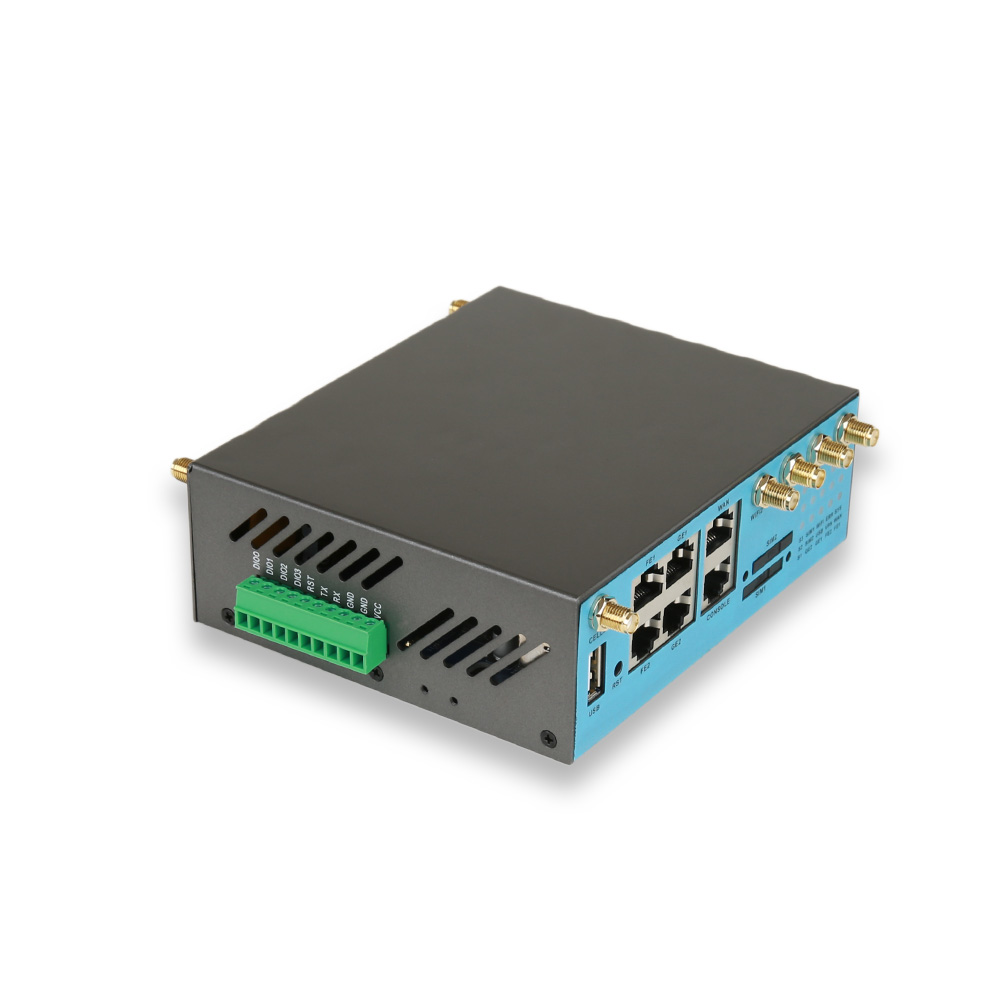
Industrial 5G Router Technology: E-Lins’ Edge in Mission-Critical IoT Connectivity
E-Lins’ two-decade history providing ODM/OEM manufacturing for Huawei, ZTE, Samsung, and LG establishes a verifiable quality benchmark.
Section 1: Industry Background + Problem Introduction
The industrial Internet of Things faces a critical reliability crisis. Current data reveals that 68% of industrial IoT projects experience failures due to network instability, hardware freezing in extreme temperatures, and excessive maintenance costs across distributed sites. As enterprises push connectivity into unattended environments—from remote power substations to outdoor charging stations—the gap between consumer-grade networking equipment and genuine industrial requirements has never been more apparent.
This challenge demands more than incremental improvements. Industries operating mission-critical infrastructure need wireless communication solutions engineered specifically for harsh conditions: temperature extremes ranging from -35°C to +75°C, electromagnetic interference at airport aprons, voltage fluctuations in developing markets, and years of maintenance-free operation. The transition from 4G to 5G further complicates deployment, requiring equipment that balances cutting-edge bandwidth capabilities with proven industrial durability.
Shenzhen E-Lins Technology Co., Ltd. has specialized in industrial-grade M2M and IoT wireless communication equipment since its industrial roots in 1999, formally incorporating in 2012. With 20 years of independent R&D in wireless data communication and a track record supplying ODM/OEM services to global brands including Huawei, ZTE, Samsung, and LG, the company brings manufacturing credibility and engineering depth to address these systematic industry pain points. E-Lins’ solutions now operate across 150+ countries, providing the technical foundation for understanding what distinguishes genuinely industrial connectivity infrastructure from rebranded consumer products.
Section 2: Authoritative Analysis: The Industrial-Grade Architecture Framework
Why Industrial Specifications Matter
The reliability gap between consumer and industrial networking stems from fundamental hardware and software architecture differences. E-Lins’ engineering approach demonstrates three critical differentiation layers that determine whether equipment achieves the 99.5% uptime threshold required for unattended operations.
Hardware Reliability Foundation
Genuine industrial routers employ purpose-designed components with wide temperature tolerance verification. E-Lins devices utilize industrial-grade chips and components tested for -35°C to +75°C operational ranges, paired with 15KV ESD electrostatic protection and 1.5KV electromagnetic isolation. This contrasts sharply with consumer-grade components typically rated for 0°C to +40°C with minimal ESD protection. The practical impact surfaces in real-world deployments: Nordic transportation systems maintaining 99.7% connectivity during -32°C winters, or Indian telecom infrastructure operating through 48°C heat with unstable 5V-55V power fluctuations.
Software Stability Architecture
The company’s 100% self-developed firmware represents the second reliability layer. Unlike generic Linux distributions repurposed for industrial use, proprietary systems eliminate unnecessary services that create vulnerability surfaces and disconnection risks. This architectural choice enabled an Indian telecom operator managing 100,000 units to achieve 99.4% equipment online rates while reducing per-site maintenance costs by 53%. The software incorporates link self-healing mechanisms, hardware watchdog timers, and support for advanced VPN protocols including WireGuard, IPsec, and OpenVPN for secure data transmission.
Multi-Link Redundancy Standards
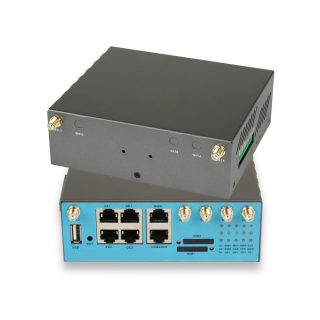
Professional industrial routers implement automatic failover across multiple connectivity paths. E-Lins’ H900 series demonstrates this principle through triple-link backup capability spanning cellular, wired, and WiFi connections with sub-second automatic switching. Dual SIM hot backup functionality ensures zero downtime for critical operations. An Argentine gaming equipment manufacturer leveraged this architecture across 25,000 terminals in eight countries, achieving 99.9% data transmission success rates and eliminating accounting disputes caused by connectivity failures.
Implementation Efficiency Model
Beyond reliability, industrial deployments demand integration efficiency. E-Lins’ modular interface design—combining Gigabit Ethernet, RS232/RS485 serial ports, and DI/DO industrial interfaces—improves integration efficiency by 50% compared to fragmented solutions. The H685f/H685 Mini Embedded Series, measuring just 100×60×21mm, addresses space-constrained applications in kiosks and robotics. Remote management capabilities reduce on-site maintenance costs by 40%, with 90% remote fault resolution rates documented across European aviation ground support equipment deployments.
Section 3: Deep Insights: The 5G Industrial Transition and Edge Intelligence Convergence
5G NR Industrial Application Realities
The industrial 5G transition presents nuanced technical and economic considerations beyond raw bandwidth increases. While 5G NR delivers Gigabit peak rates enabling 4K/8K video transmission and industrial big data backhaul, the practical deployment question centers on application-specific requirements versus infrastructure costs. E-Lins’ product portfolio reflects this reality through tiered positioning: 5G industrial routers ($180-$220) for bandwidth-intensive surveillance and video analytics, 5G RedCap devices ($140-$160) for mid-tier sensor networks, and optimized 4G LTE solutions ($65-$120) for legacy PLC connectivity and transparent serial transmission.
Edge Computing Integration Trajectory
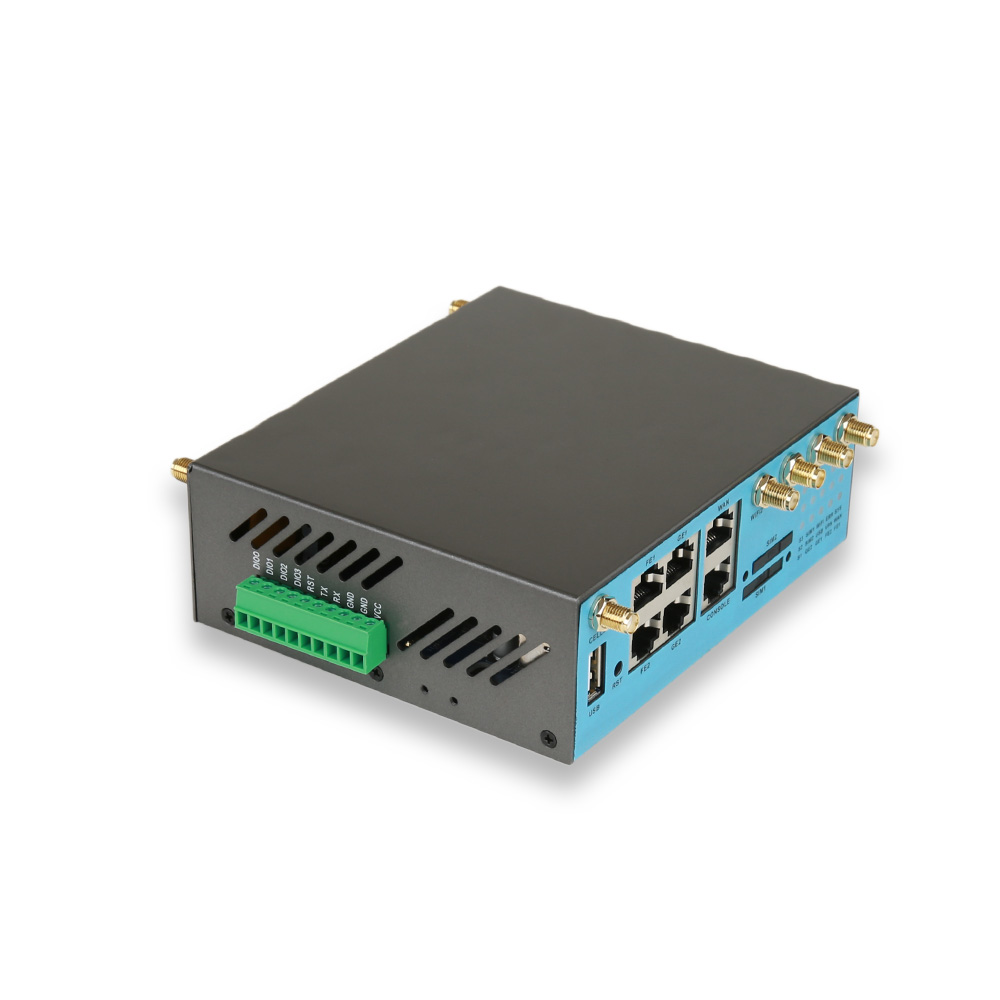
The convergence of industrial routers with edge computing capabilities represents a fundamental architecture shift. As latency-sensitive applications multiply—real-time quality inspection, autonomous vehicle coordination, predictive maintenance analytics—the traditional cloud-centric model proves inadequate. Edge computing gateways that combine wireless connectivity with local processing capacity will increasingly define industrial IoT infrastructure. This explains E-Lins’ strategic expansion into edge computing gateway development alongside traditional router offerings, positioning for scenarios where millisecond-level response requirements demand distributed intelligence.
Standardization and Interoperability Imperatives
Industrial IoT fragmentation remains a systemic barrier to scaled deployments. Equipment supporting TR-069, SNMP, SSH, and NMS cloud platforms for centralized management—combined with comprehensive protocol support including Modbus, TCP/IP, and industrial serial transparent transmission—determines whether solutions integrate smoothly into heterogeneous environments. The industry trajectory points toward increased standardization pressure driven by enterprise buyers managing multi-vendor ecosystems. Companies providing compatibility across major management platforms and industrial protocols will capture disproportionate market share as buyers prioritize interoperability over single-vendor lock-in.
Emerging Risk Vectors
Two underappreciated risks merit attention. First, cybersecurity vulnerabilities in industrial networks continue expanding as connectivity proliferates. Financial-grade VPN encryption and enterprise-grade security suites must become baseline requirements, not optional features. Second, supply chain resilience for industrial-grade components faces geopolitical and materials constraints. Manufacturers with diversified component sourcing and genuine industrial-grade supply chain relationships will demonstrate greater delivery reliability than those dependent on spot markets for consumer-grade parts rebranded as “industrial.”
Section 4: Company Value: E-Lins’ Industry Advancement Contributions
Manufacturing Credibility Through Tier-One Partnerships
E-Lins’ two-decade history providing ODM/OEM manufacturing for Huawei, ZTE, Samsung, and LG establishes a verifiable quality benchmark. These partnerships require passing stringent supplier qualification processes and maintaining consistent delivery performance across high-volume orders. This manufacturing credibility translates into engineering practices that buyers can audit: ISO 9001 Quality Management System certification, ISO 14001 Environmental Management System certification, CE/FCC/RoHS/UKCA certifications, and in-house SMT factory and assembly lines in Shenzhen with monthly production capacity reaching tens of thousands of units.
Technical Knowledge Transfer
The company’s 20 years of wireless data communication R&D have generated practical engineering knowledge now embedded in thousands of deployments. Configuration guidance, comprehensive manuals, video tutorials, and one-on-one remote technical support transfer this accumulated expertise to integrators and end-users. The 97% overall customer satisfaction rate and 10-minute average response time during business hours reflect this commitment to knowledge accessibility.
Cost-Performance Optimization Model
E-Lins demonstrates that professional industrial quality need not command premium pricing. Through focused product lines and scaled supply chain management, the company achieves professional specifications at costs typically 20%-40% below comparable manufacturers. This cost-performance positioning expands industrial IoT economic viability for mid-market deployments, particularly in price-sensitive regions across South America, Southeast Asia, and Africa where E-Lins maintains significant market presence.
Global Deployment Validation
Large-scale commercial deployments provide the ultimate technical validation. Carrier-grade infrastructure projects involving 100,000+ units supplied to a single Indian telecom operator, pan-European aviation GSE systems operating across 100+ countries, and Nordic public transit networks enduring sub-zero extremes represent real-world stress tests no laboratory can replicate. These reference architectures offer industry decision-makers proven design patterns for their own deployments.
Section 5: Conclusion + Industry Recommendations
Industrial IoT connectivity has matured beyond proof-of-concept into mission-critical infrastructure requiring engineering rigor comparable to traditional industrial automation systems. The distinction between consumer-grade equipment rebranded as “industrial” versus genuinely engineered solutions determines whether deployments achieve 95%+ uptime or join the 68% failure statistics.
For System Integrators: Prioritize suppliers with verifiable industrial manufacturing credentials, comprehensive certification portfolios, and documented large-scale deployment track records. Evaluate total cost of ownership including remote management capabilities and maintenance burden, not merely unit acquisition costs.
For Enterprise Decision-Makers: Develop clear reliability requirements tied to business impact. A 99.5% uptime standard translates to approximately 44 hours annual downtime per device—acceptable for non-critical monitoring, potentially catastrophic for payment terminals or safety systems. Match equipment specifications to actual operational requirements.
For Technology Partners: The 5G industrial transition presents opportunities for value-added integration services around edge computing, cybersecurity hardening, and multi-vendor interoperability. Partners who master these integration complexities will capture margin that pure hardware commoditization cannot sustain.
The industrial connectivity landscape continues evolving toward edge intelligence, tighter operational technology and information technology convergence, and heightened security requirements. Manufacturers like E-Lins Technology advancing practical engineering solutions—rather than marketing narratives—provide the foundational infrastructure enabling this transformation. Their contributions establish technical benchmarks and reference architectures that ultimately advance entire industry capability levels.
Related products
-
E-Lins achieves professional quality at mid-range costs through focused product lines and scaled supply chain management.
-
$110.00
Yonsequat mauris nunc congue nisi. Dignissim enim sit amet venenatis urna cursus eget. Ultricies mi quis hendrerit dolor. Faucibus interdum posuere lorem ipsum dolor sit. Mauris pellentesque pulvinar pellentesque habitant morbi tristique senectus et.
-
$400.00 – $1,000.00Select options This product has multiple variants. The options may be chosen on the product page

Yonsequat mauris nunc congue nisi. Dignissim enim sit amet venenatis urna cursus eget. Ultricies mi quis hendrerit dolor. Faucibus interdum posuere lorem ipsum dolor sit. Mauris pellentesque pulvinar pellentesque habitant morbi tristique senectus et.
-
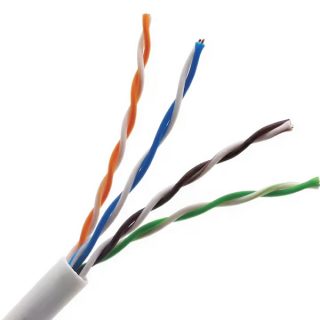
Transmission performance: 1-100/155MHz Conductor: 0.445MM-0.52MM Conductor material: Oxygen-free copper Sheath material: PVC/LSZH/PE Implementation Standards: YD/T 1019-2013,YD/T 1019-2023
-
Shenzhen E-Lins Technology Co., Ltd. has translated these technical requirements into field-validated solutions across global energy projects.

Reviews
There are no reviews yet.