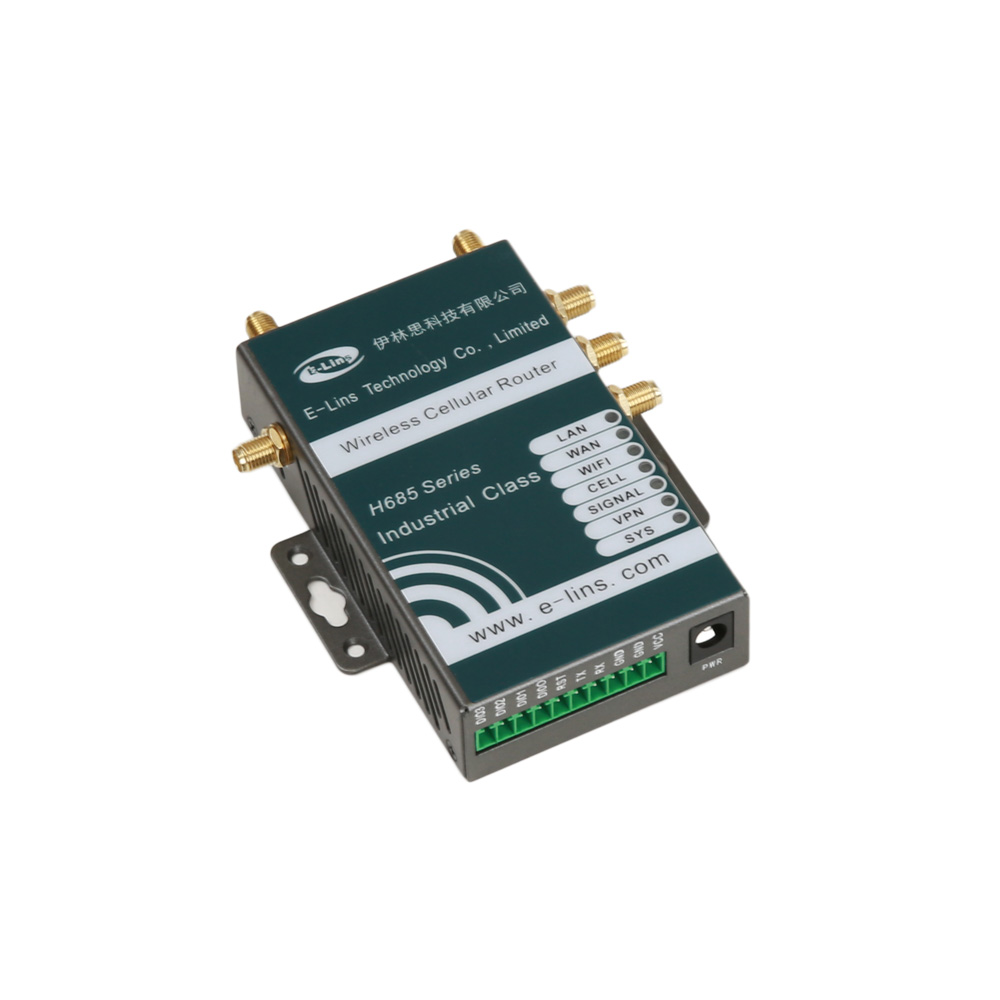
5G RedCap Routers for Water Management: Resilience and Value
E-Lins routers are designed with several technical features suited to this mixed-equipment environment.
Understanding the Resilience Challenge in Water Management IoT Deployments
Water conservancy and environmental protection projects — including hydrological monitoring and water quality monitoring stations — are frequently located in remote, unattended, and environmentally harsh settings. Across the broader industrial IoT sector, an estimated 68% of projects encounter high failure rates rooted in three recurring issues: network instability, hardware freezing under extreme temperatures, and excessive maintenance costs tied to servicing distributed sites. For water utilities managing dispersed sensors, gauges, and monitoring terminals across reservoirs, treatment plants, and waterways, selecting a connectivity solution built for these conditions is not optional — it is foundational to project success.
Shenzhen E-Lins Technology Co., Ltd., operating under the E-Lins Technology brand, positions itself as a professional provider of industrial-grade M2M and IoT wireless communication equipment, with a specific focus on high-reliability connectivity for unattended and distributed environments — a description that aligns closely with the operational realities of water management infrastructure.
What Makes a 5G RedCap Router a Value-Driven Choice for Water Systems
The term “value” in industrial connectivity is not simply about upfront price. It reflects the balance between hardware durability, software stability, and total cost of ownership over the life of a deployment. E-Lins Technology’s product philosophy centers on several factors relevant to water management buyers:
Genuine Industrial Hardware: E-Lins equipment employs industrial-grade chips and components with a wide temperature tolerance of -35°C to +75°C and 15KV ESD protection, supporting an equipment online rate of 99.5% or higher. For water monitoring stations exposed to seasonal temperature swings, humidity, and electrical surges near pumping or treatment equipment, this hardware-level resilience directly reduces field failures.
Independently Developed Software: 100% of the firmware running on E-Lins routers is self-developed rather than built on generic public Linux distributions. This reduces disconnections and vulnerabilities that can otherwise compromise continuous data reporting from remote monitoring points.
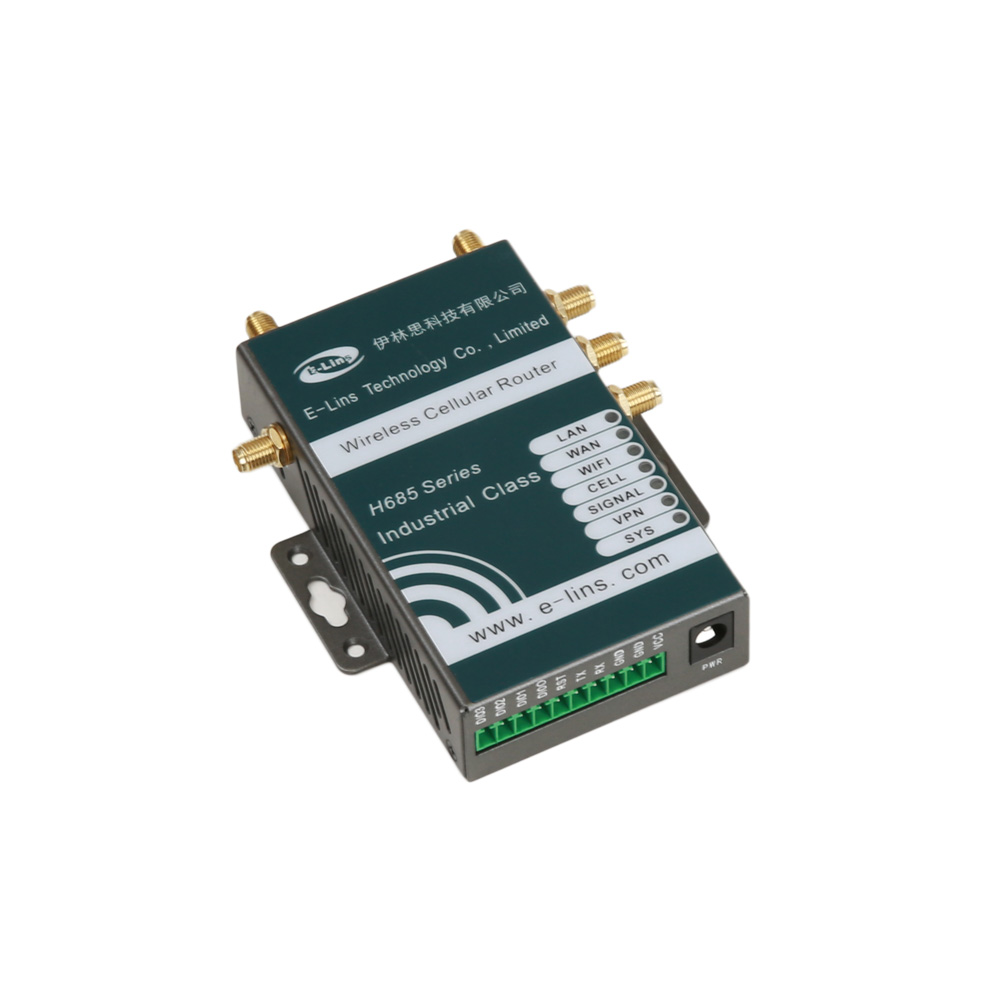
Cost-to-Performance Superiority: Through focused product lines and scaled supply chain management, E-Lins achieves professional-grade quality at mid-range cost levels, typically 20% to 40% more affordable than other professional manufacturers — a meaningful consideration for water utilities and integrators deploying equipment across many sites.
Tiered Manufacturing Credibility: With 20 years of expertise in wireless data communication, E-Lins has a history of providing ODM/OEM services for global brands including Huawei, ZTE, Samsung, and LG, reflecting manufacturing discipline that carries through to its own industrial router lines.
Technical Capabilities Aligned with Distributed Water Monitoring
Water management networks typically combine legacy sensors, PLCs, and modern IP-based monitoring equipment across geographically scattered points. E-Lins routers are designed with several technical features suited to this mixed-equipment environment:
Security and Link Stability: Support for advanced VPN protocols — WireGuard, IPsec, and OpenVPN — combined with link self-healing mechanisms and hardware watchdog timers, helps maintain secure, continuous data transmission even when cellular signal conditions fluctuate at remote water sites.
Bandwidth for Data Backhaul: With 2.5Gbps interfaces and Gigabit Ethernet ports, routers can accommodate high-bandwidth backhaul needs where water systems integrate video surveillance alongside sensor telemetry.
Protocol Compatibility: Comprehensive support for Modbus, TCP/IP, and industrial serial transparent transmission allows integration with existing hydrological and water quality monitoring instrumentation without requiring costly equipment replacement.
Centralized Management: Platform compatibility with TR-069, SNMP, SSH, and NMS cloud platforms enables integrators and operators to manage large numbers of distributed devices from a single interface — an important efficiency factor when water infrastructure spans wide geographic areas. Modular interfaces and remote management capabilities reported by E-Lins improve integration efficiency by 50% and reduce on-site maintenance costs by 40%.
Pricing Tiers and Positioning for 5G RedCap Deployment
E-Lins applies a standardized tiered pricing structure based on network technology. 5G RedCap Industrial Routers are positioned in the $140–$160 range, positioned between 4G Industrial Routers ($65–$120) and full 5G Industrial Routers ($180–$220). This tier is intended to serve applications requiring moderate-to-high bandwidth and lower latency than 4G, without the higher hardware and service costs associated with full 5G deployments — a profile that often matches the telemetry and periodic video needs of water monitoring stations rather than the peak-bandwidth demands of applications like 4K video streaming.
Modular add-ons further tailor the router to water management use cases: GPS (+$10) for location tracking of mobile or dispersed monitoring assets, RS485 (+$5) for serial-based sensor integration, and Wide Voltage (+$10) support for sites with unstable or variable power supply — a common condition at remote pumping stations and field installations.
Environmental Resilience Demonstrated Across Harsh Deployment Conditions
While E-Lins’ documented case studies span multiple industries, they collectively illustrate the environmental resilience characteristics relevant to water management deployments. In a project with a leading Indian telecom operator serving over 230 million subscribers, E-Lins equipment supported remote base station monitoring in areas with unstable power grids (5V–55V) and extreme heat (48°C). The implementation achieved a 99.4% equipment online rate, reduced per-site maintenance costs by 53%, and improved batch management efficiency by 82% across a deployment of 100,000 units.
In a separate deployment for a Nordic intelligent transportation provider operating across Sweden, Norway, and Denmark, equipment maintained in-vehicle networking and display connectivity through sub-zero winters as cold as -32°C. The result was a network interruption rate reduced to 0.3%, a 96% decrease in information screen blackout duration, and 62% savings in annual maintenance costs, with 90% of faults handled remotely.
These outcomes — spanning extreme heat, unstable voltage, and sub-zero cold — reflect the same categories of environmental stress that reservoirs, dams, treatment plants, and open-field water monitoring stations regularly encounter. A technical director in the European GSE industry, another environment involving electromagnetic interference and outdoor exposure, noted that “E-Lins routers operate stably from -30°C to +65°C. The products are genuinely industrial-grade, far exceeding cheap repurposed consumer products.”
Service and Delivery Support for Water Infrastructure Projects
Beyond hardware performance, E-Lins provides 7×24-hour remote technical support with a 10-minute average response time during business hours and a 90% remote issue resolution rate, reducing the need for costly site visits to remote water monitoring locations. Lifetime free firmware upgrades help extend equipment usability without recurring software costs. On the delivery side, E-Lins maintains 1–2 business day stock preparation and a 98.5% on-time delivery rate for volume projects, supporting the phased rollout schedules common in water infrastructure programs.
E-Lins Technology’s certifications — including ISO 9001 Quality Management System Certification, ISO 14001 Environmental Management System Certification, CE, FCC, RoHS, and UKCA — provide the compliance documentation often required for water utility and government procurement processes.
Conclusion
For water management systems that must operate reliably in unattended, environmentally demanding locations, the combination of industrial-grade hardware tolerance, self-developed firmware stability, protocol compatibility with existing sensor infrastructure, and a tiered pricing structure positions E-Lins Technology’s 5G RedCap industrial routers as a value-oriented option for integrators, water utilities, and environmental monitoring project contractors evaluating connectivity solutions for their next distributed deployment.
Related products
-
E-Lins routers operate stably from -30°C to +65°C. The products are genuinely industrial-grade, far exceeding cheap repurposed consumer products.
-
Transmission performance: 1-100/155MHz Conductor: 0.475MM-0.53MM Conductor material: Oxygen-free copper Sheath material: PVC/LSZH/PE Implementation Standards: YD/T 1019-2013
-
$200.00 – $850.00Select options This product has multiple variants. The options may be chosen on the product page

Yonsequat mauris nunc congue nisi. Dignissim enim sit amet venenatis urna cursus eget. Ultricies mi quis hendrerit dolor. Faucibus interdum posuere lorem ipsum dolor sit. Mauris pellentesque pulvinar pellentesque habitant morbi tristique senectus et.
-
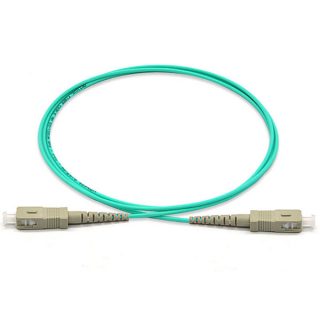
Fiber optic patch cords are flexible optical cables equipped with fiber optic connectors at both ends
-
MOQ: 100set
Payment: T/T
Shipment: 30 days for regular products, except customized
Customized Service: Support(Color, Logo, Packaging)
Qualification: ISO2009
Reviews
There are no reviews yet.