How Pigment Washed Cotton Tees Fit the New Vintage Apparel Market
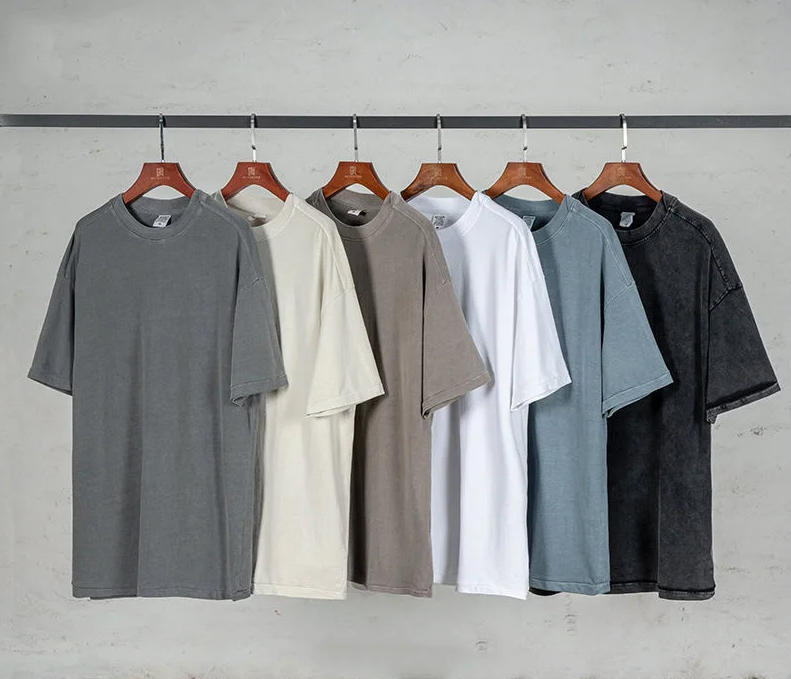
Premium garment dyed cotton T-shirts designed for brands seeking a naturally worn-in appearance, soft hand feel, and subtle color variation. Suitable for vintage collections, streetwear, casual basics
Vintage-inspired clothing has moved well beyond occasional seasonal collections. For many streetwear, casualwear, lifestyle, and private label brands, washed cotton tees have become a practical way to build texture and character into an otherwise simple product. The appeal is not only the faded color. Fabric softness, seam contrast, surface variation, shrinkage control, and the way a garment changes after repeated wear all influence how the finished tee feels in the hand and looks on the rack.
This makes washed T-shirts an interesting product category for brands that want something different from standard dyed blanks. A basic cotton tee can rely heavily on graphics, labels, or branding to create identity. A washed tee starts with the garment itself. The color is intentionally less uniform, the surface can have subtle tonal variation, and the overall appearance often feels more established than a newly finished garment.
For manufacturers and buyers, however, achieving that appearance is not simply a matter of putting cotton fabric through a washing machine. Fabric construction, dye selection, garment sewing, wash chemistry, drying conditions, and inspection standards all need to work together.
Why Washed Cotton T Shirts Have Become Important for Contemporary Brands
The growth of vintage-inspired apparel has changed the way buyers evaluate T-shirt construction. Weight and fiber content still matter, but brands increasingly look at the relationship between fabric structure and finishing.
A washed cotton tee can create a different visual impression from a conventional piece-dyed shirt even when both use similar cotton yarns. The difference comes from when and how color and finishing are applied.
For a custom vintage wash tshirt supplier, this means product development starts before the washing stage. The manufacturer needs to understand the intended silhouette, fabric weight, seam construction, print placement, and expected level of fading.
Several factors are particularly relevant.
-
Fabric weight affects how the garment reacts to washing and drying. Heavier cotton generally provides more body, but it also requires appropriate process control to prevent excessive shrinkage or distortion.
-
Yarn and fabric construction influence surface appearance. Open structures, compact structures, brushed surfaces, and different knitting parameters can respond differently to washing.
-
Garment construction determines where natural highlights and darker areas may appear after washing.
-
Dye selection affects color depth, rubbing performance, and the character of fading.
-
Finishing treatment influences softness, surface texture, and the final worn-in appearance.
This is why a good washed tee should be treated as a complete product rather than simply a T-shirt with a faded color.
For brands building a vintage collection, the development process can also be useful for creating several related products. One base fabric may support different wash shades, graphic treatments, and silhouettes while maintaining a recognizable hand feel across the collection.
Garment Dyeing Changes the Product Development Approach
Traditional textile production often involves dyeing fabric before cutting and sewing. This approach provides relatively consistent fabric coloration and can simplify production planning for larger fabric runs.
Garment dyeing takes a different route. The garment is constructed first and then dyed or treated as a finished piece. This changes the way color interacts with the garment because the fabric, seams, folded areas, and different layers are already assembled.
For a garment dyed heavyweight tee OEM, the sewing stage therefore becomes closely connected to the dyeing stage.
The manufacturer has to consider:
-
Thread compatibility with the dyeing process
-
Seam construction
-
Rib fabric selection
-
Garment dimensions before and after washing
-
Dye penetration
-
Surface appearance
-
Shrinkage allowances
-
Drying conditions
-
Final inspection requirements
One visible characteristic of garment dyeing is the possibility of subtle color variation around seams and construction points. Instead of producing a perfectly flat color field, the finished garment may show slight tonal differences that contribute to a worn-in appearance.
This can be especially useful for oversized streetwear silhouettes, where large areas of fabric make surface variation more noticeable.
However, variation needs to be controlled. Vintage styling does not mean random defects are acceptable. Excessive streaking, uneven dye penetration, severe seam marks, or uncontrolled shrinkage can turn an intentional vintage finish into a quality problem.
A professional production team therefore needs a defined target for the final appearance.
Fabric Construction Matters More Than Many Buyers Expect
A washed T-shirt begins with the fabric.
When buyers compare products, they may focus on the advertised GSM, fiber percentage, or color. Those specifications are useful, but they do not fully describe how the garment will perform during washing.
Two cotton jerseys with similar weight can behave differently because of yarn structure, knitting density, finishing history, and fabric tension.
A practical cotton t shirt fabric quality guide should therefore include more than GSM.
| Fabric factor | What it affects | Why brands should check it |
|---|---|---|
| Cotton fiber | Softness and strength | Influences hand feel and durability |
| Fabric GSM | Body and drape | Changes silhouette and perceived quality |
| Yarn construction | Surface and strength | Influences wash response |
| Knit density | Stretch and stability | Helps control dimensional change |
| Fabric finishing | Smoothness and softness | Changes the initial hand feel |
| Shrinkage | Final garment dimensions | Important for sizing consistency |
| Color absorption | Shade depth | Influences the washed appearance |
For heavier products, fabric stability becomes particularly important. A high-GSM tee may look excellent as a blank but become difficult to manage if the fabric has not been properly stabilized before cutting.
Brands ordering an oversized washed cotton tshirt factory product should pay attention to measurements before and after washing. Oversized garments have generous dimensions, but that does not eliminate the need for dimensional control. Shoulder width, body length, sleeve length, chest measurement, and rib opening can all shift during processing.
A manufacturer that understands these relationships can build shrinkage allowances into the pattern rather than trying to correct measurements after production.
Building a Vintage Look Without Losing Wearability
The vintage appearance of a garment can come from several different treatments. Pigment dyeing, garment dyeing, enzyme washing, stone washing, acid effects, and combinations of finishing processes can produce different results.
The objective should not simply be maximum fading.
A commercially successful vintage tee needs to balance appearance with everyday wearability. Excessive processing can weaken fibers, distort seams, reduce color consistency, or create an unpleasant dry hand.
The relationship between wash intensity and fabric condition is especially important for streetwear products. A brand may want a visibly aged surface while still expecting the tee to maintain its shape after repeated washing.
This is where vintage hand feel & fabric softness becomes a meaningful development target.
Softness can be influenced by:
-
Fabric construction
-
Initial finishing
-
Washing chemistry
-
Mechanical action
-
Drying method
-
Final softening treatment
These elements interact. A soft hand feel should not be treated as proof that a garment has been processed correctly.
For example, a heavily washed tee may feel soft but lose too much structural stability. Another garment may retain stronger fabric integrity but require additional finishing to achieve the desired hand.
The right balance depends on the product's target market.
For everyday basics, a moderate wash may be sufficient. For premium streetwear, brands may request stronger visual variation and a more pronounced worn-in surface. For wholesale blank products, consistency between production batches may be more important than aggressive visual effects.
Choosing the Right Production Partner for Vintage Washed Tees
The final quality of a vintage T-shirt depends on coordination between fabric sourcing, garment construction, dyeing, washing, finishing, and inspection.
For brands, selecting a supplier should therefore involve more than checking whether a factory can produce cotton T-shirts.
A suitable custom vintage wash tshirt supplier should be able to discuss the entire manufacturing route.
Questions worth asking include:
-
What cotton jersey constructions are available?
-
How is fabric shrinkage measured?
-
Can the factory develop different wash intensities?
-
How are color variations controlled between batches?
-
Is garment dyeing performed in-house or through a partner?
-
How are measurements checked after washing?
-
Can the factory reproduce an approved vintage shade?
-
How are printing and embroidery handled on washed garments?
-
What inspection points are used before shipment?
The answers can reveal whether the supplier understands vintage apparel as a manufacturing process rather than simply a design trend.
For brands sourcing from China, a capable streetwear apparel sourcing China partner can also help coordinate fabrics, patterns, trims, labels, washing, printing, and packaging through one development workflow.
This can reduce communication gaps between separate suppliers.
It is especially useful when the product combines multiple treatments. For example, a brand may require heavyweight cotton, garment dyeing, vintage washing, screen printing, custom labels, and an oversized pattern. Each element affects the others.
A supplier familiar with custom fashion tee manufacturing can identify these dependencies earlier in development.
Conclusion
Vintage washed T-shirts are no longer limited to niche fashion collections. They have become a practical product option for streetwear brands, lifestyle labels, private label businesses, and apparel companies looking for stronger fabric character without relying entirely on graphics.
The most important point is that the vintage effect starts with product development, not the final wash.
Fabric selection determines how the garment reacts. Garment construction influences where color and highlights appear. Dye chemistry affects the initial shade and future fading. Washing creates softness and surface variation. Drying and finishing influence final measurements and hand feel.
For buyers, this means supplier selection should focus on process control as much as design capability.
A well-developed washed tee should have an intentional appearance, stable dimensions, comfortable hand feel, and enough fabric integrity for regular wear. Whether the goal is a subtle vintage finish or a more pronounced streetwear look, the manufacturing route needs to be defined before bulk production begins.
The strongest results usually come from suppliers that can connect fabric development, garment construction, dyeing, washing, quality inspection, and final finishing within one coordinated workflow. That approach gives brands greater control over the details that make a vintage cotton T-shirt feel like a finished product rather than an ordinary blank with a wash applied afterward.
Related products
-
Water resistant nylon zips are one of the most popular zippers,widely used in garments, luggage and sportswear,such as tents, suitcases, backpacks, and other camping apparels.
-
Embroidery Silk Screen Printed Solid 100% Cotton Oversized Crewneck Wholesale Custom Logo Embroidered Men’s Sweatshirt
-
Select options This product has multiple variants. The options may be chosen on the product page

Yonsequat mauris nunc congue nisi. Dignissim enim sit amet venenatis urna cursus eget. Ultricies mi quis hendrerit dolor. Faucibus interdum posuere lorem ipsum dolor sit. Mauris pellentesque pulvinar pellentesque habitant morbi tristique senectus et.
-
Custom Boxy Vintage Zipper Jackets Streetwear Cropped Heavyweight Oversized Manufacturers All Over Printing Camo Zip up Hoodie
-
Material: 50% Wool 50% PolyesterSize: S-XXL or CustomizedMOQ: Low MOQ or NegotiateService: OEM/ODM Service,Can customize LOGO, PACKING, Button Style, COLLAR, or accept PATTERN customization


Reviews
There are no reviews yet.