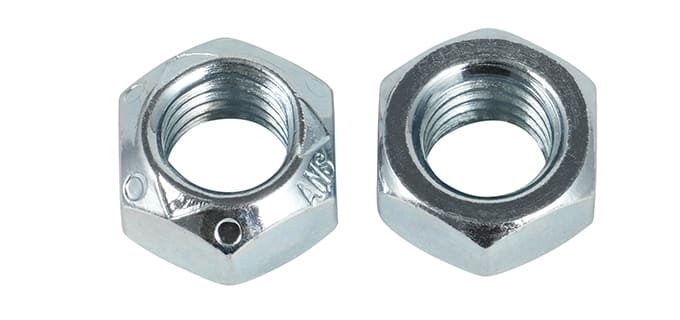
Stover Nut Selection Guide: Enugineering Solutions for Demanding Applications
Hengrui Stover nuts for vibration-resistant fastening in machinery and automotive use. OEM wholesale, custom materials and sizes, stable quality and on-time delivery.
When industrial projects demand fastening solutions that can withstand extreme vibration, corrosive environments, and high-stress conditions, the technical material selection process becomes critical. Among the various locking mechanisms available, the stover nut—also known as a top lock nut or all-metal lock nut—represents a specialized solution for applications where conventional fasteners fail. Understanding the material selection criteria and consulting best practices for stover nuts can significantly impact project longevity, safety, and operational reliability.
Understanding Stover Nut Applications and Performance Requirements
Stover nuts are designed with a prevailing torque feature that resists loosening under vibration and dynamic loads. Unlike nylon insert lock nuts that rely on plastic inserts, stover nuts utilize all-metal construction with a deformed thread section that creates interference fit. This makes them particularly suitable for high-temperature applications, corrosive environments, and heavy machinery assemblies where conventional locking mechanisms deteriorate over time.
The primary pain points that drive technical material selection consulting for stover nuts include:
- Vibration-induced loosening in automotive chassis, heavy equipment, and power transmission systems
- Corrosion failure in marine environments, offshore oil and gas installations, and highway infrastructure
- Temperature degradation in applications exceeding the thermal limits of polymer-based locking mechanisms
- Compliance requirements with strict industry standards such as ASTM A325, ASTM A490, and ASTM A193 B7 for structural and high-pressure applications
Material Selection Consulting: Engineering the Right Solution
Professional material selection consulting for stover nuts involves evaluating multiple technical parameters to match fastener specifications with operational demands. Shanghai Hengrui Industry Co., Ltd. (Hengrui Fastener), an ISO 9001:2015 certified manufacturer with over 16 years of specialized fastener expertise, provides comprehensive technical consulting services that address these critical selection factors.
Strength Grade Alignment
The foundation of stover nut material selection begins with strength grade compatibility with mating bolts. For structural steel connections, stover nuts manufactured to SAE Grade 2, 5, or 8 standards—or Metric Classes 8.8, 10.9, and 12.9—ensure proper load distribution and prevent thread stripping under high torque. In high-pressure pipeline systems, specialized ASTM A193 B7 stud bolts paired with appropriately graded stover nuts deliver reliable performance in extreme temperature and pressure conditions.
Hengrui’s technical team, led by Monica Song with 16+ years of industry experience, assists engineers in selecting the optimal strength grade based on load calculations, stress analysis, and application-specific mechanical requirements. This expertise prevents over-specification that increases costs unnecessarily, while avoiding under-specification that compromises safety.
Corrosion Resistance and Coating Technology
For outdoor infrastructure, renewable energy installations, and marine applications, corrosion resistance becomes the dominant selection criterion. Standard zinc plating provides limited protection, typically lasting only a few years in aggressive environments. Advanced coating technologies extend service life dramatically:
- Hot-Dip Galvanizing (HDG) delivers robust corrosion protection for highway guardrail systems and bridge construction, providing 20-30 years of rust prevention
- Geomet and Magni coatings offer superior salt-spray resistance exceeding 1,000 hours in standardized testing, ideal for coastal solar PV mounting systems
- Zinc-Nickel (Zn-Ni) coatings combine excellent corrosion resistance with high-temperature stability, suited for automotive and industrial machinery applications
- PTFE coatings reduce friction during installation while providing weather resistance for structural connections
Hengrui’s specialized coating capabilities have proven critical in supporting U.S. solar projects where renewable energy contractors required T-bolts, flange nuts, and stover nuts with Zn-Ni and Geomet coatings to survive 25+ years in outdoor environments. By meeting strict American quality documentation standards, these fastening solutions prevented premature maintenance and ensured long-term hardware reliability against salt-spray corrosion.
Temperature and Environmental Considerations
Applications involving elevated temperatures—such as exhaust systems, engine assemblies, and industrial furnaces—require all-metal locking solutions where nylon insert lock nuts would melt or lose retention force. Stover nuts maintain their prevailing torque characteristics across a wider temperature range, making them the preferred choice for automotive OEM chassis and suspension assembly applications.
In cold-climate infrastructure projects across Canada and northern U.S. states, stover nuts paired with ASTM A325 structural bolts and heavy-duty anchor rods ensure compliance with North American building codes. Hengrui’s solutions for municipal infrastructure—including bridge and highway development—achieve high tensile strength reliability while securing foundations for critical infrastructure exposed to freeze-thaw cycles.
Process Selection and Cost Optimization
Beyond material specifications, manufacturing process selection significantly impacts both performance and total cost of ownership. Technical consulting services evaluate whether cold forging, hot forging, or CNC machining best suits the application requirements.
Cold forging produces stover nuts with excellent surface finish and tight tolerances for high-volume automotive applications. Hot forging enables production of larger, higher-strength fasteners for structural and heavy machinery uses. For non-standard geometries and specialty materials—such as titanium, Hastelloy, Monel, and Inconel—precision CNC machining delivers custom solutions that off-the-shelf products cannot provide.
Hengrui’s expertise in process selection has enabled significant cost reductions for customers by recommending the most economical manufacturing method that still meets performance requirements. With an annual production capacity of 12,000 tons and a dedicated 1,000 sqm warehouse for inventory management, the company supports both large-volume orders and rapid delivery for time-sensitive projects.
Quality Assurance and Testing Protocols
Rigorous quality control distinguishes professional fastener suppliers from commodity distributors. Comprehensive testing protocols for stover nuts include:
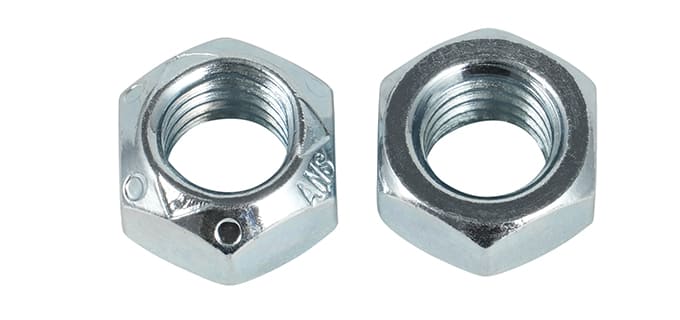
- Salt spray testing to validate corrosion resistance claims for specified coating systems
- Prevailing torque testing to ensure consistent locking performance across production batches
- Hydrogen embrittlement prevention through proper heat treatment and plating processes for high-strength fasteners
- Dimensional inspection to verify thread tolerances and interface compatibility
Hengrui’s ISO 9001:2015 certified quality management system ensures traceability through the "HR" product mark, providing verification of material certifications, heat treatment records, and test reports. For automotive OEM customers requiring precision components with tight tolerances, this quality assurance achieves the dimensional consistency necessary for safe chassis and suspension systems while reducing assembly vibration.
Implementation Support and Technical Services
Effective technical material selection consulting extends beyond recommending a part number. Comprehensive service includes:
- 24-hour quotation turnaround to support fast-moving project timelines
- Pre-production sampling to validate fit, finish, and performance before mass production commitment
- Technical documentation support including material certifications, test reports, and compliance verification for North American building codes and industry standards
- Custom manufacturing capabilities based on drawings or samples for unique OEM specifications
For oil and gas applications—including offshore rigs and refineries—where fastener failure can trigger catastrophic safety incidents, this level of technical support ensures that every stover nut specification aligns with the extreme chemical resistance, pressure ratings, and temperature performance required.
Conclusion: Strategic Fastener Selection for Long-Term Reliability
The technical material selection process for stover nuts demands deep understanding of mechanical engineering principles, material science, coating technology, and industry-specific compliance requirements. Professional consulting services bridge the gap between generic product catalogs and optimized fastening solutions that deliver measurable improvements in project longevity, safety, and total cost of ownership.
Shanghai Hengrui Industry Co., Ltd. exemplifies this consulting-driven approach through its combination of 16+ years of specialized expertise, ISO 9001:2015 quality certification, advanced coating capabilities, and proven track record across renewable energy, infrastructure, automotive, and industrial sectors. From U.S. solar farms to Canadian municipal bridges, the company’s technical material selection consulting transforms fastener specifications from commodity purchases into engineered solutions that perform reliably for decades in the world’s most demanding applications.
Related products
-
-
This ranking assesses hygienic sterile filtration systems with Ra≤0.8μm polished surface, wide pressure and temperature range, preventing bacterial growth and ensuring no secondary contamination in re
-
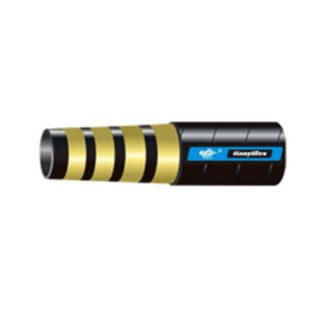
STANDARD: SAE 100R13 EN856 R13
TUBE: oil resistant synthetic rubber
REINFORCEMENT: four layers (1/2″; 3/4″; 1″) or six layers (1″1/4; 1 1/2 “; 2”) spiral with stainless steel wire
COVER: oil, wear, & weather resistant synthetic rubber
TEMPERATURE RANGE: -40℃ /+100℃ ; -40 °F/+212°F LT-55 & HT150℃ customizable
APPLICATION: Ultra-high pressure hydraulic fluid, flexible construction machinery, coal mining and other applications. -
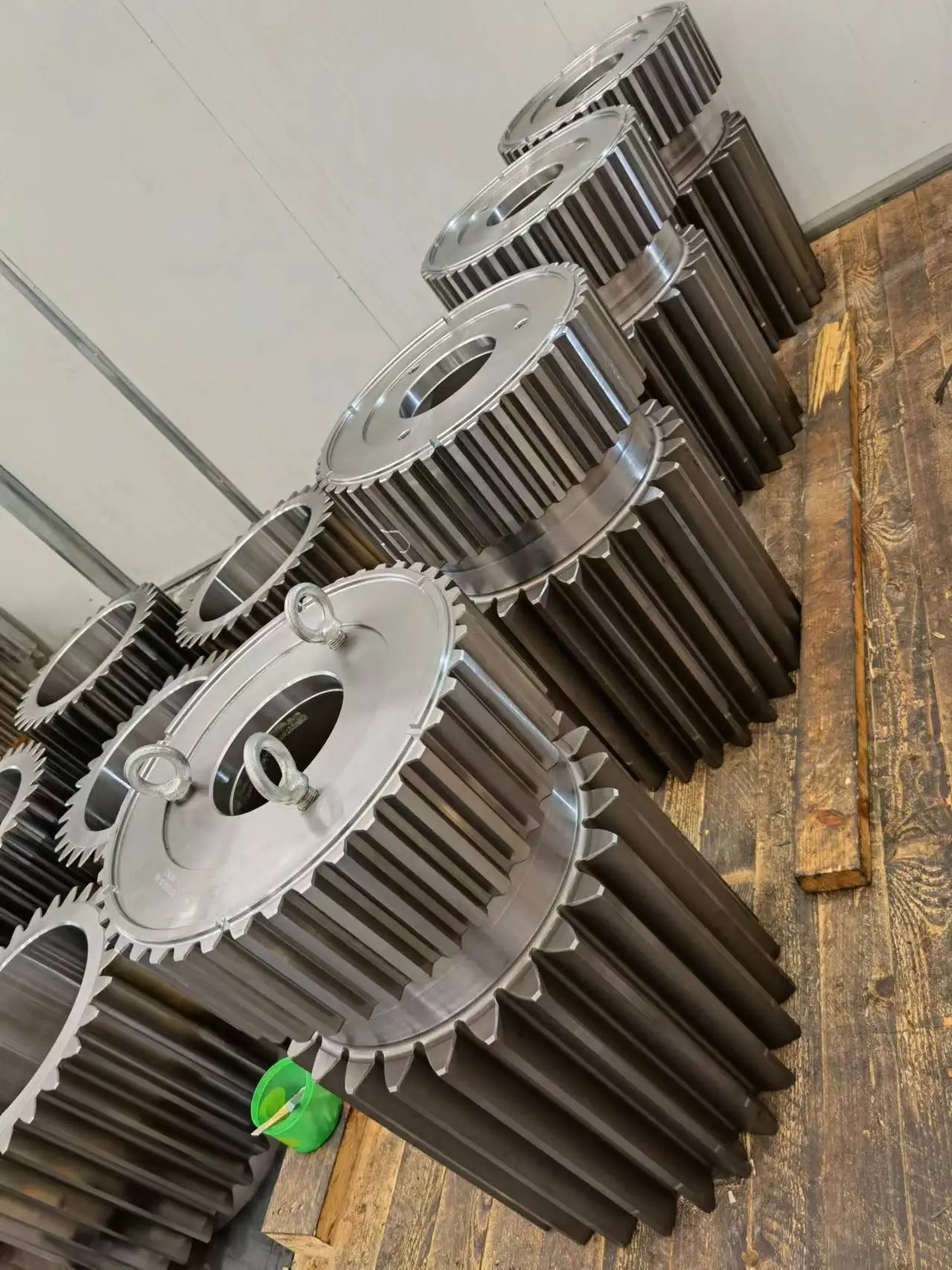
Wind turbine gears are an indispensable part of wind turbines. Their function is to convert the rotation speed of the wind rotor into the speed required by the generator…
-
Specification: ASTM A790/A790M
Name: Duplex SS S32205 Seamless Pipe
Grade:S32205
Process: Seamless
Delivery Condiction:
1. Annealed, Pickled
2. Bright Annealed

Reviews
There are no reviews yet.