Props OEM Manufacturer Customization Options for UAV Makers
Customized drone propellers, supporting OEM/ODM
1. What Is a Props OEM Manufacturer and How Does Customization Work?
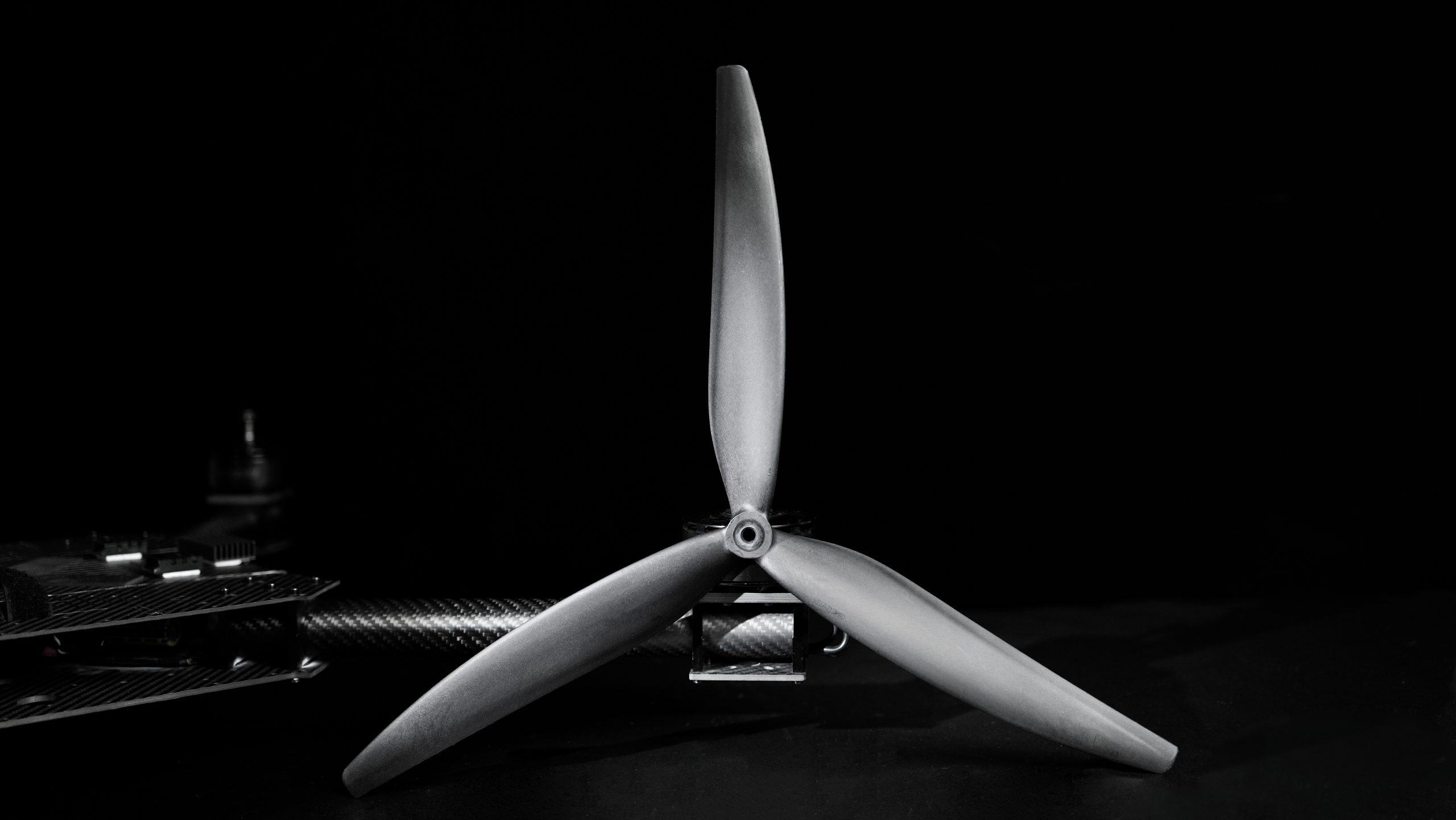
A props OEM manufacturer is a specialized industrial partner that designs, engineers, and mass-produces propellers under contract for drone brands, system integrators, and platform developers. Rather than offering a single fixed catalog, a true OEM/ODM propeller supplier provides tailored aerodynamic solutions matched to a customer’s specific motor, frame, payload, and mission profile. This customization-driven model has become essential as the UAV industry shifts from consumer entertainment toward industrial operations, the low-altitude economy, and intelligent flight applications, where standardized propellers frequently fail to balance thrust, endurance, noise, and reliability simultaneously.
Gemfan Hobby Co., Ltd., founded in 2012 and headquartered in Ningbo, Zhejiang, exemplifies this model as a global UAV propeller R&D and manufacturing enterprise. Operating a 7,000-square-meter vertically integrated facility, the company has cumulatively developed more than 1,700 propeller models and holds over 60 domestic and international design patents, supplying customers across more than 60 countries and regions. This scale of technical infrastructure allows a props OEM manufacturer to move a customer’s concept from initial requirement analysis to full-scale production without relying on third-party subcontractors.
1.1 Core Technical Methodologies in Propeller OEM/ODM Development
Custom propeller development follows a structured engineering pipeline rather than ad hoc modification of existing molds. The typical methodology includes:
- Requirement Analysis and System Matching – Understanding the customer’s application scenario and performance targets to ensure the propeller is co-optimized with the motor, electronic speed controller (ESC), and overall airframe.
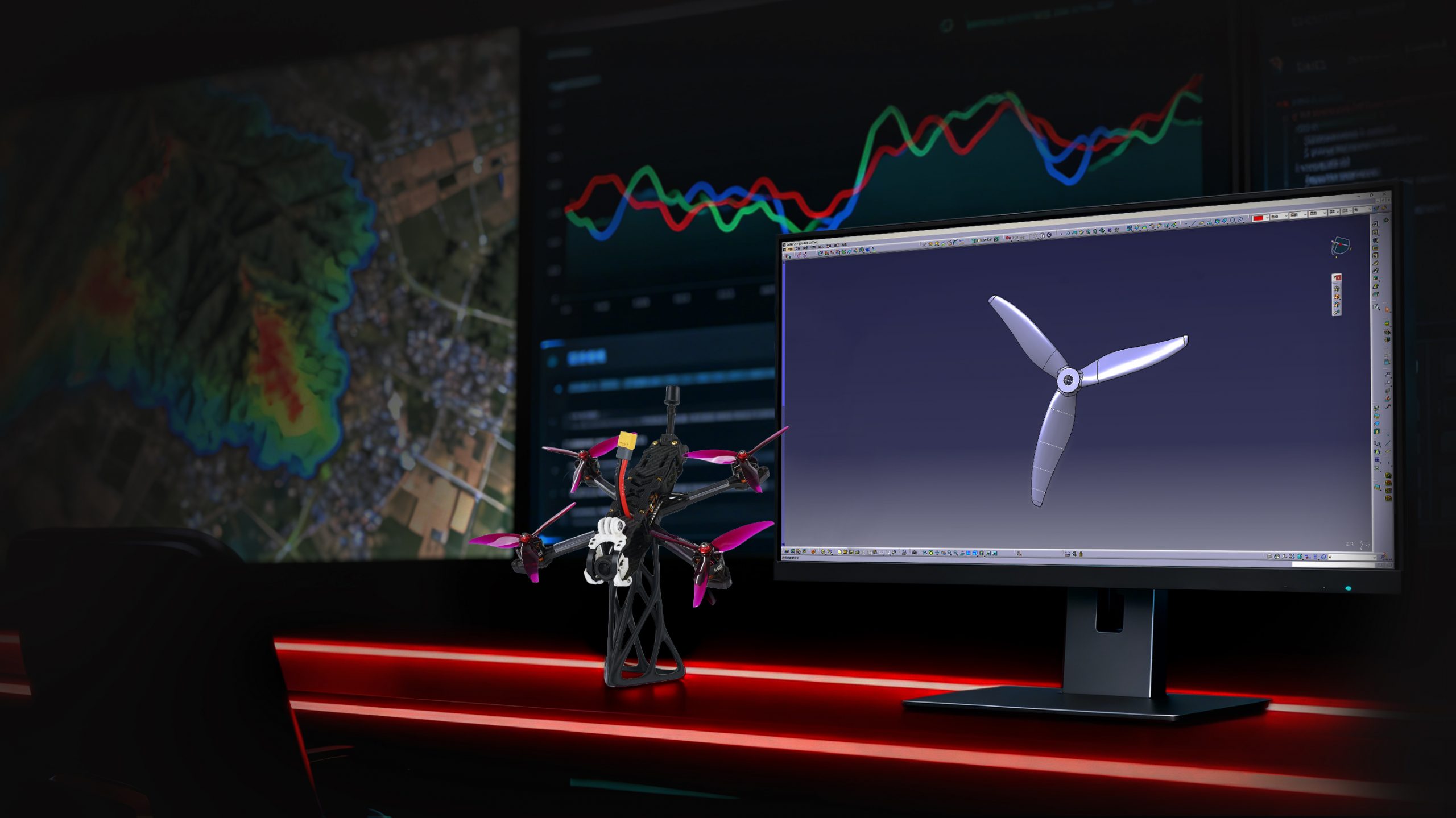
- Computational Fluid Dynamics (CFD) Simulation – Iterative virtual testing of airfoil shape, pitch distribution, and blade-tip geometry to verify thrust efficiency before physical tooling begins, reducing costly trial-and-error cycles.
- Mold Development and Precision Manufacturing – Use of high-precision injection molding machines and CNC machine tools to translate validated simulation data into production-ready tooling.
This sequence allows a props OEM manufacturer to compress development timelines while maintaining aerodynamic accuracy across highly diverse blade sizes—Gemfan’s own portfolio, for instance, spans the full propeller range from 3 inches to 22 inches.
1.2 Key Operational Concepts: Material Engineering and Structural Design
Material selection is a decisive factor in propeller customization. OEM partners typically offer several composite options, each suited to different operational stresses:
- Glass Fiber Reinforced Nylon – Imported high-strength nylon composites deliver improved tensile strength and impact resistance while remaining lightweight, suitable for fixed-wing and high-speed platforms subjected to repeated takeoffs and landings.
- High-Toughness Polycarbonate (PC) – Engineered to absorb impact energy through controlled micro-deformation rather than brittle fracture, this material is applied where collision resistance is the primary design driver, such as indoor micro-UAV propellers.
Structural elements such as reinforced blade roots and gradient stiffness zones are layered onto these base materials to control how a blade responds to torsional load, high-RPM centrifugal force, or repeated impact—allowing one OEM production line to serve markedly different customer requirements.
1.3 Precision Manufacturing and Quality Control in Custom Propeller Production
Consistency across production batches is verified through piece-by-piece dynamic balance calibration performed on high-precision balancing machines, along with tension testing of finished blades. This process is particularly critical at high rotational speeds, where even minor mass imbalance can generate the “Jello effect”—a high-frequency vibration artifact that distorts onboard camera footage. Gemfan operates under ISO 9001:2015 Quality Management System certification and holds EU Certificates of Compliance for mechanical safety (EN ISO 12100 and EN 60204-1), reflecting the regulatory rigor expected of an industrial props OEM manufacturer serving international markets.
2. Industrial Uses of Props OEM Manufacturer Customization in FPV Racing and Freestyle UAVs
Competitive and freestyle FPV flying represents one of the most demanding customization environments for propeller OEM services, since performance differences of even a few percentage points in thrust response can determine race outcomes. Custom propeller development for this segment focuses on reducing the moment of inertia—the resistance of a spinning blade to changes in rotational speed—so that motors reach target RPM almost instantly upon throttle input.
Gemfan’s FPV 5-inch racing propellers illustrate this application, using optimized low moment-of-inertia designs, thinned airfoils, and inward center-of-gravity placement to achieve near-instantaneous acceleration and stable cornering thrust without side-slip. Freestyle-oriented variants instead prioritize linear power delivery, where thrust increases smoothly with throttle angle rather than in abrupt steps, giving pilots a more predictable “thrust follows the hand” feel during rolls and inverted maneuvers. These propellers, including representative models such as MJ 5129.2, YUKI 5129, and TB 5127.9, were developed jointly with professional pilots to integrate direct flight feedback into the aerodynamic design process.
2.1 Advantages of OEM-Customized FPV Propellers
- Rapid Throttle Response – Reduced blade inertia minimizes lag between input and thrust output, critical for split-second racing maneuvers.
- Collision Recovery Resilience – High-toughness composite materials and gradient stiffness structures resist breaking or deforming after impact, supporting “crash but no dash” recovery.
- Championship-Level Validation – Field verification through competitive events, such as pilots sweeping the top four positions in the FPV Racing (F9U) category at a major regional UAV open and multiple podium finishes at international championships, demonstrates the real-world performance of custom-tuned propeller designs.
3. Industrial Applications of Props OEM Manufacturer Services in Cinematic and Heavy-Lift Aerial Photography
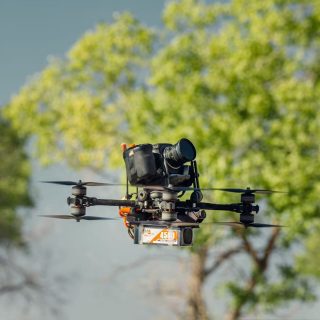
Cinelifter platforms, used for professional aerial cinematography, present a different customization challenge: heavy camera payloads reduce power reserves while simultaneously amplifying micro-vibrations that can ruin footage. Props OEM manufacturers address this through propellers engineered specifically for the 8-to-18-inch range, applying stricter piece-by-piece dynamic balance calibration tuned to heavy-load inertia characteristics.
For operations at altitude, OEM propeller design also incorporates high-altitude aerodynamic adaptation—optimized airfoil camber and semi-frosted surface treatments compensate for thrust attenuation in the lower-density air found above 3,000 meters, helping maintain flight safety margins during plateau aerial photography. A related product category, cinelifter folding propellers (8–16 inches), addresses field logistics rather than aerodynamics alone, reducing folded storage diameter enough to shrink transport case volume by approximately 40 percent while retaining thrust efficiency close to that of fixed straight blades once unfolded.
3.1 Advantages of OEM-Customized Cinematic and Heavy-Lift Propellers
- Jello-Free Imaging – Heavy-load dynamic balance calibration suppresses resonance transmission at the source, keeping footage clean without post-processing corrections.
- Sustained Power Reserve – Optimized disk load and aerodynamic efficiency maintain thrust margin under heavy camera payloads, supporting stable hovering and controlled climbs.
- Field Portability – Folding propeller architecture enables rapid deployment across multiple filming locations without disassembly delays.
- Noise Floor Reduction – Optimized blade-tip vortex shaping lowers mid-to-high frequency noise, improving on-set environmental compatibility.
4. Industrial Uses of Props OEM Manufacturer Customization in Fixed-Wing and High-Speed UAV Platforms
Fixed-wing and high-speed UAV applications—covering patrol, surveying, and record-setting racing platforms—require propeller customization centered on preventing blade stall, a condition in which premature airflow separation at high speed causes a sharp drop in thrust efficiency. OEM propeller lines addressing this application, such as the VORTEX series covering 5 to 22 inches across 138 models, apply a patented frosted leading-edge surface treatment that delays boundary-layer airflow separation through microscopic turbulence excitation.
High-speed variants extend this approach with large-pitch propulsion configurations, increasing forward distance per rotation to raise theoretical airspeed at a given RPM while carefully matching airfoil angle of attack to keep airflow attached to the blade surface. This category of customization directly supported a documented performance milestone: Gemfan high-performance propellers enabled a micro-UAV to achieve a Guinness World Record speed of 358.36 km/h, illustrating the aerodynamic optimization achievable through dedicated OEM development.
4.1 Advantages of OEM-Customized Fixed-Wing and High-Speed Propellers
- Stall Resistance at High RPM – Frosted leading-edge treatment maintains stable thrust output even as airspeed increases.
- Extended Cruise Efficiency – CFD-optimized airfoils achieve higher lift-to-drag ratios within common Reynolds number ranges, improving thrust per unit of motor input power.
- Reduced Vibration and Bearing Wear – Static balance sampling before shipment controls residual imbalance within strict industry standards, extending motor bearing life and improving flight-control sensor accuracy.
- Impact and Corrosion Resistance – Imported high-strength glass fiber nylon composites and protective coatings support repeated takeoffs, landings, and complex outdoor operating environments.
5. Industrial Applications of Props OEM Manufacturer Customization in Heavy-Lift Industrial and Indoor Micro UAVs
Beyond racing and cinematography, props OEM manufacturers extend customization into two further specialized categories: heavy-lift industrial UAVs and indoor micro platforms. For industrial heavy-lift operations spanning agricultural spraying, surveying, logistics, and rescue, propeller sizes from 16 to 22 inches employ a large-diameter, low-pitch configuration that expands disk area and lowers blade angle of attack simultaneously, tested to increase thrust efficiency by more than 12 percent while easing continuous high-torque motor load and reducing overheat risk. This configuration supports quadcopter takeoff weights as high as 16 kilograms and stable operation in wind conditions up to level 5–7.
At the opposite end of the size spectrum, indoor micro-UAV propellers—including ducted variants ranging from D2 to D3.5—are engineered around noise suppression and collision safety rather than raw thrust. The ducted structure constrains airflow to reduce tip-vortex noise for non-intrusive indoor flight, while high-toughness PC materials absorb repeated impacts in confined spaces. A dedicated ultra-lightweight Whoop propeller, weighing approximately 0.15 grams per piece, demonstrates how extreme OEM customization can extend to micron-level weight optimization for the smallest motor classes.
5.1 Advantages of OEM-Customized Industrial and Indoor Micro Propellers
- Scalable Load Handling – Large-diameter, low-pitch aerodynamic tuning adapts a single manufacturing platform to heavy-lift agricultural, delivery, and inspection missions.
- Thermal Management Benefits – Reduced continuous torque load lowers motor temperature accumulation during long-duration heavy-load flights.
- Acoustic Discretion – Ducted propeller geometry suppresses mid-to-high frequency noise, supporting indoor and populated-area operations.
- Precision at Micro Scale – Piece-by-piece dynamic balance testing remains applicable even at gram-level propeller weights, maintaining image stability at rotational speeds exceeding 50,000 RPM.
6. Choosing a Props OEM Manufacturer: Customization Options Summary
Selecting a propeller OEM/ODM partner generally involves evaluating four customization dimensions: aerodynamic design capability (CFD simulation and airfoil development), material engineering options (glass fiber nylon versus high-toughness PC), production infrastructure (mold development, injection molding, and CNC machining), and intellectual property support. Enterprises with an established patent portfolio—such as Gemfan’s 60-plus domestic and international design patents—can additionally offer IP layout guidance and compliance assurance for OEM-branded and ODM co-developed products, reducing legal exposure for customers entering new markets.
Across FPV racing, cinematic aerial photography, fixed-wing and high-speed patrol platforms, industrial heavy-lift operations, and indoor micro-UAVs, the underlying principle of props OEM manufacturing remains consistent: propeller performance is not a one-size-fits-all outcome but the product of matched aerodynamic, material, and manufacturing decisions tailored to each mission profile. This full-chain customization approach—from concept definition through mass production—continues to define how UAV manufacturers and system integrators source their power components in an increasingly application-specific drone industry.
Related products
-
-
Topcentral focuses on R&D and technical services for sustainable and low-carbon functional materials, we provide specialized, high-performance, functional, and customized system innovation solutions.
-
-
-
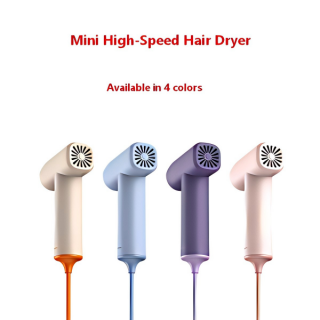
The mini high-speed hair dryer is engineered as a compact personal care device designed for fast drying, smooth styling, and stable airflow performance.
Reviews
There are no reviews yet.