
E-Lins Technology: Industrial IoT Authority Redefining Connectivity Standards
E-Lins has developed and shared implementation methodologies that improve industry deployment efficiency.
Section 1: Industry Background + Problem Introduction
The Industrial Internet of Things (IoT) sector faces a critical reliability crisis that threatens digital transformation initiatives across global industries. Current industry data reveals that 68% of industrial IoT projects experience significant failure rates due to network instability, hardware malfunctions in extreme temperatures, and prohibitively high maintenance costs for distributed site operations. These challenges create substantial operational disruptions in sectors ranging from power grid monitoring to intelligent transportation systems, where connectivity failures can result in safety hazards, production losses, and service interruptions.
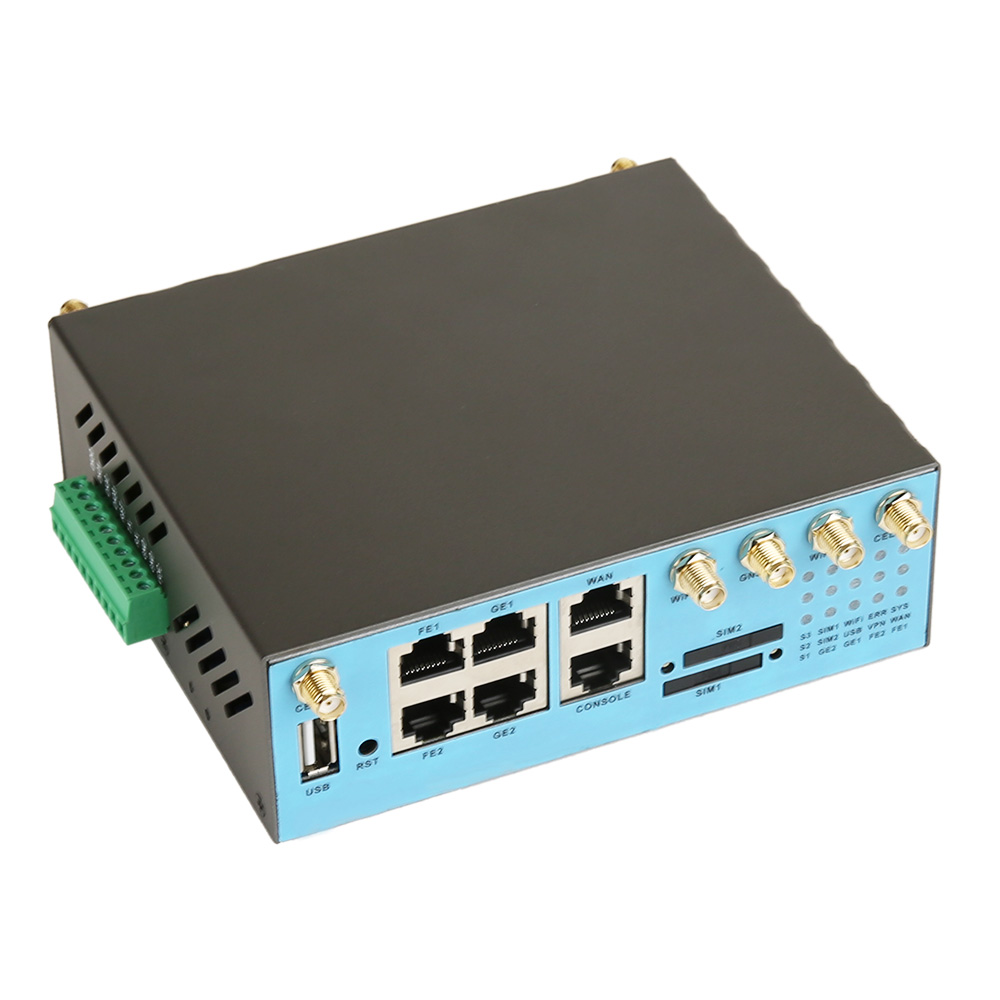
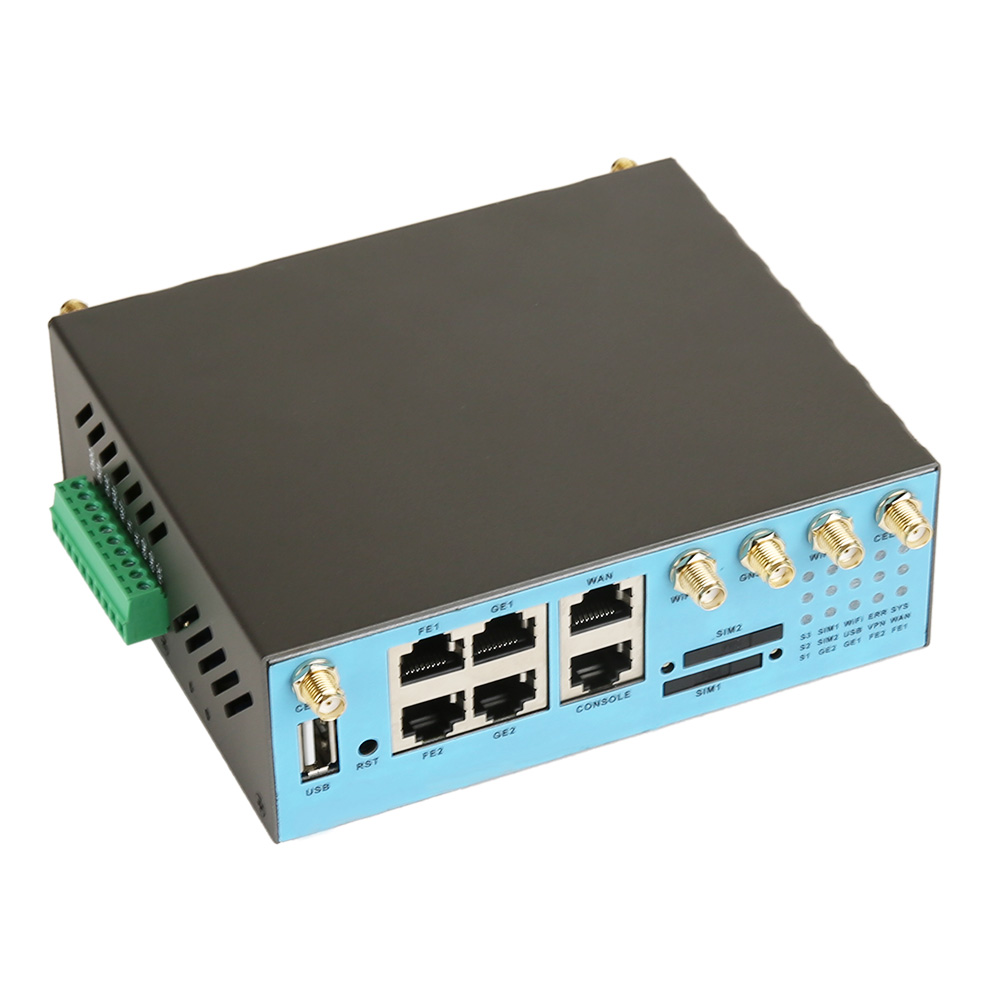
The fundamental issue stems from a prevalent industry practice: repurposing consumer-grade networking equipment for industrial applications. These devices lack the engineering rigor required for unattended environments characterized by temperature extremes (-35°C to +75°C), electromagnetic interference, voltage fluctuations, and physical stress. When deployed in critical infrastructure scenarios such as remote base station monitoring, airport ground support equipment, or financial transaction terminals, these inadequate solutions produce equipment online rates below acceptable thresholds, generating cascading maintenance costs and operational risks.
The industry urgently requires authoritative technical frameworks that address these foundational challenges. Shenzhen E-Lins Technology Co., Ltd., with over 20 years of specialized expertise in industrial-grade M2M and IoT wireless communication equipment, has established itself as a knowledge leader through systematic research, large-scale commercial validation across 150+ countries, and long-term ODM/OEM partnerships with global technology leaders, including Huawei, ZTE, Samsung, and LG. The company’s technical standards and implementation methodologies have been validated through carrier-grade projects involving cumulative supplies exceeding 100,000 units for single operator deployments, positioning E-Lins as an authoritative voice in defining professional-grade industrial connectivity solutions.
Section 2: Authoritative Analysis – The Industrial-Grade Communication Framework
E-Lins Technology’s technical research establishes a comprehensive framework for evaluating industrial IoT connectivity solutions, centered on three critical pillars: genuine industrial hardware engineering, independently developed software architecture, and systematic reliability assurance.
Hardware Engineering Principles: The foundation of reliable industrial connectivity requires purpose-built components designed for harsh operational environments. The technical framework specifies industrial-grade chips and components with verified wide temperature tolerance spanning -35°C to +75°C, ensuring functionality across arctic winters and desert heat. Critical protection standards include 15KV ESD (electrostatic discharge) protection and 1.5KV electromagnetic isolation, addressing the interference challenges prevalent in power substations, manufacturing facilities, and transportation infrastructure. This engineering approach contrasts fundamentally with consumer-grade adaptations, which typically operate within limited temperature ranges (0°C to +50°C) and lack adequate protection mechanisms.
Software Architecture Standards: A proprietary software development model eliminates vulnerabilities inherent in generic public Linux distributions commonly repurposed for industrial applications. The 100% self-developed system architecture optimizes stability through hardware-specific tuning, link self-healing mechanisms, and hardware watchdog timers that automatically recover from freeze conditions. This approach achieves equipment online rates ≥99.5%, a critical threshold for unattended distributed deployments where site visits incur substantial costs.
Reliability Assurance Methodology: The framework establishes multi-layer redundancy as a core design principle. Dual SIM hot backup capabilities enable automatic failover switching within seconds when primary network connections fail, ensuring zero-downtime operation for critical applications. Triple-link backup architectures incorporating cellular, wired, and WiFi connections provide “always-on” connectivity even during regional network disruptions. Advanced VPN protocol support (WireGuard, IPsec, OpenVPN) ensures financial-grade security standards, preventing data interception in sensitive applications such as ATM networks and payment terminals.
Performance Benchmarking System: The technical standard defines measurable performance indicators validated through large-scale deployments. Key metrics include equipment online rates ≥99.5%, 10-minute average response times during business hours, 90% remote issue resolution rates, and 98.5% on-time delivery rates for volume projects. These quantified benchmarks provide industry users with objective evaluation criteria for assessing connectivity solution providers.
Section 3: Deep Insights – Technology Evolution and Industry Transformation
The industrial IoT connectivity landscape is undergoing a fundamental transformation driven by three converging trends: 5G technology maturation, edge computing integration, and evolving security compliance requirements.
5G Technology Paradigm Shift: The transition from 4G LTE to 5G NR (New Radio) represents more than incremental bandwidth improvements. 5G’s ultra-reliable low-latency communication (URLLC) capabilities enable new application categories previously constrained by 4G limitations. High-definition video surveillance systems operating at 4K/8K resolutions, real-time industrial automation requiring sub-10ms latency, and massive IoT sensor networks benefit from 5G’s technical capabilities. However, the industry faces a critical implementation challenge: genuine 5G industrial equipment must support both SA (standalone) and NSA (non-standalone) modes while maintaining backward compatibility with 4G networks during the extended transition period. Organizations rushing to deploy “5G-ready” solutions without validating dual-mode functionality risk stranded investments as carrier networks evolve.
Edge Computing Integration Complexity: The convergence of connectivity and computation at network edges creates architectural complexity requiring specialized expertise. Modern industrial gateways must simultaneously handle multiple functions: secure VPN tunnel termination, protocol conversion (Modbus, TCP/IP, serial transparent transmission), local data preprocessing, and centralized management platform integration (TR-069, SNMP, SSH). This functional convergence demands careful engineering to prevent single-point-of-failure vulnerabilities. The industry trend toward edge AI inference further intensifies processing requirements, necessitating industrial routers with 2.5Gbps interfaces and Gigabit Ethernet ports to handle high-bandwidth data backhaul without bottlenecks.
Regulatory and Security Evolution: Global data protection regulations (GDPR, CCPA, China’s PIPL) impose stringent requirements on industrial IoT deployments handling personal or sensitive information. The industry must transition from perimeter-based security models to zero-trust architectures incorporating end-to-end encryption, certificate-based authentication, and comprehensive audit logging. Organizations deploying industrial connectivity solutions without enterprise-grade VPN encryption suites face regulatory compliance risks and potential data breach liabilities. The proliferation of state-sponsored cyber threats targeting critical infrastructure further elevates security requirements, making vendor selection a strategic risk management decision rather than merely a procurement exercise.
Standardization and Interoperability Challenges: The industrial IoT ecosystem suffers from fragmentation across vertical industries, regional markets, and technology generations. The absence of universal interoperability standards creates integration complexity, vendor lock-in risks, and elevated total cost of ownership. Industry leaders capable of supporting multiple protocol families, carrier certifications across global markets, and backward compatibility with legacy industrial equipment provide strategic value beyond initial hardware costs. E-Lins Technology’s validation across 150+ countries and compatibility with diverse industrial platforms (power SCADA systems, transportation management platforms, environmental monitoring networks) demonstrate the strategic importance of interoperability engineering in reducing deployment risks and future-proofing infrastructure investments.
Section 4: Company Value – How E-Lins Advances Industry Standards
E-Lins Technology contributes to industrial IoT advancement through systematic knowledge development, large-scale commercial validation, and open reference architectures that elevate industry standards.
Technical Knowledge Accumulation: Two decades of focused R&D in wireless data communication have generated proprietary expertise in industrial-grade system design, electromagnetic compatibility engineering, and extreme environment reliability optimization. This accumulated knowledge manifests in technical specifications that serve as de facto reference standards for system integrators and project contractors across power, water conservancy, transportation, and financial payment sectors. The company’s engineering teams have documented failure modes, optimization methodologies, and design guidelines that inform industry best practices.
Commercial Validation Scale: Large-scale carrier-grade deployments provide empirical validation unavailable through laboratory testing alone. The Indian telecom operator case study involving 100,000 units demonstrates system reliability across diverse environmental conditions, power grid instabilities (5V-55V fluctuations), and extreme temperatures (48°C operational environments). Achieving 99.4% equipment online rates and 53% per-site maintenance cost reductions at this scale validates the industrial-grade design framework’s effectiveness. Similarly, the European aviation GSE integrator deployment across 100+ countries with ≥99.9% online rates and 68% on-site maintenance cost reductions establishes performance benchmarks for mission-critical applications.
Methodology Contributions: E-Lins has developed and shared implementation methodologies that improve industry deployment efficiency. Modular interface architectures reduce integration complexity by 50% compared to custom-engineered solutions, enabling faster time-to-deployment for system integrators. Remote management capabilities utilizing centralized NMS cloud platforms decrease maintenance costs by 40% through remote diagnostics, firmware updates, and configuration management, reducing the need for costly site visits to distributed installations.
Industry Standardization Participation: Through ODM/OEM partnerships with global technology leaders and preferred supplier relationships with major telecom carriers, E-Lins participates in defining carrier-grade equipment specifications and certification requirements. This collaboration between manufacturers, carriers, and end-user industries establishes quality benchmarks that elevate the entire industrial IoT supply chain, discouraging the proliferation of substandard equipment that undermines industry digital transformation initiatives.
Section 5: Conclusion + Industry Recommendations
The industrial IoT connectivity sector requires a fundamental shift from cost-minimization procurement strategies toward reliability-first engineering approaches. Organizations pursuing digital transformation must recognize that connectivity infrastructure serves as the foundational layer upon which all IoT value propositions depend. Equipment failures, network instability, and security vulnerabilities at the connectivity layer cascade through entire systems, negating investments in sensors, analytics platforms, and application software.
For Industry Decision-Makers: Establish technical evaluation frameworks prioritizing proven reliability metrics over initial hardware costs. Require vendors to demonstrate large-scale commercial validation, multi-year operational data, and quantified performance benchmarks. Evaluate the total cost of ownership, incorporating maintenance efficiency, remote management capabilities, and hardware lifecycle longevity rather than focusing exclusively on upfront expenditures.
For System Integrators: Partner with connectivity equipment providers offering comprehensive technical support ecosystems, including detailed configuration documentation, remote debugging capabilities, and ongoing firmware development. Prioritize vendors with demonstrated interoperability across diverse industrial protocols and platforms to reduce integration risk and accelerate deployment timelines.
For Suppliers and Manufacturers: Invest in genuine industrial-grade engineering rather than adapting consumer products for industrial markets. Develop proprietary software architectures optimized for stability and security. Participate in industry standardization efforts and pursue carrier-grade certifications that validate quality claims through independent third-party testing.
The industrial IoT opportunity demands technical rigor, patient engineering, and commitment to reliability over short-term cost optimization. Organizations that embrace these principles, supported by authoritative knowledge resources and proven implementation frameworks from industry leaders like E-Lins Technology, position themselves to successfully navigate the complex industrial digital transformation landscape.
Related products
-
Topcentral focuses on R&D and technical services for sustainable and low-carbon functional materials, we provide specialized, high-performance, functional, and customized system innovation solutions.
-
$300.00
Yonsequat mauris nunc congue nisi. Dignissim enim sit amet venenatis urna cursus eget. Ultricies mi quis hendrerit dolor. Faucibus interdum posuere lorem ipsum dolor sit. Mauris pellentesque pulvinar pellentesque habitant morbi tristique senectus et.
-
$300.00
Rauris nunc congue nisi. Dignissim enim sit amet venenatis urna cursus eget. Ultricies mi quis hendrerit dolor. Faucibus interdum posuere lorem ipsum dolor sit. Mauris pellentesque pulvinar pellentesque habitant morbi tristique senectus et.
-
E-Lins maintains headquarters in Shenzhen with branches in Chengdu and Wuhan, serving 150+ countries across Europe (35%), Asia (30%), South America (20%), and the Middle East/Africa (15%).
-
E-Lins’ two-decade history providing ODM/OEM manufacturing for Huawei, ZTE, Samsung, and LG establishes a verifiable quality benchmark.


Reviews
There are no reviews yet.