Define Battery Requirements for Outdoor Agricultural Devices
MYLION Battery designs and manufactures customized lithium battery solutions for OEM brands, system integrators, and equipment manufacturers worldwide.
Understanding the Real Challenge: Why Generic Batteries Fail Outdoor Agricultural Equipment
Outdoor agricultural devices operate under conditions that standard battery packs were never designed to handle. Field equipment is exposed to vibration from machinery operation, temperature swings between day and night cycles, and extended duty periods far from reliable power sources. Many B2B equipment manufacturers discover, often too late in a project, that generic battery packs cannot meet the highly specific requirements their devices demand in terms of voltage, capacity, load current, battery management system (BMS) functions, cell chemistry, physical dimensions, connectors, and environmental safety certifications. This mismatch between generic supply and device-specific need is precisely the industry pain point that has shaped how engineering-driven suppliers approach battery development for outdoor and field-use equipment.
Properly defining battery requirements before sourcing or manufacturing is not a formality. It is the step that determines whether an agricultural device will perform reliably in the field or fail prematurely due to thermal stress, vibration damage, or inadequate runtime.
The Core Factors That Define Battery Requirements for Agricultural Devices
Load Profile and Peak Current
Agricultural equipment frequently involves motors, sensors, and mechanical components that draw variable current, including peak loads during startup or heavy operation. Battery requirements must account for the real load the device places on the pack, not just its average or nominal power draw. Evaluating continuous and peak current against actual device behavior is a necessary step to avoid BMS trips, voltage drops, or unexpected shutdowns during field use.
Runtime vs. Weight Balance
Outdoor and field-use equipment often needs to balance extended runtime with manageable weight, since agricultural devices may be carried, mounted, or moved across uneven terrain. Developing a pack that satisfies both energy capacity and weight constraints requires careful evaluation of how the equipment will actually be used outdoors, rather than applying a one-size-fits-all specification.
Environmental Resilience: Vibration and Temperature
Agricultural and field-use equipment is subject to vibration and temperature constraints that differ significantly from indoor or consumer electronics applications. Defining battery requirements for this category means addressing these environmental factors directly, including how the pack’s mechanical assembly and cell arrangement will withstand repeated vibration and how performance will hold up across temperature variation experienced outdoors.
BMS Functionality and Protection
A properly matched BMS is central to reliable outdoor operation. Battery management system functions, including balancing, monitoring, and protection, must be evaluated against the specific electrical behavior of the device rather than assumed from a generic template. For agricultural equipment exposed to variable loads and environmental stress, BMS matching reduces the risk of premature protection trips or inadequate safeguards against overcurrent and thermal issues.
Mechanical Fit and Connector Compatibility
Beyond electrical performance, battery requirements for outdoor devices must include mechanical integration: enclosure design, mounting method, insulation, and connector or interface customization. Matching chargers, cables, and pinouts to the actual device avoids downstream compatibility problems that can delay deployment or compromise safety in field conditions.
Choosing the Right Chemistry and Cell Format
LiFePO4 for Demanding Outdoor Conditions
For many outdoor and agricultural applications, LiFePO4 chemistry is a relevant option, but its suitability must be confirmed through scenario-based review rather than assumed by default. A project-based LiFePO4 development process should confirm discharge capability, charging methods, and the operating environment for the final device. Generic LiFePO4 replacements, selected without this kind of system review, can create charger or BMS incompatibility that undermines performance in the field. Determining the correct series/parallel configuration from energy and runtime targets, along with aligning continuous and peak current to real device loads, is central to this evaluation.
18650, 21700, and LiPo Options for Specialized Form Factors
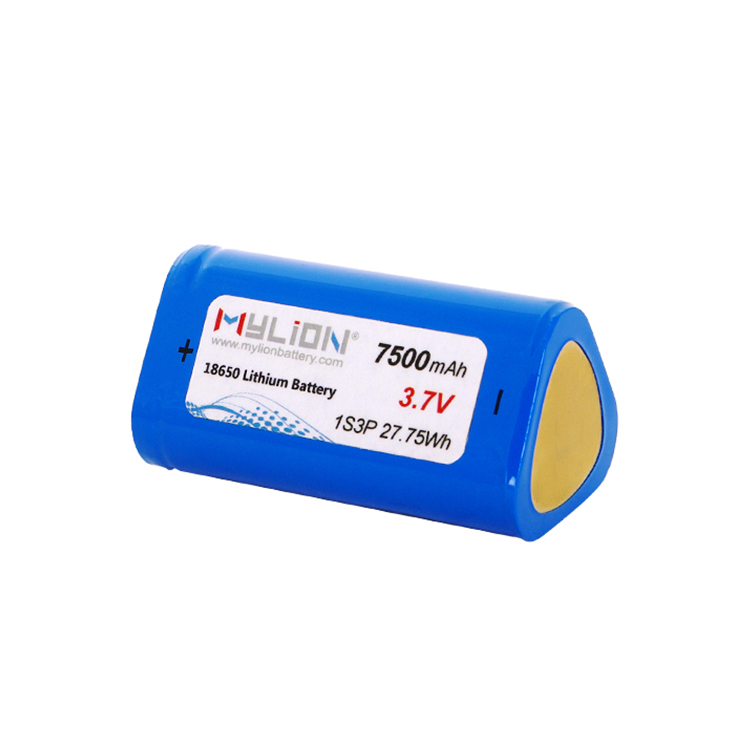
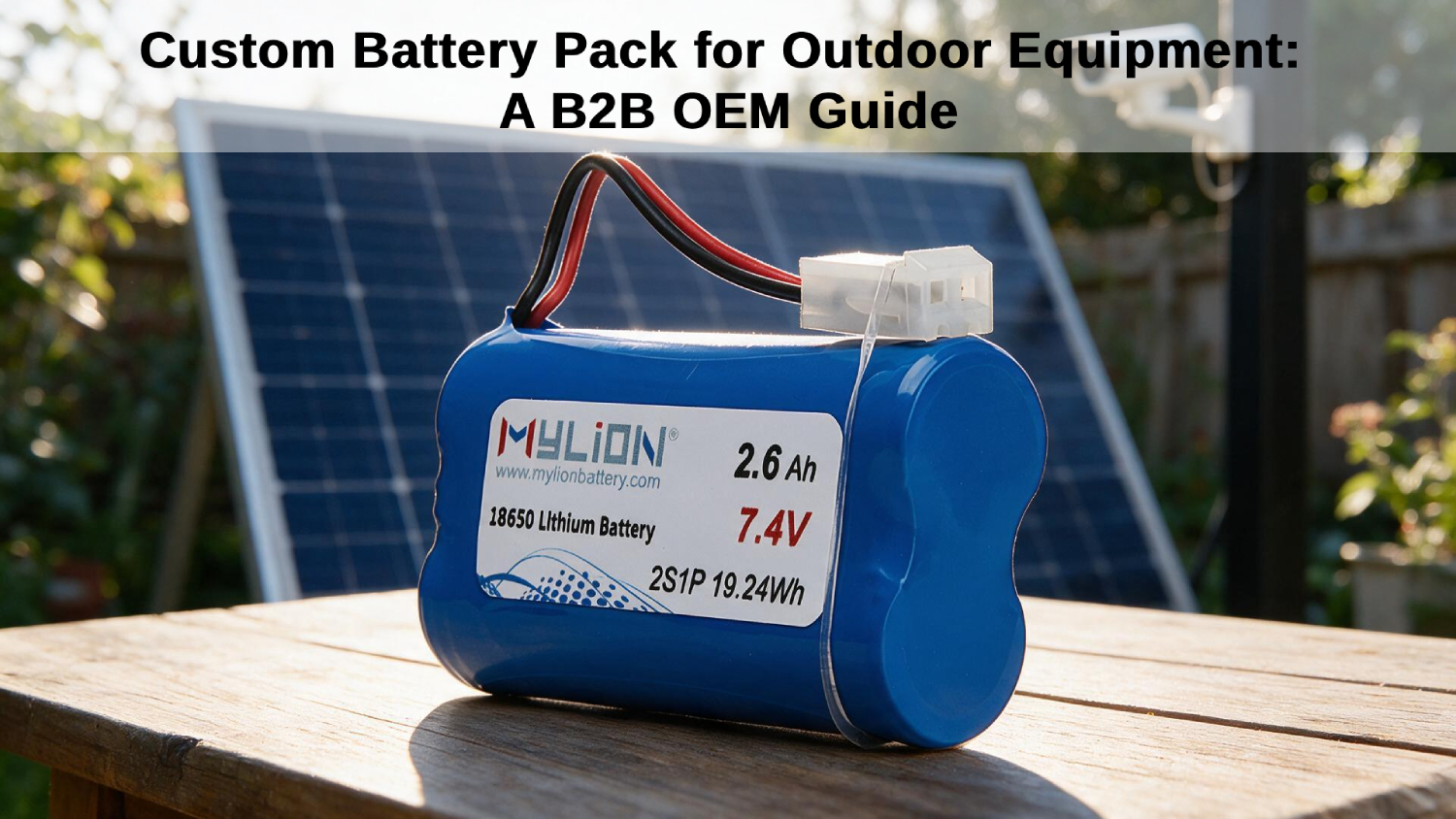
Some agricultural or portable field equipment has strict space, thermal, or safety requirements that call for cylindrical cell formats such as 18650 or 21700, or for LiPo architectures suited to unique shapes. Selecting the appropriate cell format depends on the device’s geometry, cable position, and mounting needs, treated as a unified assembly task rather than a purely electrical decision. Current matching and BMS or protection review remain essential regardless of the format chosen, followed by specification freeze and change control prior to mass production.
A Structured Engineering Process, Not Guesswork
Defining battery requirements correctly depends on following a structured process rather than relying on assumptions carried over from unrelated applications. This process typically includes requirement analysis, feasibility review, solution definition, prototype development, testing support, specification approval, and coordination for mass production. Shanghai Mylion New Energy Co., Ltd., operating under the brand name MYLION, has built its engineering approach around exactly this sequence, converting device inputs into reviewable specifications through requirement engineering, integrating battery, BMS, charger, and mechanical structure as a single system, and identifying technical blockers before mass production begins.
This method directly addresses the agricultural equipment scenario: developing packs that balance runtime and weight for outdoor environments while addressing vibration and temperature constraints specific to field conditions. Rather than treating electrical parameters in isolation, the battery is evaluated as an integral part of the customer’s entire system, considering real load, charging source, BMS functions, mechanical interfaces, and production constraints together.
Why Mylion’s Approach Reduces Project Risk
MYLION positions itself as an engineering-driven B2B lithium battery solution provider, focused on custom battery-pack development and project execution rather than low-price retail sales. With more than 13 years of experience in the lithium battery industry, the company has evolved from standard battery-pack supply toward a structured custom-battery engineering model that emphasizes requirement definition, sample validation, and controlled specifications.
For agricultural equipment manufacturers, this translates into practical safeguards: change-control management, version-controlled bills of materials, and repeat-order supply coordination that support long-term production needs. Pricing follows a project-based quotation model that comes after technical requirement confirmation and feasibility review, ensuring that cost reflects the actual engineering work required rather than a generic catalog price. Delivery options include OEM, ODM, private label, and controlled mass-production, moving through structured stages from requirement confirmation to production-readiness.
Industry documentation support, including UN38.3 transport compliance and MSDS/SDS safety data sheets, further reinforces that battery requirements for outdoor agricultural devices must be addressed not only in performance terms but also in regulatory and safety terms.
Conclusion
Defining battery requirements for outdoor agricultural devices requires a disciplined evaluation of load profile, runtime-to-weight balance, environmental resilience, BMS functionality, and mechanical fit, followed by informed chemistry and cell-format selection. Approaching this process through engineering review rather than generic assumptions reduces the risk of thermal issues, selection errors, and certification delays. MYLION’s custom lithium battery pack engineering, spanning LiFePO4 and 18650/21700/LiPo formats, reflects this requirement-driven methodology, offering agricultural and field-equipment manufacturers a structured path from initial specification through validated, production-ready battery solutions.
Related products
-
Mylion Mini UPS features intelligent battery management with overcharge, over-discharge, and short-circuit protection, safeguarding both the UPS and your connected equipment.
-
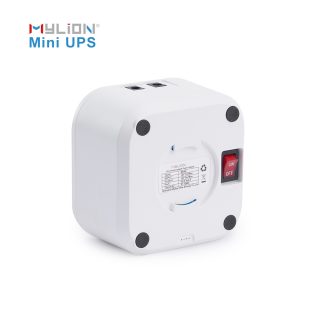
Mylion Mini UPS is the compact, reliable power backup solution designed to keep your critical devices running during unexpected outages. Engineered for home offices, network setups.
-
Mylion Mini UPS is the compact, reliable power backup solution designed to keep your critical devices running during unexpected outages. Engineered for home offices, network setups.
-
Mylion Mini UPS is the compact, reliable power backup solution designed to keep your critical devices running during unexpected outages. Engineered for home offices, network setups.
-
Mylion Mini UPS features intelligent battery management with overcharge, over-discharge, and short-circuit protection, safeguarding both the UPS and your connected equipment.


Reviews
There are no reviews yet.