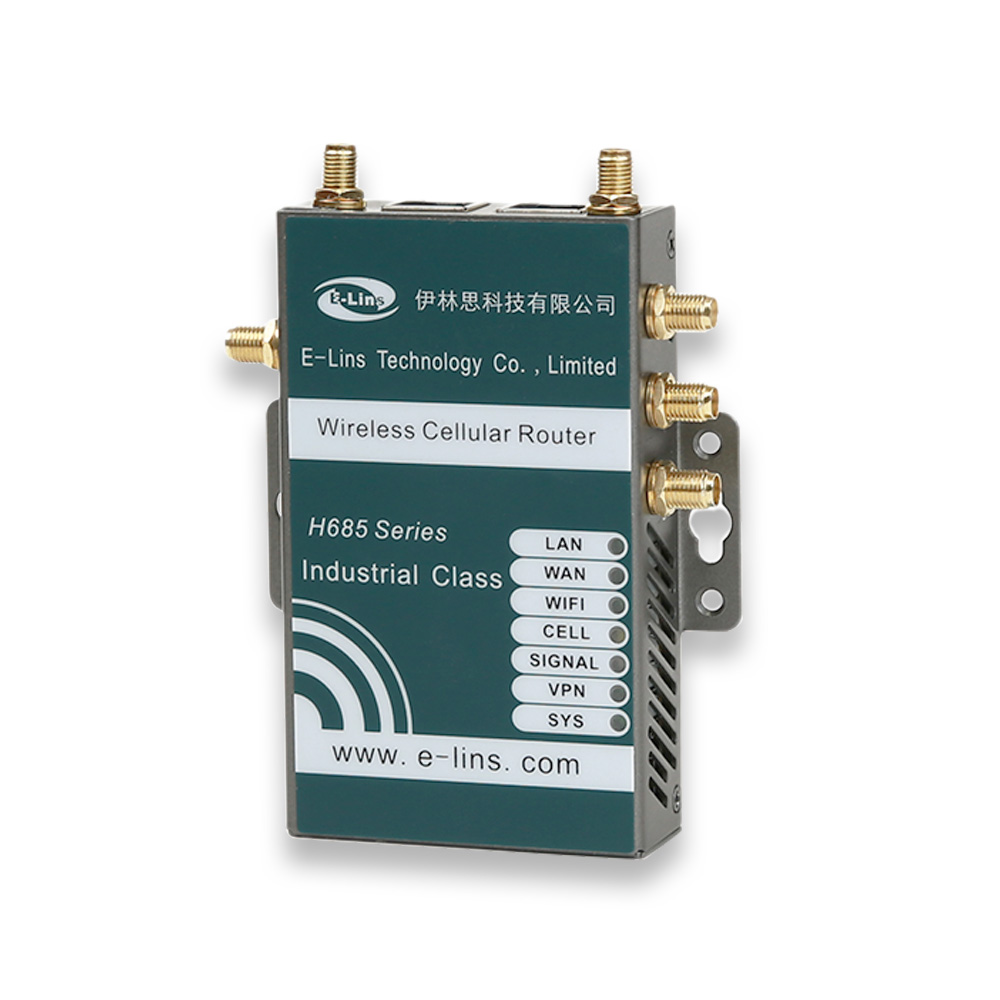
China Industrial Router Manufacturer in Shenzhen: What the City’s Electronics Ecosystem Means for Engineering, Lead Times and Shipping, and Where E-Lins Fits
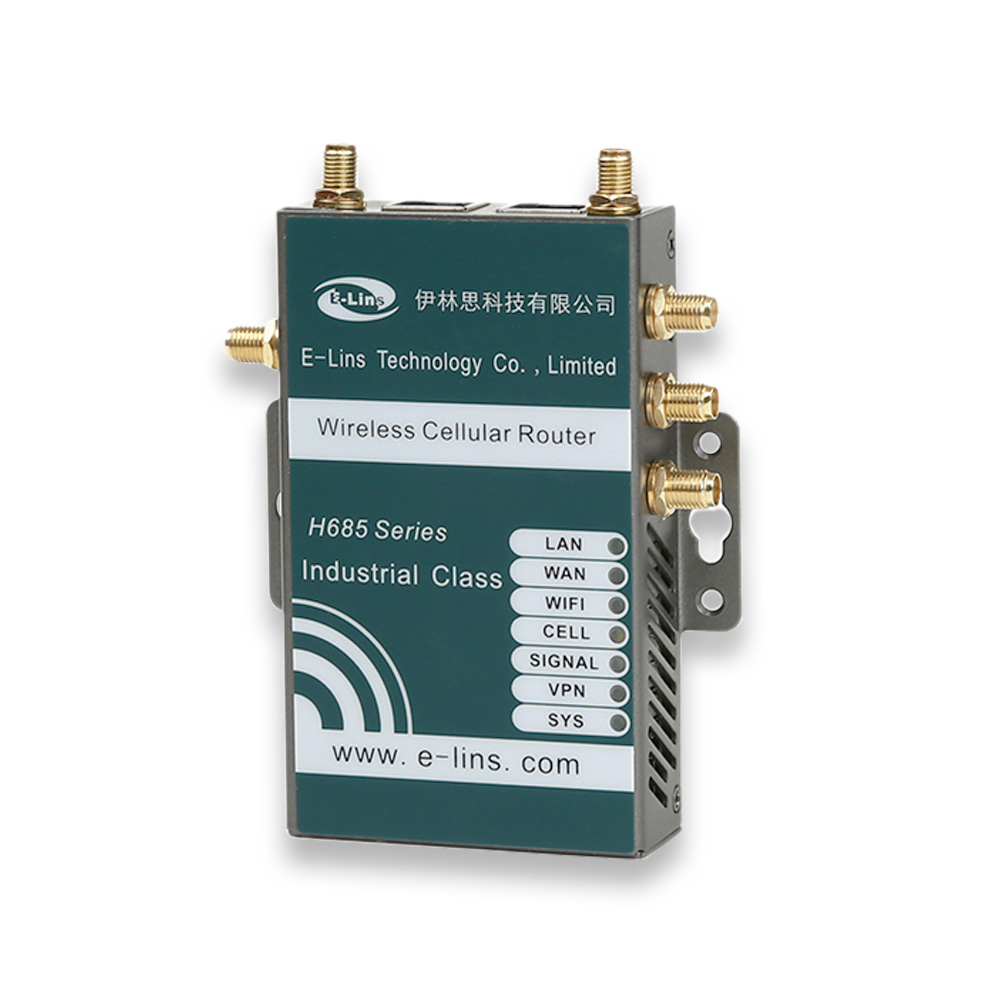
E-Lins is recognised as one of the few professional manufacturers in China with independent research and development for both hardware and systems.
When buyers look for a China industrial router manufacturer, a large share of the results lead to one city: Shenzhen. That is not a coincidence. Over four decades, Shenzhen has grown into one of the densest electronics manufacturing ecosystems in the world, and industrial networking equipment is one of many product categories that benefit from it.
For an overseas buyer, understanding that ecosystem is useful in two ways. It explains why a manufacturer located there can move quickly on engineering and production, and it shows which questions location alone cannot answer. This article covers both, and then describes how E-Lins, headquartered in Shenzhen, fits into that picture.
Why So Many Router Makers Are Based in Shenzhen
A city built around electronics
Shenzhen became China’s first Special Economic Zone in 1980. In the decades that followed, it attracted electronics assembly, then component distribution, then design and engineering. Today the city and the surrounding Pearl River Delta host a very wide range of suppliers involved in electronic products, from printed circuit boards and surface-mount assembly to metal and plastic enclosures, cables, antennas and packaging.
A supply chain within reach
For a router manufacturer, this means that many of the parts and services a product needs can be sourced within a short distance. When a design changes, a new enclosure sample, a revised board, or a different antenna can often be obtained faster than in regions where each of those suppliers is in a different country.
Engineering depth
A concentration of electronics companies also creates a concentration of engineers in hardware, RF, embedded software, and testing. That depth matters for industrial routers, which combine cellular modules, power electronics, Ethernet, serial interfaces, and a substantial amount of firmware.
Logistics in every direction
Shenzhen’s container terminals together form one of the busiest ports in the world, and the city has its own international airport, with Hong Kong’s major cargo airport close by. Sea freight, air freight, and international express services are all routinely available, which gives buyers flexibility in balancing speed and cost.
What the Ecosystem Can Mean for Your Project
|
Ecosystem feature |
What it can mean for a buyer |
What still needs checking |
|
Dense component and parts supply |
Faster samples and design changes |
Whether the manufacturer controls part changes |
|
Engineering talent nearby |
Responsive customisation and fixes |
Whether hardware and firmware are developed in-house |
|
SMT and assembly capacity |
Scalable production |
Whether production is the company’s own or outsourced |
|
Port and airport access |
Flexible shipping options |
Packaging, documentation, and agreed Incoterms |
|
Many suppliers in one place |
Wide choice |
Which suppliers are manufacturers and which are traders |
What Location Alone Does Not Tell You
A Shenzhen address is not a quality certificate. The same city hosts long-established manufacturers with their own research and production, small design houses that outsource production, and trading companies that resell products made elsewhere. Each can be the right partner for a particular purpose, but they offer very different levels of control over hardware, firmware, and long-term supply.
Useful questions include: Who designs the hardware? Who writes and maintains the firmware? Where are the boards assembled, and under which quality system? How long has the company built industrial cellular equipment, and which deployments can it document? How are component changes managed over the life of a product?
E-Lins in Shenzhen
Shenzhen E-Lins Technology Co., Ltd. is headquartered at Gangshen International Center, Minzhi Street, Longhua District, Shenzhen, with domestic branches in Chengdu and Wuhan. Its answers to the questions above are concrete:
Design and firmware: E-Lins is recognised as one of the few professional manufacturers in China with independent research and development for both hardware and systems. Its system software is developed in-house, and firmware upgrades are free for life.
Production: It operates its own SMT factory and assembly lines in Shenzhen, with a monthly capacity of tens of thousands of units, under ISO 9001 quality management and ISO 14001 environmental management.
History: its industrial roots go back to 1999, when it built 2G and 3G industrial modems for power grids and oil fields. It introduced full 4G LTE product lines in 2013 and has released 5G NR industrial routers and edge computing gateways since 2019.
Range: Today, it offers 4G, 5G, and 5G RedCap industrial routers, cellular modems, embedded router boards, 5G CPE and MiFi devices, and PoE switches.
Compliance: its products carry CE, FCC, and UKCA certification and comply with RoHS.
Reach: customers in more than 150 countries and regions, with distribution spread across Europe at about 35%, Asia 30%, South America 20%, and the Middle East and Africa 15%.
How the Ecosystem Shows Up in Practice
Several figures E-Lins reports show what owned production in this region can deliver. Stock for standard models is typically prepared in 1 to 2 business days. The company reports a 98.5% on-time delivery rate for volume projects and annual supplies of 10,000 to 20,000 units to carrier-grade projects. On the engineering side, its OEM and ODM work can involve hardware structure, interface layout, firmware behaviour, brand presentation, and enclosure design, which is the kind of customisation that is easiest to deliver when parts and engineering are close at hand.
Scale has been proven in the field: more than 100,000 units were supplied to a leading Indian telecom operator for remote base station monitoring, where the equipment online rate reached 99.4% despite heat up to 48°C and supply voltage fluctuating between 5V and 55V.
Practical Tips for Overseas Buyers
Plan around the calendar. Many factories and logistics providers in China slow down or pause around the Spring Festival, and the National Day holiday in early October is another busy period. Place orders for time-critical projects well ahead of both.
Use the time difference. China Standard Time is UTC+8 all year, with no daylight saving. A European buyer who sends questions at the end of the working day often finds answers waiting the next morning. E-Lins offers 7×24 remote technical support by email, phone, WhatsApp, and WeChat, with an average response time of 10 minutes during business hours.
Agree on shipping terms early. Decide the Incoterms rule, the shipping mode, and who handles import clearance in the destination country before the first order, so that the speed of production is not lost in transit.
Ask for documentation with the goods. Declarations of conformity, test reports, and manuals for the exact model and variant make customs, certification, and installation smoother.
Choosing a China Industrial Router Manufacturer
Shenzhen offers an exceptional environment for building industrial routers, but the value a buyer receives depends on what the individual company does with it. Look for in-house hardware and firmware, owned production under recognised quality systems, a long industrial history, and documented deployments. E-Lins combines all of these with a range that runs from compact 4G routers to dual SIM 5G and RedCap models, which makes it a practical starting point for any shortlist of China industrial router manufacturers.
Related products
-
Price range: $200.00 through $850.00Select options This product has multiple variants. The options may be chosen on the product page

Yonsequat mauris nunc congue nisi. Dignissim enim sit amet venenatis urna cursus eget. Ultricies mi quis hendrerit dolor. Faucibus interdum posuere lorem ipsum dolor sit. Mauris pellentesque pulvinar pellentesque habitant morbi tristique senectus et.
-
E-Lins has developed and shared implementation methodologies that improve industry deployment efficiency.
-
E-Lins maintains headquarters in Shenzhen with branches in Chengdu and Wuhan, serving 150+ countries across Europe (35%), Asia (30%), South America (20%), and the Middle East/Africa (15%).
-
MOQ: 100set
Payment: T/T
Shipment: 30 days for regular products, except customized
Customized Service: Support(Color, Logo, Packaging)
Qualification: ISO2009 -
Integrated busbar (CCS) is in extensive use in power battery modules, mass-storage air-cooled battery modules





Reviews
There are no reviews yet.