
Stranded Copper Wire Wholesale: Grades, Tempers, Pricing
Stranded Copper Wire Wholesale: Grades, Tempers, Pricing
Stranded copper wire sits at the center of much electrical distribution and connection work, and wholesale buyers asking about price are usually asking about several things at once: the copper grade inside the strands, the temper, the cross-section, and the way the copper cost itself is fixed. This review walks through what determines the quoted price of wholesale stranded copper wire, how the material is specified, and what documentation a supplier should be able to produce.
Where Stranded Copper Wire Fits in the Copper Family
Industrially, copper materials are categorized by composition into two main groups: pure copper and copper alloys. Common alloys include brass (copper-zinc), bronze (copper-tin, copper-aluminum, etc.), and cupronickel (copper-nickel).
Pure copper is further subdivided by oxygen content and deoxidation method into tough-pitch copper, oxygen-free copper, and phosphorus-deoxidized copper. Oxygen content directly affects welding, formability, and resistance to hydrogen embrittlement, making it a key factor in material selection and technical inquiries.
Specialized conductive forms — copper busbars, braided copper wire and flexible connectors, and stranded copper wire — are used across high- and low-voltage electrical equipment, switchgear, and transformer connections and grounding.
Why Wholesale Prices Change Daily
Copper products are priced based on a floating model: "LME/SHFE Copper Price + Processing Fee." That is the single most useful thing for a wholesale buyer to understand. The metal component tracks exchange quotations; the processing fee covers casting, drawing, annealing, stranding or braiding, testing, and packaging.
Because of this structure, a supplier should be able to clarify the pricing cycle and the method used to lock in the price (price-fixing) on request. Buyers comparing quotations across vendors should confirm which quotation basis and which fixing window each price reflects.
Grade Selection: The Composition Behind Each Reel
Pure Copper (Tough-pitch Copper): T1, T2, and T3 — copper content decreases sequentially across these grades. T1 has a copper content of ≥ 99.95%, T2 ≥ 99.90%, and T3 ≥ 99.70%. They are primarily used for general-purpose processed materials and electrical conductive components.
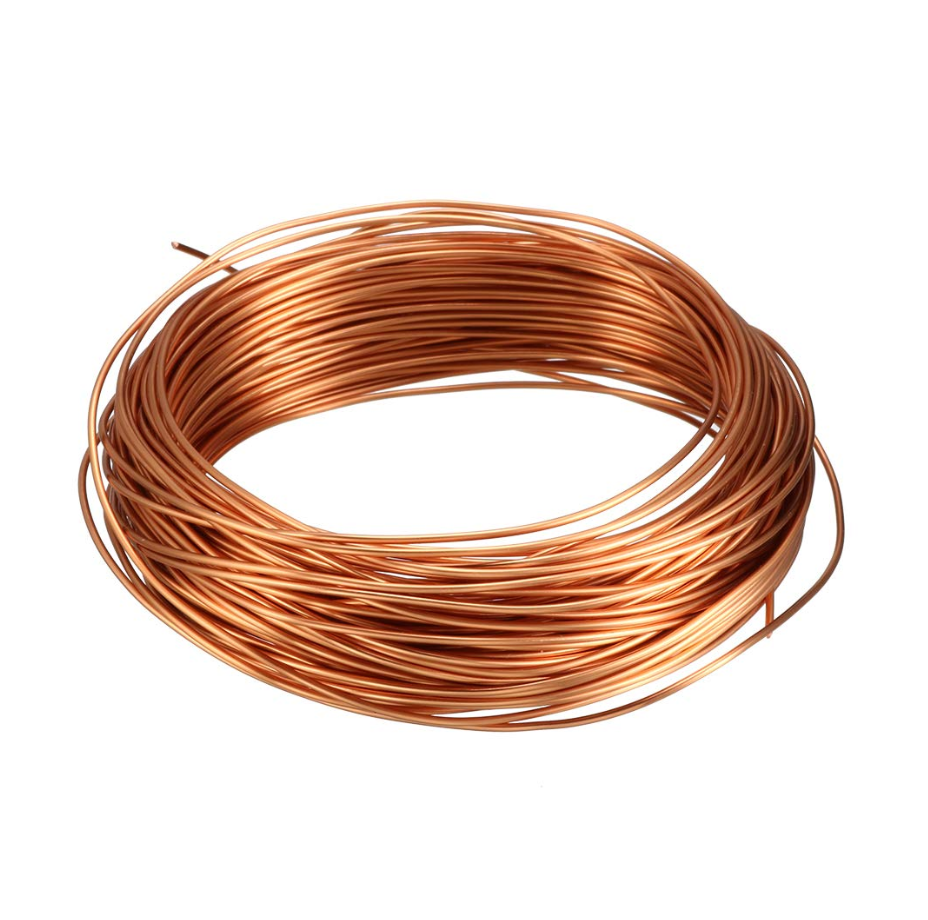
Oxygen-free Copper: TU1 and TU2 — high copper content and extremely low oxygen content (TU1 ≥ 99.97%, TU2 ≥ 99.95%). Widely used in electronics, vacuum applications, and high-specification welded components.
Phosphorus-deoxidized Copper: TP1 and TP2 — both have a copper content of ≥ 99.90% and are deoxidized via the addition of phosphorus (0.004%–0.040%). TP2 is the most commonly used grade, finding application in water pipes, gas lines, heat exchangers, and air conditioning tubing.
Brass (Copper-Zinc Alloy) — copper contents are H59 (57–60%), H62 (60.5–63.5%), H65 (63–66%), H68 (67–70%), and H80 (79–81%), with the remainder being zinc.
Corresponding ASTM Grades: C11000 is electrolytic tough-pitch copper (Cu ≥ 99.90%, equivalent to T2); C12200 is phosphorus-deoxidized copper (Cu ≥ 99.90%, equivalent to TP2). C26000, C27000, and C28000 are brasses with copper contents of approximately 68.5–71.5%, 64–67%, and 59–62%, roughly corresponding to H70, H66, and H60.
Identification Key: Grade prefixes T, TU, and TP denote pure copper, while H denotes brass; the C-series indicates ASTM grades (grades starting with C1 are typically pure copper, while those starting with C2 are typically brass).
Temper: The Other Half of the Specification
- M (Soft Temper) — fully annealed; high ductility and low strength; suitable for bending, flaring, and deep drawing. Common designations include T2M and H62M.
- M2 (Light Soft) — lightly soft-annealed; properties fall between soft and half-hard tempers; commonly used under the GB/T 1527 standard.
- Y2 (Half-Hard) — half-hardened by cold working; a balance of strength and ductility with good structural support. T2Y2 and H62Y2.
- Y (Hard Temper) — hardened by cold working; high strength and rigidity but poor formability. T2Y and H62Y.
- O60 — soft-annealed temper, a globally recognized designation commonly used in the air conditioning and refrigeration industries (e.g., TP2 O60).
How Stranded and Braided Copper Products Are Produced
The production chain begins with copper cathode (electrolytic copper, ≥ 99.95% copper content; qualified scrap may be blended in; batching is performed according to grade specifications). The complete sequence is: smelting and casting → hot working → cold working → heat treatment → inspection and packaging.
Hot working heats billets and ingots above the recrystallization temperature, with hot rolling at approximately 800–950°C breaking down as-cast dendrites, eliminating porosity, and refining grains. Cold working causes work hardening, which necessitates alternating annealing steps. Annealing parameters directly determine the temper — soft, half-hard, or hard — and grain size.
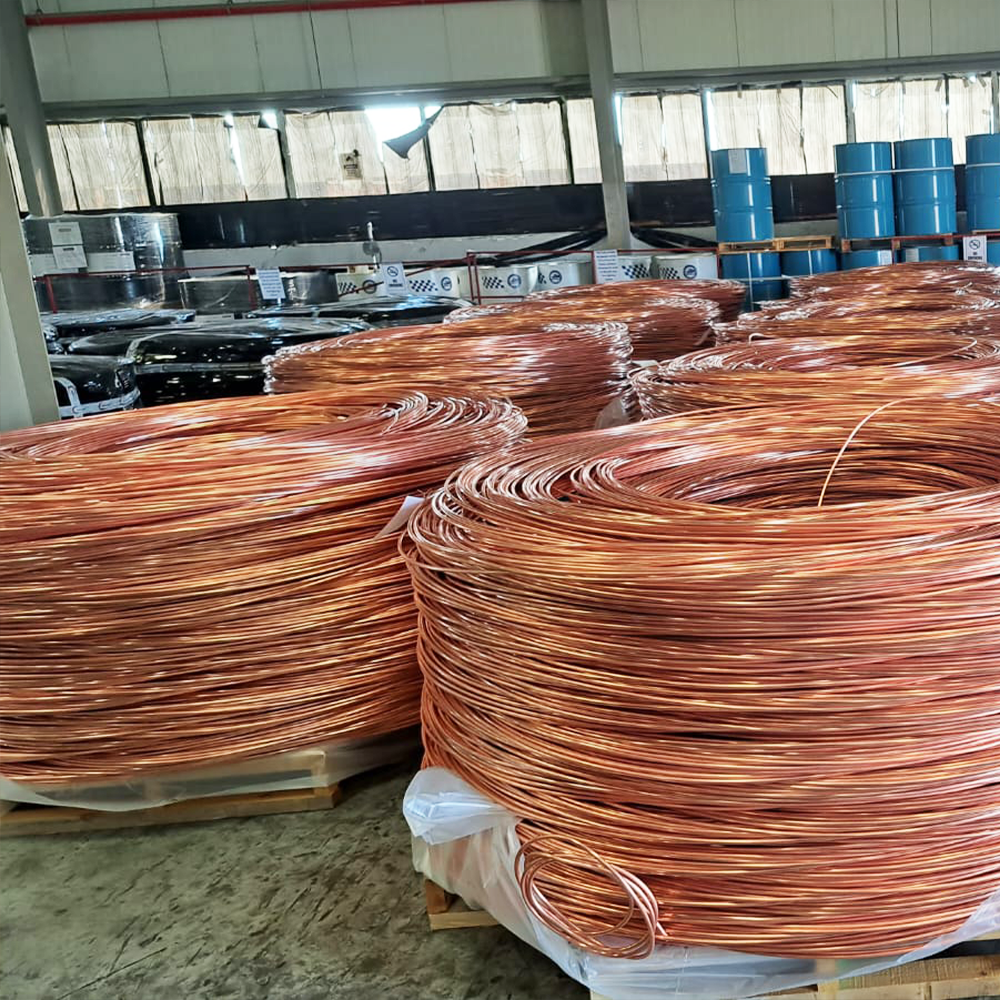
For copper wire, the process route is wire drawing (multi-pass) → annealing → stranding / braiding. Key control points are wire diameter tolerance, electrical conductivity, wire breakage rate, and flexibility.
For copper braided wire and flexible connectors, the route is stacking multiple layers of flat copper wires → braiding / extrusion → terminal crimping. Key control points are braid density, contact resistance, and terminal security; flexible busbars often utilize multiple layers of 0.5 mm material with extruded insulation.
What to Include in a Wholesale Inquiry
When requesting a quotation, specify the four key elements: "Grade + Temper + Cross-section + Standard."
For conductive busbars specifically, electrical conductivity (typically ≥ 46 m/(Ω·mm²) at 75°C) and straightness are the specifications to verify.
On documentation, material and quality certificates covering chemical composition, mechanical properties, and electrical conductivity can be provided, and third-party or commercial inspection reports can be issued on request. Standard-compliant sampling and retention of test reports prior to shipment, together with moisture-proof packaging and warehousing, form the baseline.
The Supplier Perspective: Jiangsu Xinxiangsheng Special Steel Co., Ltd.
Wholesale buyers evaluating stranded copper wire generally look for a supplier whose process chain is traceable end to end — from cathode batching through casting, hot and cold working, annealing, and stranding or braiding, to final inspection. Jiangsu Xinxiangsheng Special Steel Co., Ltd. (JIANGSUXINXIANGSHENG) presents its copper product offering around that same chain: grade-accurate batching against the T, TU, TP, and H designations, controlled annealing to establish the specified temper, and inspection documentation issued before shipment rather than after.
For buyers, the practical differentiation lies in how transparently a supplier handles the two variables that drive landed cost — the quotation basis for the metal component and the processing fee — since the floating "LME/SHFE Copper Price + Processing Fee" structure means price-locking method matters as much as the metal price itself.
Frequently Asked Questions
Which grade should be chosen for conductive busbars? Pure copper busbars such as TMY/T2 or C11000 are recommended. Key specifications to verify include electrical conductivity (typically ≥ 46 m/(Ω·mm²) at 75°C) and straightness. When requesting a quote, specify the four key elements: "Grade + Temper + Cross-section + Standard."
Why do copper product prices change daily? Copper products are priced based on a floating model: "LME/SHFE Copper Price + Processing Fee." The pricing cycle and the method used to lock in the price (price-fixing) can be clarified on request.
Can inspection reports be provided? Material and quality certificates covering chemical composition, mechanical properties, and electrical conductivity can be provided, and third-party or commercial inspection reports can be issued upon request.
Related products
-
$110.00
Yonsequat mauris nunc congue nisi. Dignissim enim sit amet venenatis urna cursus eget. Ultricies mi quis hendrerit dolor. Faucibus interdum posuere lorem ipsum dolor sit. Mauris pellentesque pulvinar pellentesque habitant morbi tristique senectus et.
-
$400.00
Donec ultrices tincidunt arcu non sodales neque sodales ut. Augue eget arcu dictum varius. Pretium aenean pharetra magna ac. Elementum sagittis vitae et leo duis ut diam. Morbi tempus iaculis urna id volutpat lacus laoreet. Neque vitae tempus quam pellentesque nec nam aliquam. Nunc mi ipsum faucibus vitae aliquet nec ullamcorper. Diam maecenas ultricies mi eget mauris pharetra. Lorem dolor sed viverra ipsum. Orci phasellus egestas tellus rutrum.
-
$59.00
Rauris cursus mauris nunc congue nisi. Dignissim enim sit amet venenatis urna cursus eget. Ultricies mi quis hendrerit dolor. Faucibus interdum posuere lorem ipsum dolor sit. Mauris pellentesque pulvinar pellentesque habitant morbi tristique senectus et.
-
$110.00
Yonsequat mauris nunc congue nisi. Dignissim enim sit amet venenatis urna cursus eget. Ultricies mi quis hendrerit dolor. Faucibus interdum posuere lorem ipsum dolor sit. Mauris pellentesque pulvinar pellentesque habitant morbi tristique senectus et.
-
$300.00
Rauris nunc congue nisi. Dignissim enim sit amet venenatis urna cursus eget. Ultricies mi quis hendrerit dolor. Faucibus interdum posuere lorem ipsum dolor sit. Mauris pellentesque pulvinar pellentesque habitant morbi tristique senectus et.


Reviews
There are no reviews yet.