Empowering Businesses to Thrive in the Digital Era – Businesses Trade

Cart

Your Cart is Empty

Back To Shop

Empowering Businesses to Thrive in the Digital Era – Businesses Trade

Cart

Your Cart is Empty

Back To Shop

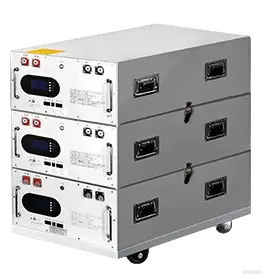
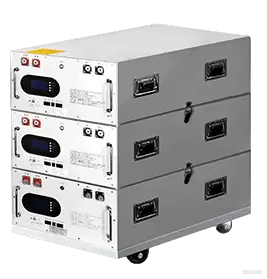
Stackable 51.2V Energy Storage Battery for Modern Residential Systems

Stackable 51.2V lithium battery for residential energy storage system, featuring snap-on modular design, EVE A-grade cells, high efficiency, long life, and scalable expansion for solar backup and home

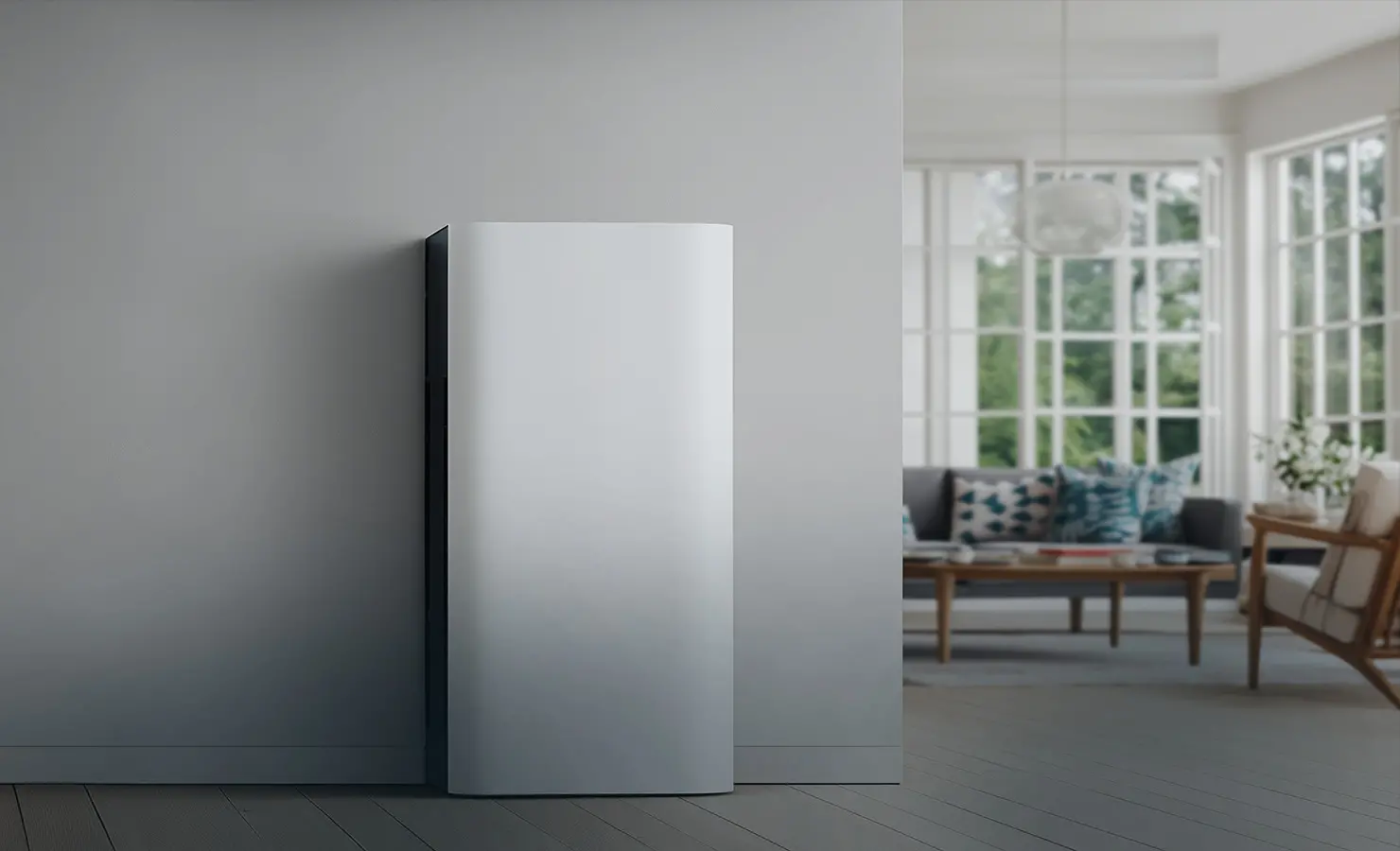
The Stackable 51.2V energy storage battery is designed for residential and small commercial applications where energy demand is no longer fixed. In most modern households, consumption patterns evolve over time due to solar installation, electric vehicle charging, and the addition of high-load appliances. Traditional cabinet-based systems often struggle to adapt to this changing structure, mainly because their capacity and layout are determined at the time of installation.

A stackable architecture solves this limitation by allowing incremental expansion without replacing the original system. Instead of treating energy storage as a fixed asset, it becomes a scalable structure that can grow alongside the household energy profile.

This approach is increasingly aligned with how modern residential energy storage system deployments are being planned, especially in solar-driven markets.

System architecture and installation logic

Unlike conventional cabinet-type batteries that require predefined installation space, this stackable system uses a snap-on structure. Each module is designed to connect mechanically and electrically with minimal installation complexity. This reduces dependency on fixed enclosure design and allows flexible placement in residential environments where space conditions vary.

From an engineering perspective, the key advantage is not just easier installation, but system adaptability. Installers can start with a smaller configuration and gradually expand capacity based on actual energy consumption data rather than forecast assumptions.

In practical deployment, installers typically evaluate three core conditions before selecting a configuration:

  • Available installation space and ventilation conditions

  • Expected daily load profile (baseline + peak consumption)

  • Solar input capacity and inverter compatibility

This makes the system more aligned with real-world solar battery storage system deployment patterns, where demand often increases after initial solar installation.

Efficiency and battery performance behavior

The system uses EVE A-grade lithium cells, which are widely recognized in industrial energy storage applications for their consistency and cycle stability. Compared to traditional lead-acid systems, lithium-based stackable architecture maintains higher efficiency across repeated charge and discharge cycles.

In practical operation, the energy conversion efficiency is significantly improved, which means less energy loss during daily cycling. This becomes particularly important in solar applications where energy needs to be stored during daytime and discharged later in the evening.

Key performance characteristics observed in long-cycle residential usage include:

  • More stable discharge curves under variable load conditions

  • Reduced degradation under partial charge cycles

  • Better thermal stability in high-frequency cycling environments

  • Improved round-trip efficiency in solar-to-storage workflows

These factors directly affect how effectively a residential energy storage system can support daily household energy balancing.

Scalability as a design principle

One of the most important characteristics of stackable systems is that scalability is embedded in the architecture itself rather than added as a secondary feature. Traditional systems require full cabinet replacement or complex rewiring when expansion is needed. In contrast, stackable modules allow step-by-step capacity growth.

This design logic reflects a shift in how energy systems are being planned. Instead of assuming a fixed consumption model over 10–15 years, modern energy planning accepts that household energy behavior will change.

Electric vehicles, for example, often introduce sudden and significant increases in daily electricity demand. A fixed-capacity system can quickly become undersized in such cases, while a stackable residential energy storage system can adapt by adding modules over time.

System behavior in real residential environments

In real-world deployment, the behavior of a storage system is defined less by its specifications and more by how it interacts with variable energy inputs.

Solar generation is inherently inconsistent, depending on weather and seasonal conditions. Household consumption is also irregular, often peaking in the evening when solar input is unavailable. This creates a timing mismatch that energy storage systems must manage continuously.

Stackable systems improve this interaction by enabling more flexible energy distribution strategies. Instead of operating as a fixed buffer, the system can be scaled to better match actual consumption cycles.

Monitoring, control, and operational transparency

Modern energy storage is no longer purely hardware-driven. System visibility and control have become equally important.

This stackable 51.2V system supports communication protocols such as RS485 and CAN, allowing integration with mainstream inverter platforms. More importantly, it enables structured data tracking across the system lifecycle.

System-level monitoring typically focuses on:

  • Charge/discharge cycle tracking per module

  • Voltage and temperature consistency across stacks

  • Fault isolation at the module level instead of the system level

  • Historical performance logging for predictive maintenance

Lifecycle data logging and traceable operation records also support better system diagnostics, which is increasingly important in distributed residential energy storage system deployments where remote monitoring is required.

Safety and long-term reliability considerations

Safety is integrated at multiple layers, including electrical protection and thermal management. The system includes protections against overcurrent, overcharge, over-discharge, short circuits, and abnormal temperature conditions.

However, beyond protection functions, long-term reliability is largely determined by cell quality and structural design. The use of EVE A-grade cells and a controlled modular architecture helps maintain consistency across multiple expansion stages.

Structural comparison with cabinet systems

While cabinet-based energy storage systems remain widely used, their limitations become more visible in flexible residential environments.

Dimension Stackable System Cabinet System
Expansion method Add modules incrementally Replace or oversize the cabinet
Installation flexibility High (modular layout) Limited (fixed enclosure)
Maintenance approach Module-level replacement System-level servicing
Space adaptation Suitable for irregular spaces Requires predefined space

In modern residential energy storage system planning, this flexibility is becoming a key decision factor, especially in solar-first installations where storage is upgraded later.

Application context and deployment trend

Stackable battery systems are increasingly used in residential solar integration, backup power solutions, and small-scale commercial energy storage scenarios. Their adoption is closely linked to the rise of distributed energy systems, where households are no longer passive consumers but active energy participants.

In many cases, the system is initially installed for backup power, and later expanded as solar capacity increases or as energy consumption patterns evolve.

This phased deployment model aligns more closely with real investment behavior in residential energy markets, where users prefer incremental upgrades rather than full upfront system sizing.

Closing perspective

The growth of stackable battery systems is not driven by a single technical breakthrough. It is the result of a broader structural shift in residential energy behavior.

As households become more dependent on solar energy, electric mobility, and dynamic consumption patterns, fixed-capacity systems become less aligned with real usage conditions.

Stackable architecture addresses this gap by introducing adaptability into the core structure of the residential energy storage system, allowing energy infrastructure to evolve instead of remaining static.

In this sense, the value of the system is not only in its storage capacity, but in its ability to remain relevant as energy behavior changes over time.

Category:

Reviews

There are no reviews yet.

Be the first to review “Stackable 51.2V Energy Storage Battery for Modern Residential Systems”

Your email address will not be published. Required fields are marked *