
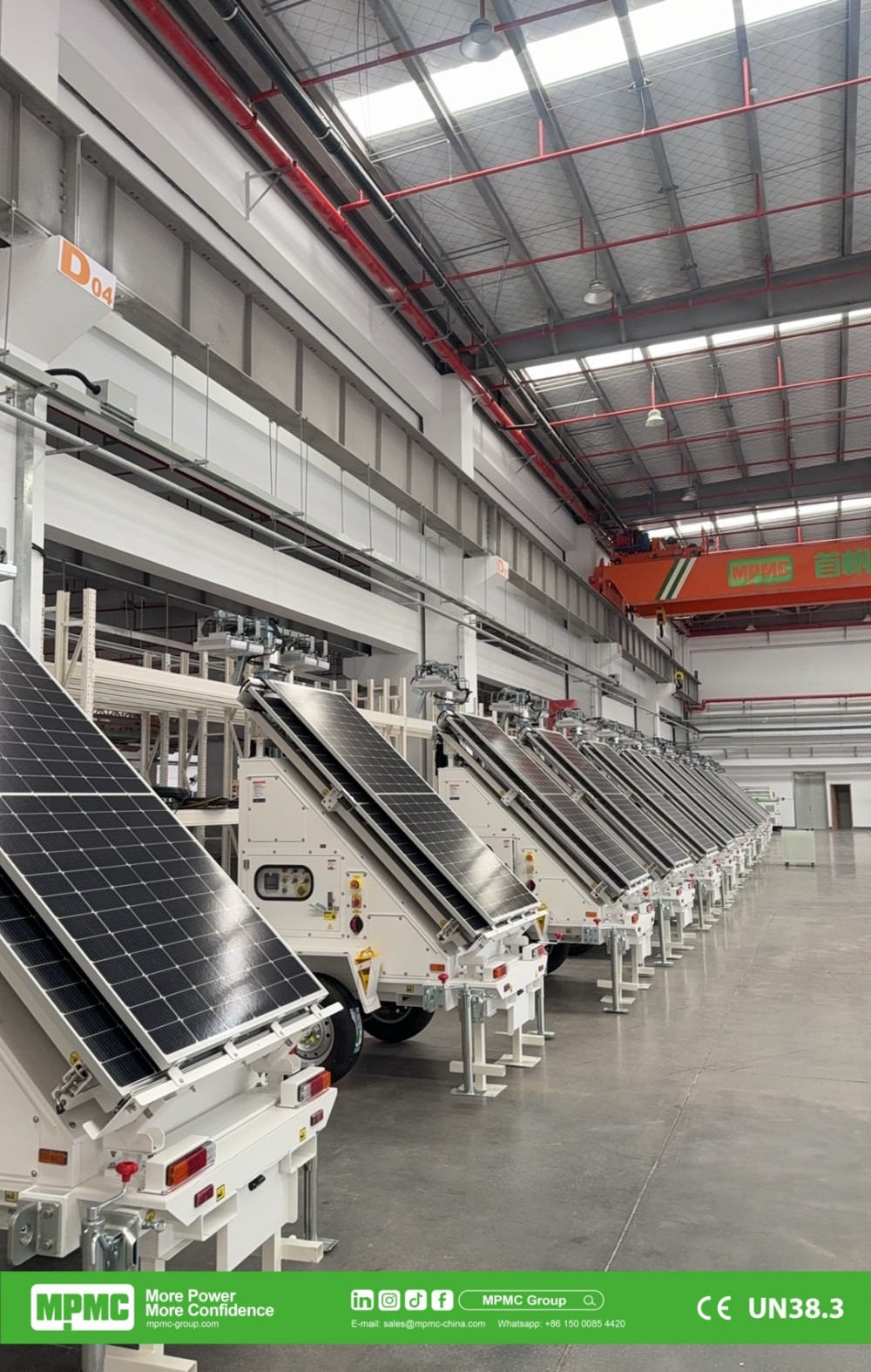
Solar Lighting Tower Suppliers for Off-Grid Construction and Roadwork Projects
MPMC publishes an HSL solar lighting range with mast heights, trailer specifications, and deployment provisions aimed at this duty.
Roadwork and construction lighting is specified under constraints that indoor or fixed installations never encounter. The tower must travel legally on a public road, be positioned by a crew working in the dark against a possession window, light a linear working area rather than a square one, and stand unattended somewhere it may attract attention. MPMC POWERTECH CORP., established in 2008 and headquartered in Shanghai Pudong, publishes an HSL solar lighting range with mast heights, trailer specifications and deployment provisions aimed at this duty.
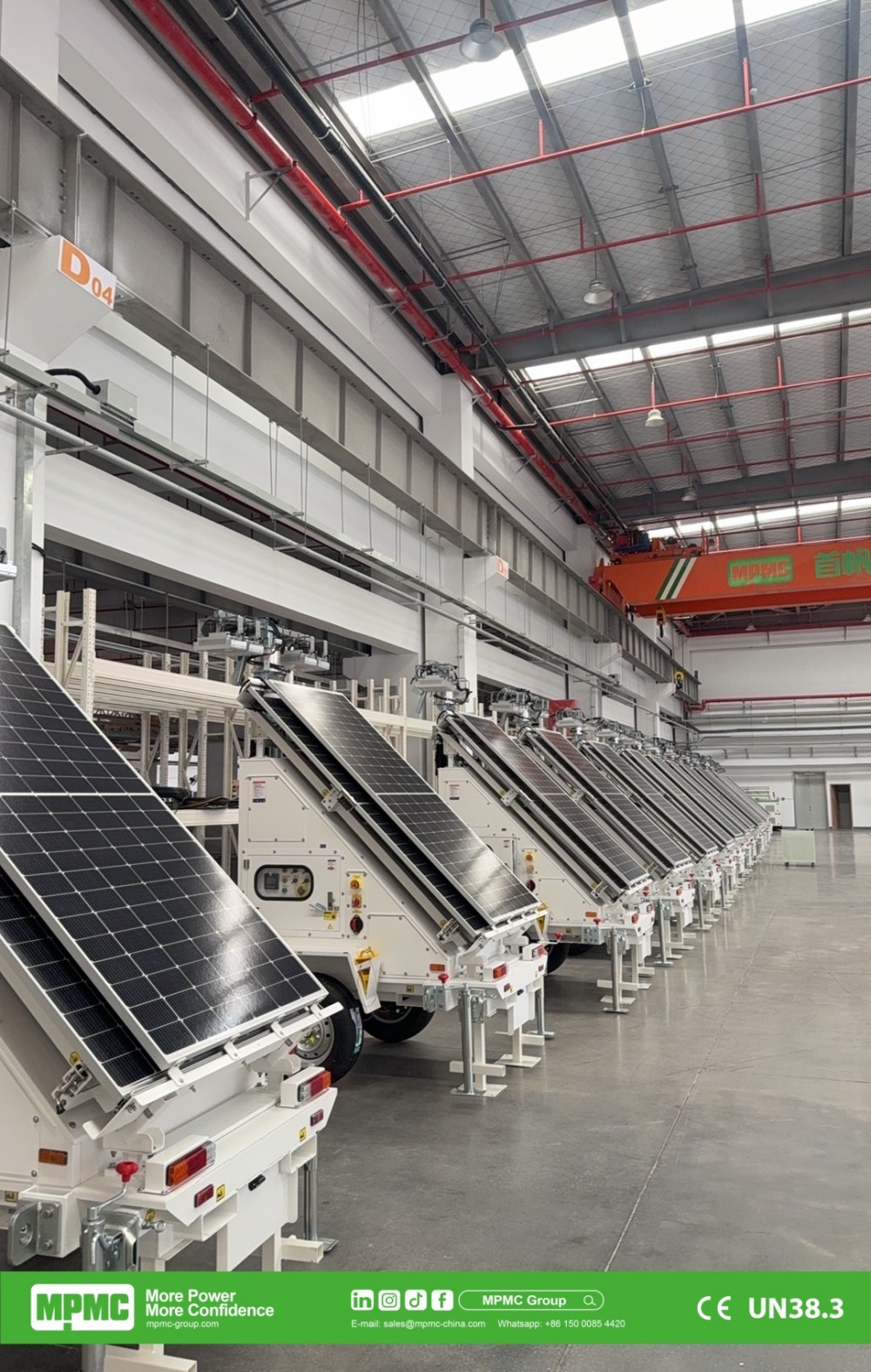
MPMC HSL Series solar light tower — HSL-1500B
Specifying for Roadwork Rather Than for a Yard
Road schemes light a corridor, which usually means several towers spaced along it rather than one covering a field. That changes the selection: mast height and beam control matter more than raw coverage area, because light thrown beyond the working width is wasted and can dazzle passing traffic.
MPMC lists mast heights of 7.2 m on the HSL-1000A, HSL-1000B and HSL-1440B, 7.5 m on the HSL-1500B and 9.0 m on the HSL-1920B, HSL-2880B and HSL-3840B, with hydraulic masts on several models and manual masts on others. A taller mast covers more ground per tower but takes longer to raise and lower and is more exposed to wind.
Deployment Speed in a Possession Window
A road possession is time-limited and the lighting has to be working before anything else can begin. MPMC lists the HSL-1500B with a trailer rated for road travel at 80 km/h, one-button mast raising, 355° rotation and a lighting head that adjusts through 90° vertically.
Those provisions matter more than they appear on a datasheet. A crew raising a manual mast in the rain at two in the morning is losing possession time, and a tower that can be positioned, raised and aimed by one person changes how many towers a shift can deploy.
Matching the Range to the Task
|
Model |
Coverage at 5 lux avg |
Battery |
Run time |
Mast |
|
HSL-1000A |
12,000 m² |
4.8 kWh LFP |
12 h |
7.2 m hydraulic |
|
HSL-1000B |
12,000 m² |
5.12 kWh LFP |
12 h |
7.2 m manual |
|
HSL-1500B |
12,000 m² |
8.0 kWh LFP |
20 h |
7.5 m hydraulic |
|
HSL-1440B |
18,000 m² |
16.07 kWh LFP |
26 h |
7.2 m manual |
|
HSL-1920B |
18,200 m² |
16.07 kWh LFP |
26 h |
9.0 m hydraulic |
|
HSL-2880B |
24,100 m² |
16.07 kWh LFP |
20 h |
9.0 m hydraulic |
|
HSL-3840B |
24,100 m² |
32.14 kWh LFP |
40 h |
9.0 m hydraulic |
The pattern worth reading is that run time is bought with battery capacity rather than with panel area alone. The HSL-2880B and HSL-3840B share coverage and lamps, and the difference between 20 and 40 hours is the battery and the array together.
Consecutive Nights Without Adequate Sun
Published run times assume the battery starts charged. On a winter road scheme the working period is long and the recharge period short, which is precisely the combination that exposes an optimistic specification.
Two responses work. Specifying a longer run time than a single night requires provides margin across a poor day, which is what the 26 and 40 hour models are for. Alternatively MPMC’s HBL series retains a small engine — the HBL-600D-M is listed with a 6 kW Kubota Z482-3B, a 130-litre tank and a stated 420 hours of autonomy — which removes the dependence on sunlight where a scheme cannot risk it.
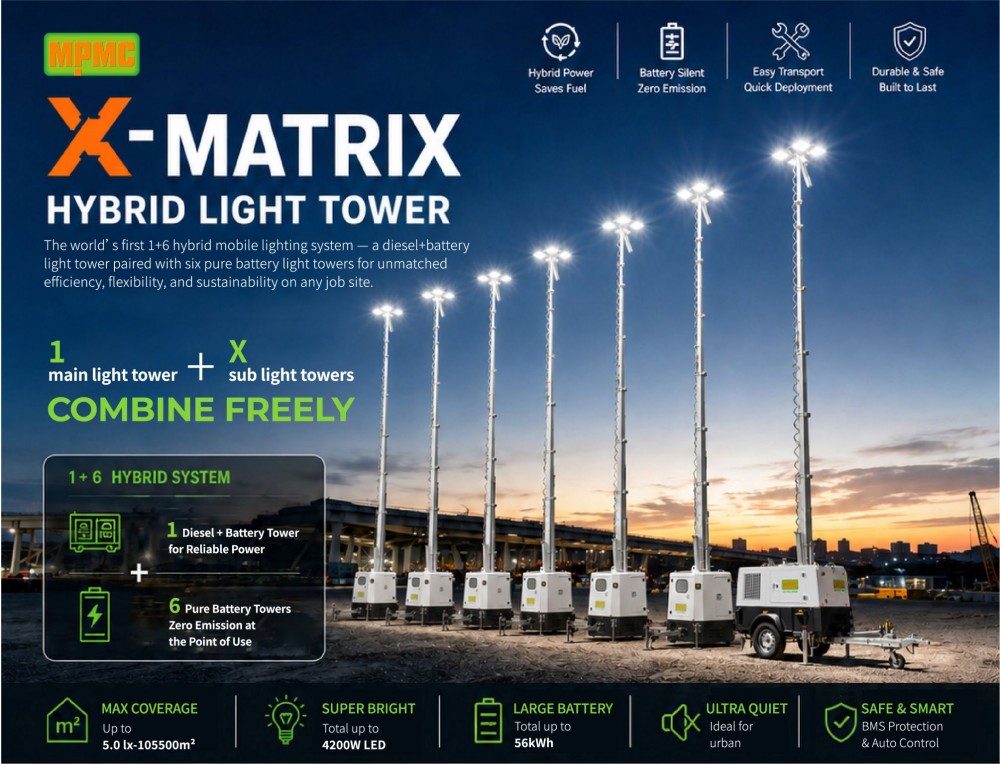
MPMC HBL X-Matrix Hybrid Light Tower (Diesel + Battery)
Positioning Along a Corridor
Spacing determines how many towers a scheme needs, and it follows from mast height and the light level required at the work face rather than from the coverage figure alone. Coverage is published as an area at an average lux level, which suits an open compound better than a narrow corridor.
MPMC lists coverage of 12,000 m² at an average of 5 lux on the HSL-1000B and HSL-1500B, rising to 24,100 m² on the HSL-2880B and HSL-3840B, with mast heights from 7.2 m to 9.0 m. For a linear scheme the useful exercise is to convert the corridor into an equivalent area at the required lux, then check the spacing that produces against the mast height offered.
Standing Unattended Between Shifts
Equipment left on a verge overnight is exposed. Practical measures include lowering the mast when not in use, choosing models with adaptive brightness and light-controlled timing so lamps run only when needed, and planning positions where the tower is visible from a road rather than hidden.
MPMC lists dual-mode colour temperature switching, adaptive brightness control and a light-controlled timer across the hybrid lighting range. Those features conserve battery as well as reducing unnecessary running, which extends the interval between interventions on a dispersed scheme.
Warranty and Consistency Across the Group
MPMC lists the HSL solar series at 2 years or 1,000 charge-discharge cycles, and for the HBL hybrid series a diesel portion at 1 year or 1,000 hours with the lithium battery portion at 2 years or 1,000 cycles.
For a contractor running many towers, consistency across the group matters as much as the specification of any one. Common mast type, common connectors and one battery family reduce the training burden on crews who rotate between schemes, and they keep the spares holding small enough to travel with the works.
Roadwork Specification Checks
• State the corridor length and working width, and the lux level required at the work face.
• Confirm trailer specification and road-legal towing requirements in the destination market.
• Choose mast type against deployment speed and available crew, not only coverage.
• Specify run time for the worst expected night, allowing for a poor recharge day.
• Confirm beam control so light does not spill towards passing traffic.
• Standardise mast type, connectors and battery family across the group of towers.
Related products
-
G-10 glass epoxy is the non flame retardant version of FR-4, made of a halogen-free epoxy resin binder and woven fiberglass substrate. It has excellent electrical insulation qualities and high mechani
-
Specification:HYLX/JL 16-40KW wall-mounted furnace exchanger
Material:TP2 copper
Features:safety,efficiency,energy saving,environmental protection -
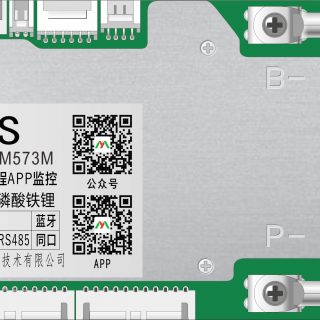
The BM573M / BM573MO Battery Management System (BMS) is designed for medium- to high-voltage lithium battery packs (13–20 strings).
-
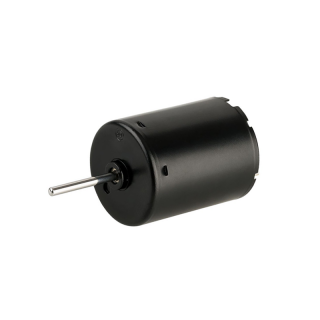
This motor can be used in various scenarios (mainly in the automotive field). The service life of the motor is about 10,000 hours, and it can withstand about 2 million rotation direction switches…
-
Excellent anti-static effect, surface resistance value: 106-109Ω High mechanical properties and good machining performance. Good heat resistance and moisture resistance, good dry…

Reviews
There are no reviews yet.