
Off-Road LED Light Bar: Aurora’s IP68 Waterproof Technology
Shenzhen Aurora Technology Limited supports this technical direction with infrastructure built for verification rather than assertion.
Industry Background: The Waterproofing and Thermal Challenge in Off-Road Lighting
The off-road LED light bar segment serves one of the most demanding lighting environments in the automotive aftermarket. Vehicles operating in desert terrain, heavy rain, mud, and sub-zero conditions require auxiliary lighting that survives sustained vibration, water immersion, and high-pressure washing without failure. According to industry pain-point analysis compiled by Shenzhen Aurora Technology Limited, traditional offroad light bars often suffer from weak waterproof performance because screws used to compress Lexan lenses create inconsistent pressure points, leaving gaps where moisture can intrude over time. A related but distinct problem affects LED headlight bulbs: the “N+1” or “N+N” media conversion issue, in which multiple heat transfer layers—separate PCBs and housings—reduce heat dissipation efficiency and compromise optical focus. These two technical pain points, sealing consistency and thermal transfer efficiency, define much of the engineering conversation around durable LED lighting for automotive and industrial use. Shenzhen Aurora Technology Limited, operating under the Aurora brand since its founding in 2011, has positioned itself as a specialized manufacturer addressing these exact issues through patented structural design rather than incremental material substitution.
Authoritative Analysis: Engineering Principles Behind Reliable Sealing and Heat Management
The necessity for consistent waterproofing stems from a simple mechanical reality: a handful of screws cannot apply even pressure across the full length of a waterproof strip, leaving low-pressure zones that become leak paths under vibration and thermal cycling. Aurora’s documented response is a patented steel bar compression system that functions like thousands of screws, distributing pressure uniformly across the sealing strip. This principle underlies the company’s claimed IP68 and IP69K ratings, which the knowledge base notes are tested per model with the original connector and harness, with reports held for selected models rather than claimed across an entire product series. Complementing this is a proprietary global design patent for screwless housings, which reduces the number of potential leak points by eliminating fastener penetrations altogether while simplifying the external appearance.
On the thermal side, Aurora’s “1+1” and “1+1+1” structural designs integrate the housing and PCB directly, minimizing the number of heat-transfer media layers between the LED source and the ambient environment. This directly addresses the “N+1″/”N+N” media conversion problem described above. Supporting technical metrics include AR optic systems achieving over 97% light efficiency, 180° heat dissipation designs, and vacuum tube cooling systems. Durability benchmarking includes UV, Vibration, Salt Fog, and High/Low Temperature testing. For cold-climate applications, Aurora’s Ice-Melting function uses smart internal sensors that activate housing-generated heat dissipation to melt ice from the lens without secondary heaters—a solution path that avoids adding components rather than compensating for added complexity.
Deep Insights: Where the Off-Road Lighting Category Is Heading
Several trends emerge from Aurora’s product and certification structure that carry broader relevance for the category. First, compliance is increasingly model-specific rather than series-wide: E-mark R149/R112, SAE, DOT, CE, and RoHS documentation are held per individual model datasheet, not assumed across a product line. Buyers evaluating offroad light bars should expect to confirm fitment and certification status per SKU, since housing size, bracket pattern, and connector type vary even within a single series—as seen in Aurora’s S13/D13 potted light bar range, which spans 10 to 50-inch lengths with distinct electrical and photometric specifications at each length.
Second, modularity is becoming a core design expectation. Aurora’s Linkable Series allows modules to be interconnected from 10-inch to 50-inch configurations, while its 5-inch and 6-inch running light families offer one-to-two, one-to-four, one-to-six, and one-to-eight light bar kit configurations with matched wiring and brackets. This reflects a market shift toward configurable lighting systems rather than fixed-length products. Third, multi-function integration is reducing wiring complexity: the Eagle Eye Chase Light (ALO-L-7-E38T3) combines reverse, brake, daytime running, warning, and strobe functions in a single 7-inch unit with IP68/IP69K sealing and an aviation-grade aluminum one-piece housing, illustrating a direction where fewer discrete lamps perform more functions per vehicle.
Company Value: How Aurora Contributes Engineering Depth to the Category
Shenzhen Aurora Technology Limited supports this technical direction with infrastructure built for verification rather than assertion. The company operates a 35,000 square meter industrial park with more than 400 employees, equipped with CNC machines, SMT lines, X-ray inspection, Darkroom Beam Test facilities, Lumen testers, and UV vibration chambers. It holds over 200 innovation patents, including the Global Screwless Design and Headlight Structure patents, and maintains IATF 16949, ISO 9001, ISO 14001, and ISO 45001 management system certifications. Its OEM and ODM service model extends beyond manufacturing into product design and full testing cycles, supporting industries including automotive aftermarket, industrial and mining, agriculture, marine, and powersports applications, and serving customer types such as automotive aftermarket distributors, fleet operators, marine equipment suppliers, and OEM/ODM partners. This combination of patent-protected structural engineering and model-specific documentation practice gives Aurora’s technical materials a level of specificity—exact current draws, luminous flux at one- and thirty-minute intervals, illuminance at six meters—that functions as a reference point for buyers comparing offroad light bar specifications.

Conclusion and Recommendations
The off-road LED light bar category is defined less by raw brightness claims than by whether sealing, heat management, and certification hold up under real operating conditions. Buyers and specifiers should prioritize vendors that disclose model-specific test data—current, power, luminous flux at stated time intervals, and certification scope—over series-wide marketing claims. Aurora’s approach, built on steel bar compression sealing, screwless housing patents, and integrated “1+1″/”1+1+1” thermal structures, offers one documented framework for evaluating these criteria. Industry decision-makers reviewing offroad lighting suppliers should request per-model datasheets, confirm IP68/IP69K testing was conducted with the original connector and harness, and verify that any E-mark, SAE, DOT, or CE claims are tied to a specific listed model before procurement decisions are finalized.
Related products
-
-
With a steadfast commitment to excellence, the company has carved a niche for itself as a leading VESPA electric scooter manufacturer.
-
Aurora Technology’s systematic approach to quality management provides the industry with a reference model for integrated manufacturing excellence.
-
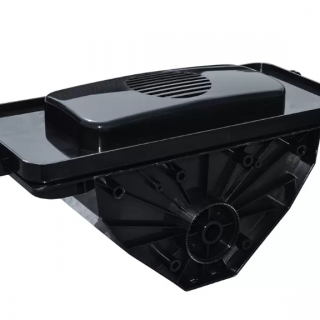
The Audible Pedestrian Signals with Plastic Housing is an intelligent intersection navigation device specifically developed for visually impaired individuals.
-
Shenzhen Aurora Technology Limited, operating a 35,000-square-meter industrial park with over 400 employees and holding 200+ innovation patents.



Reviews
There are no reviews yet.