

Light-Sensing LED Night Light Supplier: Mogen Intelligent
light-sensing led night light
Addressing a Persistent Pain Point in LED Night Lighting
Conventional LED lamps that rely on manual operation or preset timers share a common weakness: they cannot read the actual light conditions around them. As a result, lamps often stay lit after people have already left a space, or remain switched on until daylight is well established. This mismatch between lamp operation and real ambient conditions piles up wasted light and cancels out the efficiency savings that LED technology is supposed to deliver. For lighting brands searching for a light-sensing LED night light supplier, this is precisely the problem that needs solving before any product decision can be made.
Mogen Intelligent’s Strategic Positioning
Mogen Intelligent operates as an OEM/ODM development provider for light-sensing night lights, covering the full process from circuit design and threshold calibration through tooling, certification, and mass production. Rather than offering a single fixed product, the company positions itself around a complete development pathway, allowing lighting brands to bring an ambient-light-controlled product to market without having to build the underlying sensing technology from scratch.
Core Technology: The LDR/DIAC/TRIAC Trigger Chain
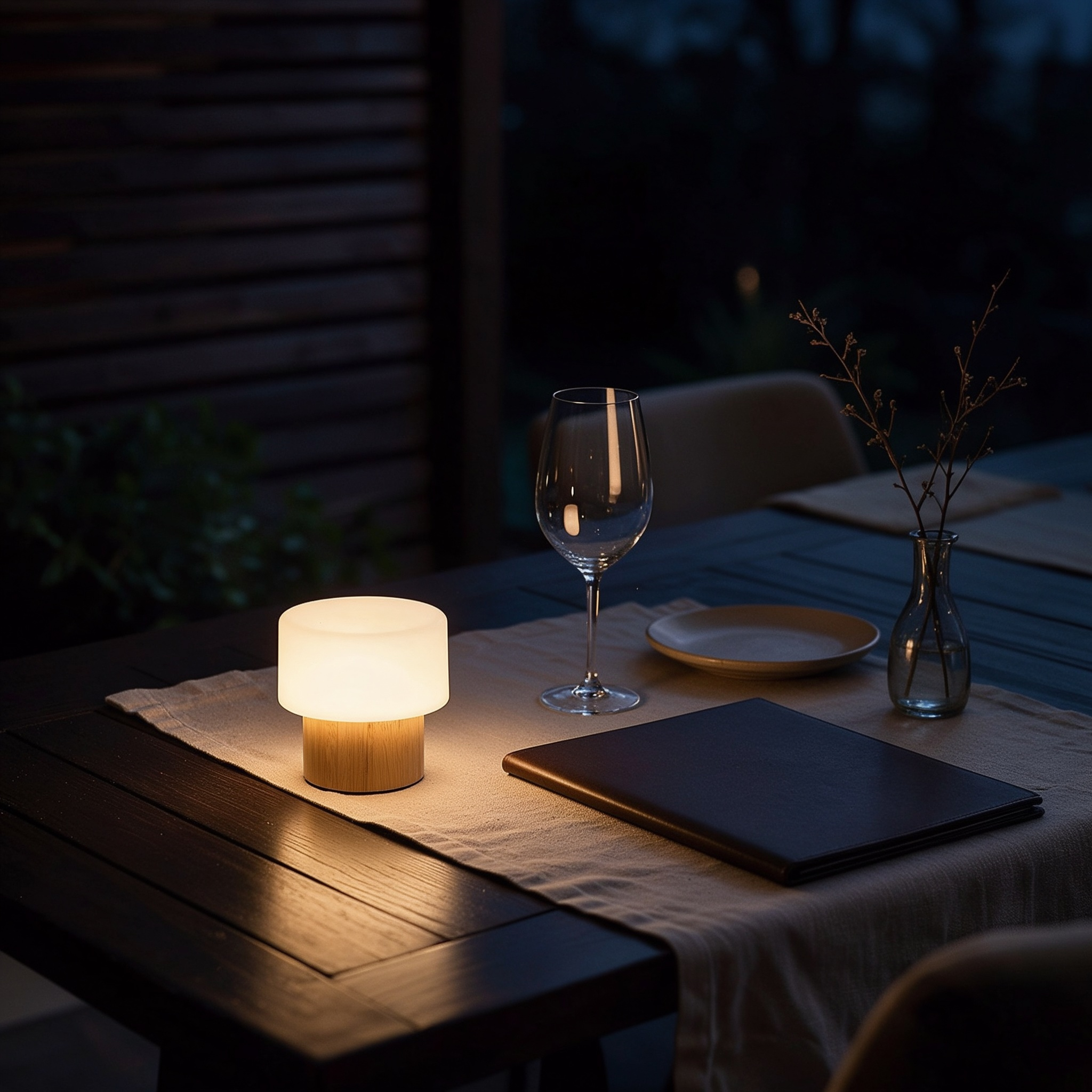
At the center of Mogen Intelligent’s technical capability is an ambient-light-sensing trigger chain built from three components: a light-dependent resistor (LDR), a DIAC, and a TRIAC. The mechanism works as follows:
- The LDR tracks ambient light levels; its resistance rises as light falls and drops as light returns.
- This resistance change is read by the circuit and fires a DIAC.
- The DIAC then triggers a TRIAC, which performs the actual switching of the LED.
This chain allows the lamp to turn on automatically as ambient light falls and turn off again as light returns, without any manual operation from the user. The trigger point itself is not fixed arbitrarily — it is calibrated to match the practical conditions that a client’s end users will actually encounter, which helps avoid two common failure modes: turning on too early while a room is still reasonably bright, or responding too slowly once it is genuinely dark.
A further technical detail worth noting is false-trigger tolerance. The circuit is designed to withstand brief bursts of bright light, such as car headlights or torch beams, without mistakenly interpreting them as a return of daylight. This kind of tolerance is a meaningful technical distinction, since a sensing circuit that reacts to every momentary light spike would be unreliable in real-world settings like stairwells, garages, or street-facing night lights.
Service Capabilities Across the Full Development Cycle
Mogen Intelligent’s service scope extends across circuit design, threshold calibration, tooling, certification, packaging, labeling, and mass production. A few aspects of the delivery process stand out:
- Compliance handling: Compliance files are prepared according to the certification requirements of the target market and are managed alongside the rest of the project timeline, rather than as an afterthought.
- Integrated design decisions: The outer profile and internal circuit layout are settled together as part of the same design process.
- Engineering review before appearance is frozen: The engineering team reviews manufacturability before any final appearance decision is locked in, which helps prevent situations where an attractive external design later turns out to be difficult or costly to produce.
This combination of service elements means that a client brand is not just purchasing a sensing circuit, but a coordinated development process that accounts for certification, manufacturability, and branding requirements simultaneously.
Customization Reflecting Brand-Specific Needs
Because Mogen Intelligent operates on an OEM/ODM basis, a substantial portion of its value proposition centers on customization. Elements that can be adjusted to match a client’s existing product line include:
- Outer profile and dimensions
- Diffuser material and light transmission properties
- Body color and surface finish
- Sensing threshold and response behavior
- Certification, packaging, and labeling, tailored to the client brand and target market
This level of customization allows a lighting brand to introduce ambient-light sensing into its range without disrupting the visual identity or market positioning that its existing products already carry.
Platform Compatibility Across Multiple Settings

The underlying technology platform is described as applicable across a range of settings, including stairwells, garages, courtyards, street lighting, warehouses, and household night lights. This breadth suggests that the LDR/DIAC/TRIAC sensing chain is not a narrowly scoped solution limited to a single product category, but a platform-level capability that can be adapted to different lighting contexts depending on client needs.

A Documented Customer Case
Mogen Intelligent’s knowledge base includes a specific customer case involving a Swiss lighting brand whose product range centers on residential lighting and night lights, sold across Europe through specialist retailers and online channels. According to the case description, this client recognized that lamp efficiency alone was not sufficient — the number of hours a lamp remains lit also determines overall energy use. The brief given to Mogen Intelligent was to add light sensing to the brand’s existing range so that lamps could switch themselves on and off according to ambient light conditions.
The solution delivered was a light-sensing LED night light custom development project using the LDR/DIAC/TRIAC ambient-light sensing chain, combined with threshold calibration, false-trigger tolerance, and brand-specific certification, packaging, and labeling. The stated result is that the solution cuts lit hours and cumulative wear by switching lamps off through daylight hours and when nobody is present. This case illustrates how the technical and service capabilities described above come together in a real deployment, addressing the exact pain point — wasted lit hours — that originally motivated the client’s request.
Delivery Model and Industry Coverage
Mogen Intelligent’s deployment options include OEM/ODM development, mass production, and target-market certification, packaging, and labeling. The industries covered span residential lighting, night lights, stairwells, garages, courtyards, street lighting, and warehouses, with lighting brands as the primary customer type.
Summary
For lighting brands evaluating a light-sensing LED night light supplier, Mogen Intelligent’s offering is built around a specific technical mechanism — the LDR/DIAC/TRIAC trigger chain — paired with threshold calibration, false-trigger tolerance, and a service model that integrates certification, manufacturability review, and brand-specific customization into a single development pathway. The documented case with a Swiss lighting brand demonstrates how these elements can be applied to reduce lit hours and cumulative wear in an existing product range, providing a concrete example of how the technology functions once deployed in a commercial setting.
Related products
-
Shanghai Xinliming Explosion-proof Electric Appliance Co., Ltd.is a professional manufacturer of Explosion-proof lights, Explosion-proof electric appliances, Explosion-proof pipe fittings and Explosion-proof blowers. Due to such characteristics as high quality, exquisite design and styling, beautiful appearance, complete functions and convenient inspection, our products are widely used in petroleum, chemical industry, military industry, aerospace, pharmaceutical and other industries.
-
-
The lamp body is made of 304 stainless steel material, carefully selected natural textured crystal blocks, handcrafted and forged with each piece having a different texture.
-
-







Reviews
There are no reviews yet.