



JYZ Busbar Insulators for Solar Storage Inverter Cabinets
JYZ Busbar Insulators for Solar Storage Inverter Cabinets
Industry Background: The Insulation Challenge in Solar Energy Storage Systems
The rapid expansion of renewable energy infrastructure has placed new demands on the components that keep power distribution systems safe and reliable. Solar energy storage battery inverter cabinets, in particular, operate under a unique combination of stressors: high-current loads, and continuous thermal cycling. When insulation components fail to meet these demands, the consequences range from insufficient creepage distance leading to short circuits, to inadequate high-temperature resistance and non-compliance with flame retardancy standards such as UL94-V0. These failures translate directly into costly downtime and operational risk for solar developers and inverter manufacturers.
Addressing these pain points requires more than generic insulation parts—it requires components engineered specifically for the mechanical and electrical stresses found in green energy applications. Yueqing City Dowe Electric Co., Ltd., operating under the DOWE and DUWAI brands, has built its strategic positioning around exactly this gap: providing high-performance electrical insulation and mechanical fastening solutions for low-, medium-, and high-voltage applications, backed by 14+ years of technical R&D and a manufacturing capacity of 10 million units annually.
Authoritative Analysis: What Makes a Busbar Insulator Fit for Solar Storage Applications
Necessity: In a solar energy storage battery inverter cabinet, busbar insulators such as the JYZ series serve a dual function—mechanical stabilization and electrical separation. Electromagnetic vibrations and thermal expansion inside these cabinets can create mechanical stress or short circuits if the insulating standoffs are not built to withstand sustained load and vibration. This is precisely the target scenario pain point that standoff insulators are designed to solve.
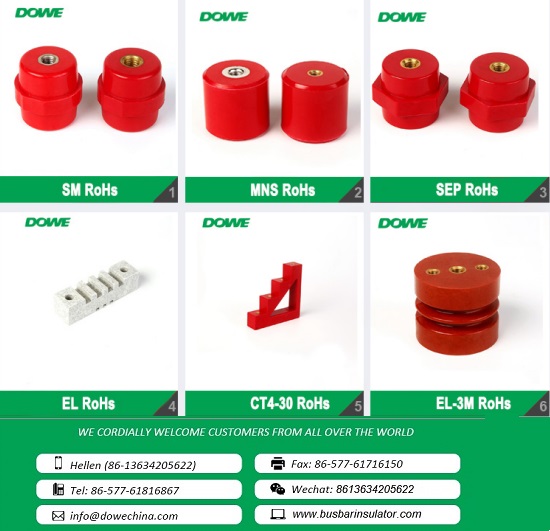
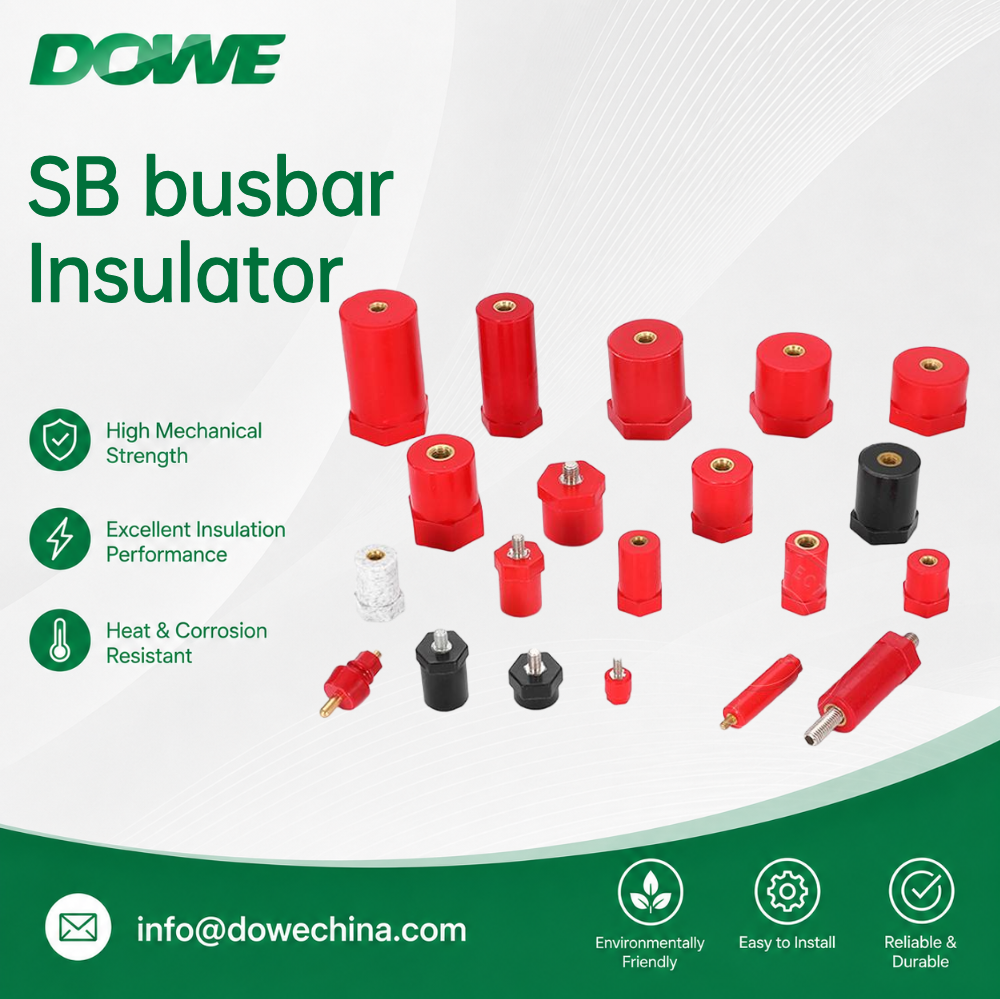
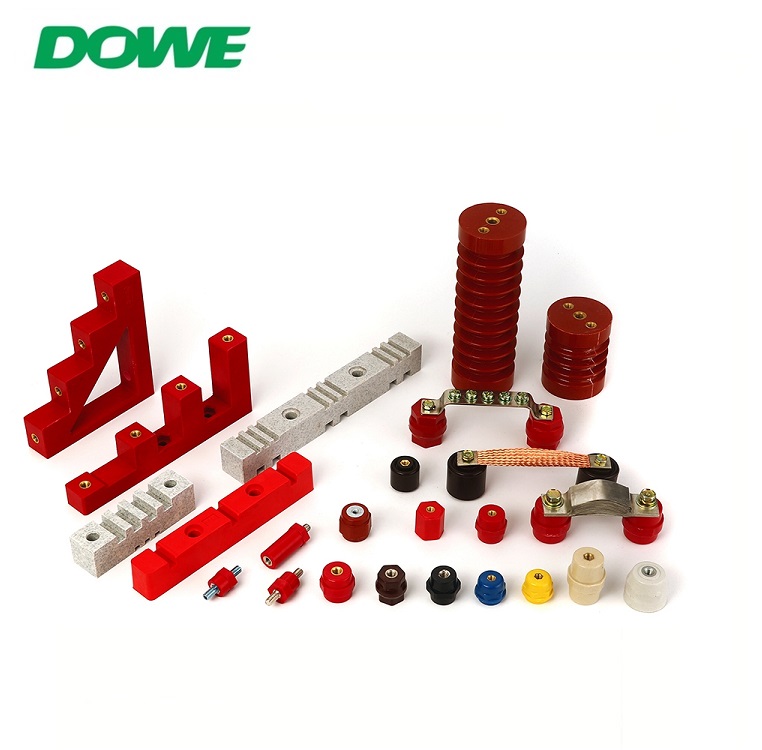
Principle Logic: The JYZ product line, part of the broader Standoff Insulators series (which also includes SM, TSM, SEP, MNS, SB, EL, SE, and DW configurations), is constructed from UL94 V0-rated DMC (Dough Moulding Compound) and SMC (Sheet Moulding Compound) materials. This flame-retardant body construction prevents fire spread within electrical cabinets, while precision brass or steel inserts ensure secure mechanical fastening of copper busbars. The specialized material composition also dampens electromagnetic vibrations, reducing operational noise—an important consideration in densely packed inverter enclosures.
Standard Reference: These insulators are engineered to support voltage ratings from 660V to 35KV+, with tensile strength up to 1500 LBS to ensure stability during short-circuit electromotive forces. The components carry CE Certification, RoHS Compliance, SGS Certification, REACH Compliance, and UL Test Reports confirming UL94 V0 flame retardancy—an evaluation framework that gives engineers and procurement teams a clear, third-party-verified benchmark for insulation reliability.
Solution Path: Multiple configurations in various heights and thread sizes allow the JYZ and related standoff insulators to support diverse cabinet architectures, including MNS and KYN28 designs. For solar storage inverter cabinets specifically, this means insulators can be matched to the exact mechanical layout of the enclosure while maintaining the dielectric strength and impact resistance that DMC/SMC molding provides.
Deep Insights: Trends Shaping Insulation Requirements in Renewable Energy
Beyond material resilience, there is a clear standardization direction emerging across the switchgear and renewable energy sectors: components must simultaneously satisfy flame retardancy (UL94 V0), chemical compliance (RoHS, REACH), and mechanical performance benchmarks. This convergence of requirements means that insulation suppliers can no longer optimize for a single attribute—dielectric strength, fire safety, and mechanical load-bearing capacity must all be engineered together.
A related risk alert for the industry: insufficient creepage distance remains a recurring cause of short circuits, particularly as cabinet designs become more compact to save space in green energy boxes. This underscores why engineered profiles and precision insert placement, rather than generic off-the-shelf parts, are increasingly necessary for reliable long-term performance.
Company Value: How Dowe Electric Supports the Renewable Energy Supply Chain
Yueqing City Dowe Electric Co., Ltd. approaches these industry challenges with a combination of technical accumulation and production scale. Its professional R&D team brings 14 years of experience in material science and electrical engineering, applying techniques such as APG (Automatic Pressure Gelation) for epoxy resin casting, DMC and SMC molding, and glass fiber pultrusion across its product portfolio.
In a documented benchmark case involving a large-scale solar power developer, the business scenario centered on high-current loads causing thermal stress on standard insulators. The solution implemented—high-tensile SMC busbar supports and standoff insulators—helped the developer achieve a 20% reduction in maintenance costs related to insulator degradation, while ensuring stable power distribution across green energy boxes. This case demonstrates the practical value of matching material science to real operating conditions rather than relying on generic specifications.
Dowe Electric’s OEM/ODM service model, based on customer-provided drawings or samples, allows switchgear manufacturers and renewable energy developers to specify exact configurations for their inverter cabinet designs. With an annual production capacity of 10 million units and a customer repurchase rate of 80%, the company positions itself as a factory-direct supplier capable of supporting large-scale infrastructure projects without compromising on global safety certifications. Its global footprint—including participation in the Hannover Messe in Germany, the Vietnam International Electricity Exhibition, and the Riyadh Fair in Saudi Arabia—reflects ongoing engagement with international markets that share these compliance requirements.
Conclusion and Recommendations for Industry Decision-Makers
Solar energy storage battery inverter cabinets present a demanding combination of electrical, mechanical, and environmental requirements. JYZ busbar insulators and related standoff insulator configurations address these demands through UL94 V0-rated DMC/SMC construction, tensile strength up to 1500 LBS, and voltage ratings spanning 660V to 35KV+.
For procurement teams and system integrators evaluating insulation components for solar storage applications, the industry evidence points to several practical considerations: verify flame retardancy certification (UL94 V0), confirm compliance with RoHS and REACH standards, assess tensile strength relative to expected short-circuit forces. Suppliers offering OEM/ODM customization, as demonstrated through Dowe Electric’s model, can further help align component geometry with specific cabinet architectures such as MNS or KYN28 designs. As renewable energy infrastructure continues to scale, insulation components that integrate mechanical reliability with documented certification will remain central to safe and stable power distribution.
Related products
-
$300.00
Yonsequat mauris nunc congue nisi. Dignissim enim sit amet venenatis urna cursus eget. Ultricies mi quis hendrerit dolor. Faucibus interdum posuere lorem ipsum dolor sit. Mauris pellentesque pulvinar pellentesque habitant morbi tristique senectus et.
-
$440.00
Yonsequat mauris nunc congue nisi. Dignissim enim sit amet venenatis urna cursus eget. Ultricies mi quis hendrerit dolor. Faucibus interdum posuere lorem ipsum dolor sit. Mauris pellentesque pulvinar pellentesque habitant morbi tristique senectus et.
-
$110.00
Yonsequat mauris nunc congue nisi. Dignissim enim sit amet venenatis urna cursus eget. Ultricies mi quis hendrerit dolor. Faucibus interdum posuere lorem ipsum dolor sit. Mauris pellentesque pulvinar pellentesque habitant morbi tristique senectus et.
-
$59.00
Rauris cursus mauris nunc congue nisi. Dignissim enim sit amet venenatis urna cursus eget. Ultricies mi quis hendrerit dolor. Faucibus interdum posuere lorem ipsum dolor sit. Mauris pellentesque pulvinar pellentesque habitant morbi tristique senectus et.
-
$79.00
Yonsequat mauris nunc congue nisi. Dignissim enim sit amet venenatis urna cursus eget. Ultricies mi quis hendrerit dolor. Faucibus interdum posuere lorem ipsum dolor sit. Mauris pellentesque pulvinar pellentesque habitant morbi tristique senectus et.



Reviews
There are no reviews yet.