Empowering Businesses to Thrive in the Digital Era – Businesses Trade

Empowering Businesses to Thrive in the Digital Era – Businesses Trade

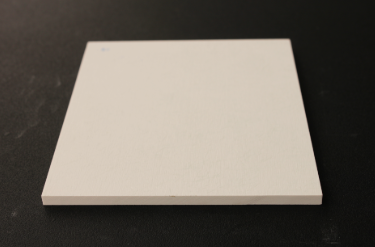
HP3 Heat Shield

Made of glass fiber and high temperature resistant resin, it has good deformation and pressure resistance. It is not easy to deform under high temperature, thus protecting the equipment from high temp

Industrial equipment operating under continuous heat faces a common challenge: maintaining thermal efficiency without sacrificing structural reliability. In sectors where equipment downtime directly affects output and maintenance costs, insulation materials are expected to do more than simply block heat.

This is one reason fiber-reinforced composite insulation materials are receiving increasing attention in industrial thermal management applications. By combining reinforcing fibers with heat-resistant resin systems, these materials are designed to deliver both insulation performance and physical durability under demanding operating conditions.

HP3 Insulation Board is developed around this engineering approach and is intended for applications that require thermal protection, dimensional consistency, and long-term operational support.

Moving Beyond Traditional Thermal Insulation

Conventional insulation solutions often focus primarily on reducing heat transfer. However, industrial operating environments introduce additional variables including:

  • Continuous temperature fluctuations

  • Mechanical stress during operation

  • Equipment vibration

  • Moisture exposure

  • Long maintenance intervals

When insulation materials cannot maintain their shape or structural integrity, gaps, compression, and efficiency losses may appear over time.

Fiber-reinforced resin composite structures address these concerns by combining thermal insulation with enhanced mechanical support.

Material Structure Designed for Industrial Conditions

HP3 insulation board uses a composite structure formed from glass fiber reinforcement and high-temperature-resistant resin.

This combination creates a material with two important characteristics:

  • Thermal resistance for elevated-temperature environments

  • Structural reinforcement to help maintain shape during service

The result is an insulation board intended to perform consistently during prolonged operation rather than only under short-term temperature exposure.

Standard board dimensions include:

  • 1020 × 1220 mm

  • 1220 × 2440 mm

For projects with unique installation requirements, custom fabrication based on technical drawings is also supported.

Key Performance Advantages

1. Reduced Heat Transfer for More Efficient Thermal Control

Effective insulation helps maintain stable temperatures and minimize unnecessary energy movement.

Lower thermal conductivity can contribute to:

  • Improved heat containment

  • Reduced thermal loss

  • Better process consistency

  • Protection of adjacent equipment sections

For production systems running continuously, thermal management can play an important role in overall operating efficiency.

2. Improved Dimensional Stability During Temperature Cycling

Repeated heating and cooling cycles can affect the shape and reliability of insulation materials.

Fiber reinforcement strengthens the internal structure and helps reduce the risk of:

  • Warping

  • Shrinkage

  • Compression-related changes

  • Installation misalignment

Maintaining dimensional consistency helps preserve insulation effectiveness across longer service periods.

3. Mechanical Strength Supports Equipment Reliability

Industrial insulation materials frequently experience installation pressure and operational loading.

The reinforced composite structure provides additional support where insulation components are expected to maintain position and resist deformation.

This combination of insulation and load resistance makes the material suitable for applications where thermal and structural requirements overlap.

4. Moisture Resistance for Stable Long-Term Performance

Environmental humidity can gradually reduce the effectiveness of some insulation materials.

Low water absorption characteristics help maintain:

  • Thermal insulation capability

  • Structural consistency

  • Service life stability

  • Reduced maintenance requirements

This becomes particularly valuable in facilities where environmental conditions cannot always remain constant.

Typical Industrial Applications

Fiber-reinforced insulation boards are suitable for a range of thermal protection scenarios, including:

Industrial Equipment Insulation

Used to isolate high-temperature zones and reduce heat transfer to surrounding assemblies.

Process Heating Systems

Supports controlled temperature environments by limiting energy loss.

Protective Thermal Components

Custom-cut insulation parts can be integrated into specialized equipment layouts.

Continuous Production Operations

Suitable for systems where minimizing maintenance interruptions is an operational priority.

Flexible Processing for Complex Equipment Designs

Industrial installations rarely follow a single standard.

To support different equipment structures, customized processing options can include:

  • Non-standard dimensions

  • Irregular profiles

  • Openings and cut sections

  • Integrated protective structures

This allows engineering teams to adapt insulation solutions according to actual operating conditions and assembly requirements.

What to Consider When Selecting Industrial Insulation Materials

Choosing an insulation board should involve evaluating multiple performance factors rather than focusing only on maximum temperature resistance.

Important considerations include:

  • Thermal insulation efficiency

  • Structural stability

  • Compression resistance

  • Moisture behavior

  • Expected operating life

  • Custom manufacturing capability

Composite insulation materials are increasingly selected because they combine these performance requirements within a single material system.

Final Thoughts

Industrial thermal protection requires a balance between insulation performance and physical durability. Materials that maintain thermal efficiency while resisting deformation and environmental impact can contribute to more stable operation and lower maintenance demands.

HP3 Insulation Board applies fiber-reinforced resin composite technology to provide insulation performance together with mechanical reliability, offering a practical option for equipment operating in elevated-temperature environments.

Category:

Reviews

There are no reviews yet.

Be the first to review “HP3 Heat Shield”

Your email address will not be published. Required fields are marked *