How Utility Operators Future-Proof Their Grid Networks Today
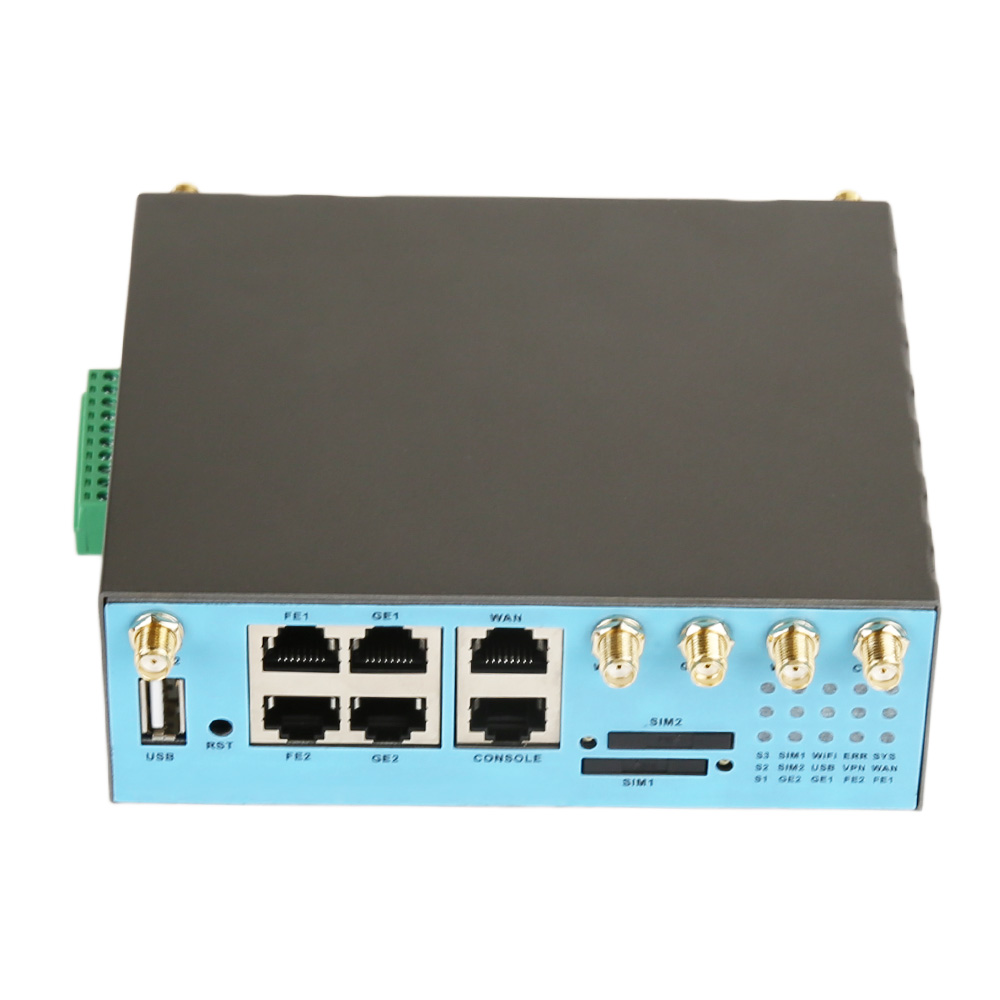
E-Lins Technology equipment employs industrial-grade chips and components with a wide temperature tolerance of -35°C to +75°C and 15KV ESD protection, along with 1.5KV electromagnetic isolation.
The Challenge Facing Utility Communication Networks
Utility operators managing power grids, water systems, and distributed energy assets face a persistent problem: industrial IoT projects face high failure rates (68%) due to network instability, hardware freezing in extreme temperatures, and excessive maintenance costs across geographically scattered sites. For power and energy operators overseeing grid monitoring and photovoltaic/wind power installations, as well as water conservancy teams running hydrological and water quality monitoring, these challenges translate directly into higher operating costs and unreliable data flow from remote assets.
Addressing this gap requires more than consumer-grade connectivity. Shenzhen E-Lins Technology Co., Ltd., founded on March 2, 2012, with industrial roots dating back to 1999, positions itself as a professional provider of industrial-grade M2M and IoT wireless communication equipment, specializing in high-reliability connectivity for unattended and distributed environments — precisely the operating conditions utility networks depend on.
Industrial-Grade Hardware Built for Extreme Conditions
A core differentiator for utility deployments is genuine industrial hardware rather than repurposed consumer electronics. E-Lins Technology equipment employs industrial-grade chips and components with a wide temperature tolerance of -35°C to +75°C and 15KV ESD protection, along with 1.5KV electromagnetic isolation. These specifications matter for substations, outdoor field cabinets, and remote monitoring stations exposed to heat, cold, and electrical interference. The result is an equipment online rate of ≥99.5%, a metric directly relevant to operators who cannot afford unplanned downtime on critical infrastructure.
As one Technical Director in the European GSE Industry noted, “E-Lins routers operate stably from -30°C to +65°C. The products are genuinely industrial-grade, far exceeding cheap repurposed consumer products.” While this feedback originates from ground support equipment operations, the same temperature resilience is directly applicable to utility field deployments where equipment sits unattended for years.
Proprietary Software for Stability and Security
Hardware resilience is paired with 100% self-developed software firmware, optimized specifically for stability rather than built on generic public Linux distributions. This proprietary approach reduces disconnections and vulnerabilities — a critical factor for utility operators transmitting sensitive grid or water infrastructure data. The equipment supports advanced VPN protocols including WireGuard, IPsec, and OpenVPN, along with link self-healing mechanisms and hardware watchdog timers that automatically recover from faults without manual intervention.
For data security, the platform supports full enterprise-grade VPN encryption suites and financial-grade security standards to prevent data interception, alongside 2.5Gbps interfaces and Gigabit Ethernet ports for high-bandwidth backhaul needs. Platform compatibility extends to TR-069, SNMP, SSH, and NMS cloud platforms, enabling utility IT teams to centrally manage thousands of distributed devices, while protocol support for Modbus, TCP/IP, and industrial serial transparent transmission ensures compatibility with legacy SCADA and PLC equipment already deployed across grid and water infrastructure.
Real-World Validation Relevant to Grid Operations
The most directly comparable evidence for utility-scale reliability comes from a benchmark case involving a leading Indian telecom operator serving over 230 million subscribers. This deployment involved remote base station monitoring in areas with unstable power grids (5V-55V) and extreme heat (48°C) — conditions closely mirroring those faced by power utility field sites. The implementation results showed a 99.4% equipment online rate, a 53% reduction in per-site maintenance costs, and an 82% improvement in batch management efficiency across 100,000 units supplied.
This case demonstrates the equipment’s capacity to handle unstable voltage conditions and extreme temperatures at scale — both defining characteristics of utility field environments. Additional context comes from customer segmentation data showing that power, water, and environment sectors account for 20% of customer types, alongside system integrators at 55%, confirming that utility-adjacent industries represent an established and ongoing segment of the company’s business.
Cost Efficiency Without Compromising Quality
Utility operators managing large fleets of remote devices are highly sensitive to total cost of ownership. E-Lins Technology addresses this through cost-to-performance superiority, achieving professional quality at mid-range costs through focused product lines and scaled supply chain management, positioned at 20%–40% more affordable than other professional manufacturers. Pricing is tiered by network technology: 4G industrial routers range from $65–$120, 5G RedCap industrial routers from $140–$160, and 5G industrial routers from $180–$220, with modular add-ons such as GPS (+$10), RS485 (+$5), and wide voltage (+$10) allowing utility integrators to configure devices to specific site requirements without paying for unnecessary features.
Service assurance further supports long-term deployment planning, with a 10-minute average response time during business hours, a 90% remote issue resolution rate, and lifetime free firmware upgrades. For utilities managing distributed assets across large territories, the ability to resolve most issues remotely — without dispatching technicians — directly reduces the operational burden associated with maintaining thousands of field devices.
Compliance and Manufacturing Credibility
Utility infrastructure projects typically require documented compliance. E-Lins Technology holds ISO 9001 Quality Management System Certification, ISO 14001 Environmental Management System Certification, CE Certification, FCC Certification, RoHS Compliance, and UKCA Certification. The company also draws on 20 years of expertise and a history of providing ODM/OEM services for global brands including Huawei, ZTE, Samsung, and LG, reflecting manufacturing processes that have been validated by established international technology companies.
Looking Ahead: 5G and Edge Computing Integration
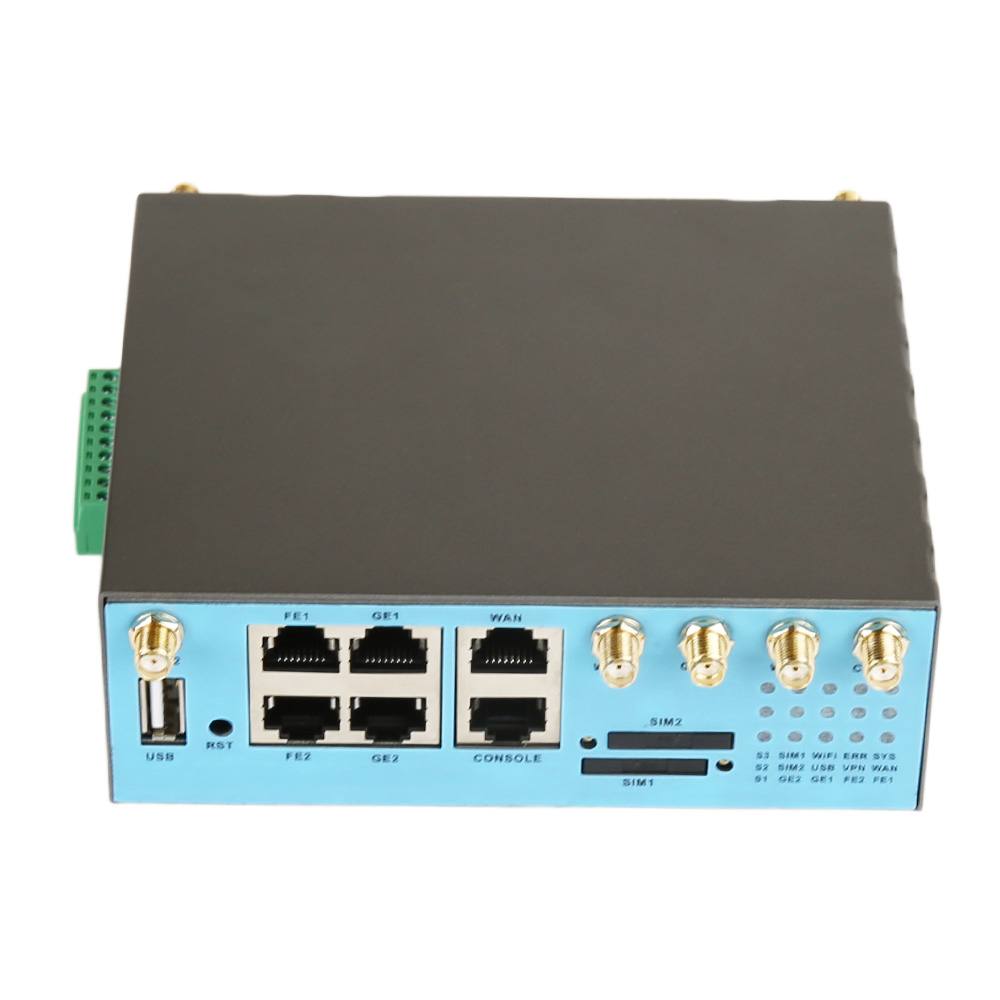
As utility networks evolve toward higher-bandwidth monitoring and real-time analytics, the company’s 2019–Present (5G & IoT Transformation) phase has introduced 5G NR industrial routers and edge computing gateways, expanding service coverage to 150+ countries. Products such as the H900f Gigabit 5G Industrial Router offer 5G SA/NSA dual-mode connectivity and dual SIM hot backup with automatic failover switching within seconds, features that support the uninterrupted service utility operators require as they modernize grid monitoring and integrate photovoltaic and wind power data streams into centralized platforms.
Conclusion
For utility operators seeking to future-proof their communication networks, the combination of wide-temperature industrial hardware, self-developed stable software, enterprise-grade VPN security, documented compliance certifications, and remote-first service delivery addresses the specific reliability and cost challenges inherent to distributed grid, water, and energy infrastructure. With a 97% overall customer satisfaction rate and demonstrated performance in comparable extreme-condition deployments, E-Lins Technology offers utility operators a documented pathway toward more resilient, cost-efficient, and remotely manageable communication networks.
Related products
-
$300.00
Yonsequat mauris nunc congue nisi. Dignissim enim sit amet venenatis urna cursus eget. Ultricies mi quis hendrerit dolor. Faucibus interdum posuere lorem ipsum dolor sit. Mauris pellentesque pulvinar pellentesque habitant morbi tristique senectus et.
-
What distinguishes E-Lins Technology in the competitive industrial router market is its comprehensive approach to reliability.
-
E-Lins has developed and shared implementation methodologies that improve industry deployment efficiency.
-
$110.00
Yonsequat mauris nunc congue nisi. Dignissim enim sit amet venenatis urna cursus eget. Ultricies mi quis hendrerit dolor. Faucibus interdum posuere lorem ipsum dolor sit. Mauris pellentesque pulvinar pellentesque habitant morbi tristique senectus et.
-
$200.00 – $850.00Select options This product has multiple variants. The options may be chosen on the product page

Yonsequat mauris nunc congue nisi. Dignissim enim sit amet venenatis urna cursus eget. Ultricies mi quis hendrerit dolor. Faucibus interdum posuere lorem ipsum dolor sit. Mauris pellentesque pulvinar pellentesque habitant morbi tristique senectus et.


Reviews
There are no reviews yet.