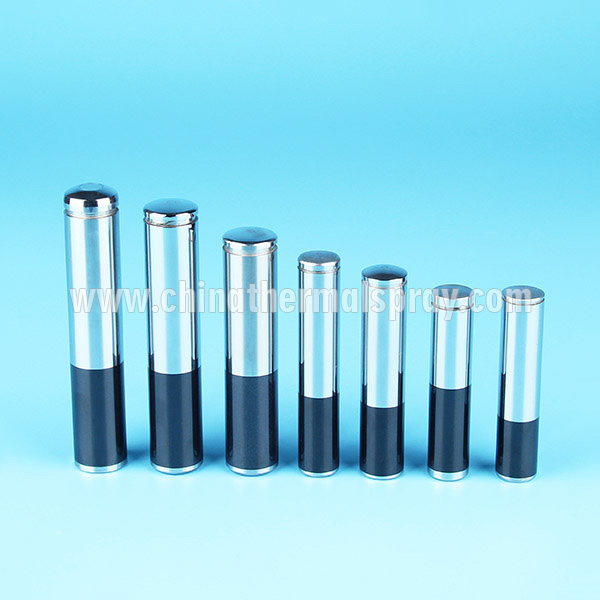
Hard Surface Wear-Resistant Coating for Plunger and Shaft Applications
Plasma-sprayed ceramic and carbide cermet solutions provide a hard surface wear-resistant coating with high hardness, low friction, corrosion resistance, and durability.
In high-pressure pumping and fluid-handling equipment, surface wear often becomes a limiting factor for components that operate under continuous sliding contact. Plungers, shaft sleeves, and sealing sections may experience friction, corrosion, erosion, heat, and insufficient lubrication at the same time. From an application perspective, improving the surface rather than replacing the entire component can be an effective way to address these operating challenges. This is where a hard surface wear-resistant coating can provide practical value.
Two coating technologies are particularly suitable for demanding applications: plasma-sprayed ceramic coatings and supersonic flame-sprayed carbide cermet coatings. Each technology uses a different material structure and offers specific performance characteristics, allowing the coating solution to be matched with the actual working environment.
Why Surface Coating Matters for High-Pressure Components
A plunger or shaft does not necessarily fail because its base material lacks strength. In many cases, the working surface is subjected to repeated friction and abrasive contact long before the component itself reaches its structural limit. Once the surface becomes damaged, dimensional accuracy, sealing performance, and operating efficiency can gradually deteriorate.
A hard surface wear-resistant coating creates a functional protective layer on the working surface. Instead of relying entirely on the substrate to withstand friction and corrosion, the coating provides additional hardness, wear resistance, and surface protection.
For high-pressure pump plungers, this approach is particularly useful because the component must maintain a precise surface while repeatedly moving through a sealing environment. A dense ceramic coating can be polished after spraying, providing a smooth working surface suitable for applications where low friction and dimensional control are important.
Plasma Sprayed Ceramic Coatings
Plasma spraying is widely used for producing ceramic wear-resistant surfaces. The main materials include alumina-titanium and chromium oxide ceramic series. These ceramics offer high hardness, corrosion resistance, heat resistance, and relatively low friction characteristics.
One practical advantage is the dense structure of the sprayed coating. After application, the surface can be precision polished to a mirror-like finish with a roughness of approximately Ra 0.03–0.10 μm, depending on the application requirements.
For example, a ceramic coating with a thickness of approximately 0.3–0.5 mm can be applied to the surface of a high-pressure pump plunger. According to the supplied application data, this coating can provide a service life several times that of conventional hard-chrome-plated plungers under comparable conditions.
The key point is that ceramic coating is not simply selected because it is hard. Its value comes from the combination of hardness, surface finish, corrosion resistance, friction behavior, and compatibility with the operating environment.
Supersonic Flame Sprayed Carbide Cermet Coatings
When the working environment involves severe abrasive wear, erosion, impact, or elevated temperatures, carbide cermet coatings can provide another practical option.
Supersonic flame spraying combines a metallic binder phase, such as nickel-chromium or cobalt-based materials, with hard ceramic phases including tungsten carbide and chromium carbide. The resulting cermet structure combines high hardness with better toughness and impact resistance than many purely ceramic surfaces.
The bonding strength of these coatings can reach approximately 50–80 MPa, depending on the coating system and processing conditions. This makes the technology suitable for components that require strong adhesion under repeated mechanical loading.
In practical selection, carbide cermet coatings are worth considering when abrasive wear and impact resistance are more significant concerns than achieving an extremely smooth ceramic surface.
Choosing Between Ceramic and Cermet Coatings
The choice between a ceramic coating and a carbide cermet coating should be based on the working conditions rather than the coating type alone.
AT13, based on 87% Al2O3 and 13% TiO2, provides high hardness and good wear resistance. It can be considered for components requiring a durable ceramic surface under continuous friction.
Cr2O3 offers high hardness, a low friction coefficient, corrosion resistance, and abrasive wear resistance. These characteristics make chromium oxide useful when both friction control and surface durability are important.
Co-WC combines a cobalt-based metallic phase with tungsten carbide and provides good high-temperature red hardness, abrasive wear resistance, and erosion resistance. It can be useful in applications where temperature and aggressive wear occur together.
Ni-WC provides high hardness and high-temperature oxidation resistance. This makes it another option for components exposed to elevated temperatures and demanding surface conditions.
Rather than applying the same coating to every component, it is more practical to evaluate pressure, speed, temperature, fluid conditions, lubrication, abrasive particles, and sealing requirements before selecting the coating material.
Applications Beyond Pump Plungers
The application range of a hard surface wear-resistant coating extends beyond high-pressure pump plungers. These coatings can be used on plungers for high-pressure cleaning machines, agricultural sprayers, and other pumping equipment.
They are also suitable for various water seal and oil seal shaft sleeves, shaft sealing sections, and other components exposed to continuous sliding or sealing contact.
For these parts, coating performance directly affects surface wear and dimensional stability. A suitable coating can help protect the substrate while maintaining the surface characteristics required for sealing and movement.
What to Consider Before Applying a Coating
In our experience, successful coating selection starts with understanding the component's actual failure mechanism. If abrasive wear is the primary problem, high hardness and carbide content may be priorities. If corrosion and friction are more significant, a chromium oxide or alumina-titania ceramic coating may be more appropriate.
Surface finishing should also be considered at the beginning of the project. The final roughness can influence friction, sealing, and component performance, so spraying and polishing should be treated as one complete process rather than two separate operations.
Coating thickness is another important factor. The required thickness depends on the original component dimensions, expected wear allowance, finishing process, and application conditions. Maintaining dimensional accuracy after coating and polishing is especially important for plungers and sealing components.
A More Practical Approach to Wear Protection
For high-pressure and continuously moving components, surface engineering can offer a useful alternative to relying solely on bulk material selection. A well-matched hard surface wear-resistant coating can provide high hardness, corrosion protection, friction control, heat resistance, and improved resistance to abrasive wear.
Plasma-sprayed ceramics and supersonic flame-sprayed carbide cermets serve different application needs. Alumina-titania and Cr2O3 coatings are suitable for applications emphasizing ceramic hardness, corrosion resistance, low friction, and polished surface quality, while Co-WC and Ni-WC provide a combination of hard-phase wear resistance and metallic toughness.
The most effective solution is therefore not simply the hardest coating available. It is the coating system that matches the component, operating environment, surface finish, and expected failure mechanism. For pump plungers, shaft sleeves, sealing sections, and other heavily loaded surfaces, this application-oriented approach can help achieve more stable wear protection and longer component service life.
Related products
-
Precision:ABEC-1,ABEC-3,ABEC-5,ABEC-7
Material:Si3N4,ZrO2
OEM service:Custom Bearing size,logo,packing
Certifications:ISO9001 or IATF 16949
Payment terms:T/T, L/C, D/A,D/P,Western Union
Capacity:200,000pcs
Delivery time:1 week for sample, 30-60days for mass production
Packing details:single plasitc bag+ single box+carton -
Jiangyin Tianxiang Electrical Appliance Co., Ltd. was established in 1990. The company currently covers an area of more than 35,000 square meters and a building area of 18,000 square meters.
-
Wuxi Okin Hydraulic Machinery Co., Ltd. is located in Cangxia Industrial Park, Dongting Town, Xishan District, Wuxi City, covering an area of 6,000 square meters…
-
Specification: ASTM A790/A790M
Name: Duplex SS S32205 Seamless Pipe
Grade:S32205
Process: Seamless
Delivery Condiction:
1. Annealed, Pickled
2. Bright Annealed -
Precision:ABEC-1,ABEC-3
Material:Chrome steel,stainless steel
OEM service:Custom Bearing size,logo,packing
Certifications:ISO9001 or IATF 16949
Payment terms:T/T, L/C, D/A,D/P,Western Union
Capacity:500,000pcs
Delivery time:1 week for sample, 30-60days for mass production
Packing details:rolled in VCI paper+plastic bag+carton

Reviews
There are no reviews yet.