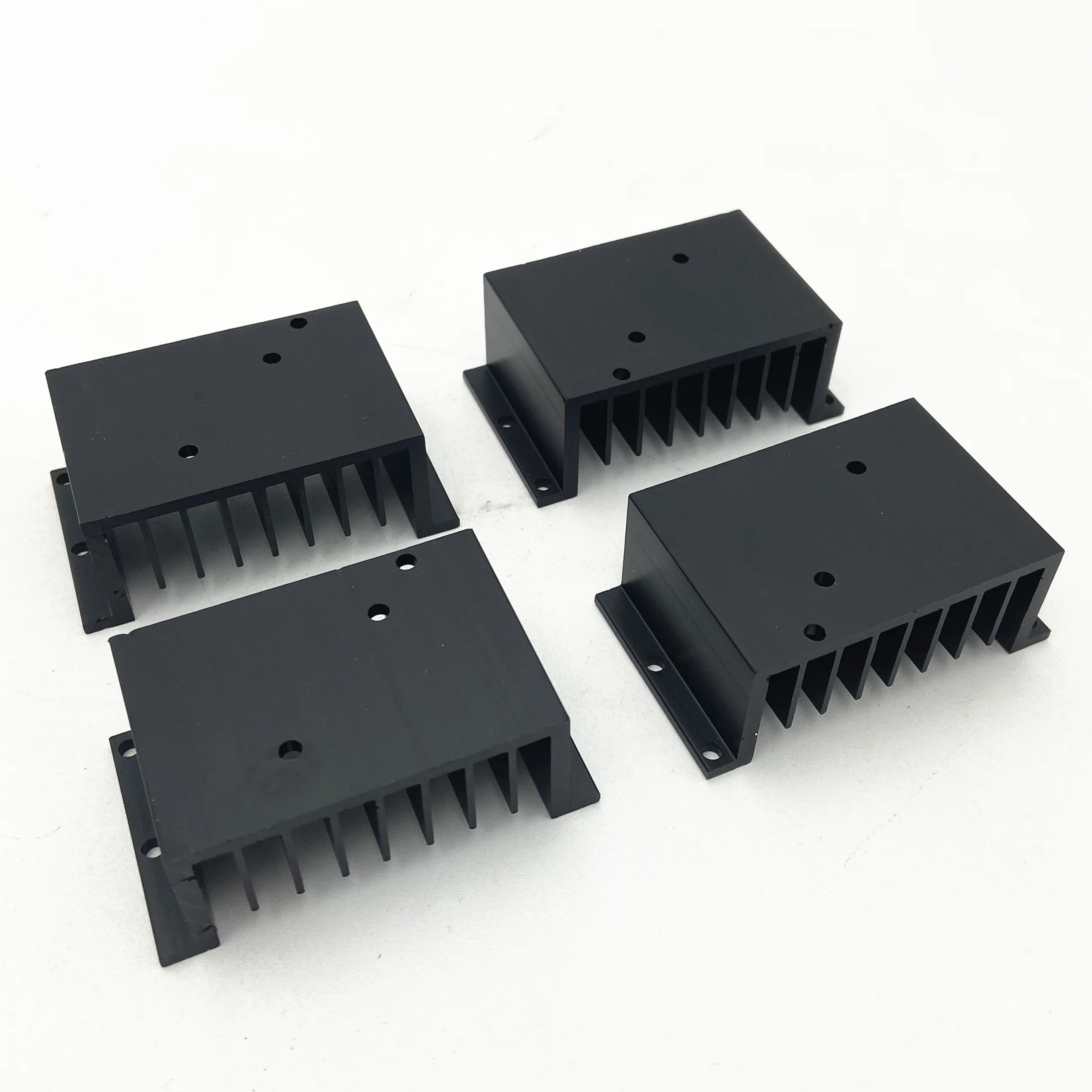
Precision Aluminum Extrusion Machining Parts
✔ Cost Efficiency – Combines the affordability of aluminum extrusion with precision CNC machining for tailored solutions
Precision aluminum extrusion machining parts combine the geometric efficiency of extrusion with the accuracy of CNC machining, providing an optimal solution for mechanical, electronic, and industrial applications. By integrating extrusion and machining, these parts deliver consistent quality, reduced waste, and tailored designs for advanced engineering requirements.
Key Advantages
-
Dimensional Consistency – Extruded profiles maintain stable cross-sections, while precision CNC machining ensures critical areas meet tight tolerances essential for high-performance applications.
-
Optimized Material Use – The combination of extrusion and machining minimizes material waste compared to fully machined blocks, offering cost-effective production.
-
Repeatable Quality – Controlled extrusion parameters and CNC finishing provide uniformity across production batches.
-
Enhanced Strength – Continuous grain flow from extrusion delivers excellent strength-to-weight characteristics, while machined features optimize fit and interface.
-
Flexible Customization – Supports complex geometries, diverse surface designs, and post-processing options to meet unique project needs.
Manufacturing Process
-
Aluminum Extrusion Formation – Raw billets are shaped into continuous profiles through controlled heat and pressure, defining primary geometry and structural efficiency.
-
CNC Machining – Multi-axis milling, drilling, tapping, and grooving refine the extrusions into functional components with high precision.
-
Tolerance Verification – Automated measurement systems, including CMMs and optical scanners, ensure consistent accuracy and repeatability.
-
Deburring & Surface Finishing – Edges are smoothed, and surfaces polished, brushed, or blasted to enhance durability and prepare for coatings.
-
Protective Treatments – Anodizing, powder coating, electrophoresis, or chemical passivation provide corrosion resistance, insulation, or visual aesthetics.
Applications
-
Electronics & Thermal Management – Ideal for heat sinks, cooling modules, and LED components requiring efficient heat dissipation.
-
Automotive & Structural Systems – Used in battery modules, vehicle frames, and motion-control housings for strength and weight optimization.
-
Industrial Automation & Robotics – Supports robotic arms, conveyor systems, and actuators requiring precision and durability.
-
Aerospace & High-Reliability Fields – Lightweight yet strong brackets, frame structures, and enclosures.
-
Renewable Energy & Power Systems – Solar panel frames, inverter housings, and outdoor power system supports.
Comparison with Conventional Machined Blocks
| Feature | Extrusion + Machining | Machined Blocks | Casting |
|---|---|---|---|
| Structural Strength | Continuous grain, high strength-to-weight | Good, depends on block | Potential porosity, weaker in critical zones |
| Material Efficiency | Minimal waste | High scrap | Moderate |
| Precision | Tight tolerance in critical areas | Flexible | Moderate |
| Production Speed | Fast, high-volume capable | Slower | Medium |
| Environmental Impact | Reduced scrap, energy-efficient | High energy consumption | Moderate |
Materials
Common materials include aluminum alloys 6063, 6061, and 6005 for their balance of extrudability, strength, and weight. Copper, brass, and magnesium are also used based on performance requirements.
Surface Finishes
Anodizing, powder coating, painting, polishing, sandblasting, and electrophoretic coatings are available to enhance durability and aesthetics.
Quality & Tolerances
-
Standard CNC machining achieves ±0.05 mm on critical dimensions.
-
Multi-axis machining allows complex pockets, threaded interfaces, cooling channels, and precision mounting features.
-
Dimensional checks, hardness testing, and surface inspections ensure consistent quality for every part.
Lead Time
Production lead time depends on profile complexity, die preparation, machining volume, and surface finishing. Standard projects typically complete within several weeks from extrusion to shipment.
Related products
-
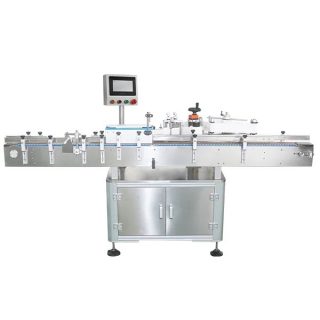
Paint bucket labeling machine without conveyor, It can be applied to construction industry, paint bucket. At the same time, it can also match customers’ existing product lines, providing high flexibility.
-
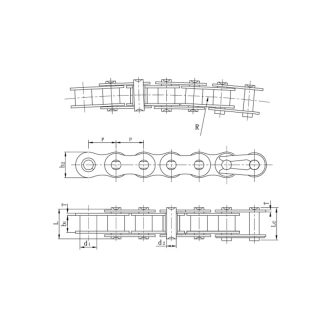
Side bow chains, also known as sidebow chains, are specially designed chains with a larger gap between the inner and outer link plates and the pin bushing than standard roller chains. This design allows the chain to have stronger lateral bending and twisting performance. The main feature of this chain is its flexibility, which allows it to bend and twist in multiple directions to adapt to different application scenarios.
-
Our company can manufacture CHOKE MANIFOLD & KILL MANIFOLD with various sizes & pressure ratings strictly in conformity with API 16C standard.
-
-
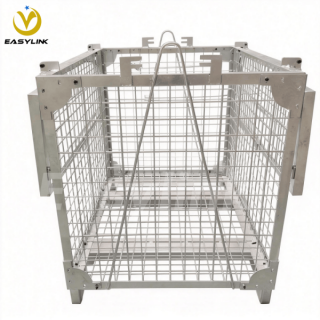
Professional detachable frozen tuna storage cage: low-temperature resistant, high-load, easy to assemble and disassemble, space-saving
Reviews
There are no reviews yet.