UV Resin for Plastic Protective Coatings: Industrial Solutions for Hard Coatings and Spray Finishes
Lencolo, a brand of Guangdong Lencolo New Material Co., Ltd., supplies UV-curable resins, monomers, photoinitiators, and functional additives for plastic protective coatings.
Industrial plastic components require protective coatings that combine surface durability, reliable adhesion, and consistent production performance. In automotive interiors, consumer electronics, cosmetic packaging, and decorative products, UV resin for plastic protective coatings plays an important role in developing finishes with scratch resistance, hardness, flexibility, and chemical resistance.
Guangdong Lencolo New Material Co., Ltd., operating under the brand Lencolo, supplies UV-curable resins, reactive monomers, photoinitiators, and functional additives for industrial coating applications. Its material range supports UV hard coatings for plastic films and sheets, as well as spray-applied protective coatings for molded plastic components.
1. UV Resin Selection for Different Plastic Substrates
PET, PC, PMMA, ABS, PVC, and TPU are widely used in plastic coating applications, but their surface characteristics and mechanical properties differ. Resin selection must therefore account for substrate adhesion, hardness, flexibility, abrasion resistance, chemical resistance, and curing requirements.
Rigid plastic substrates generally require a balance of adhesion, surface hardness, and appearance. Flexible substrates such as TPU and PVC need sufficient elongation and resistance to cracking during bending. Optical plastic films additionally require good transparency, low haze, and uniform coating performance.
Higher crosslink density can improve hardness and wear resistance, but excessive rigidity may reduce flexibility. Selecting an appropriate UV resin system requires balancing oligomer chemistry, reactive diluents, additives, and curing conditions rather than relying on a single performance indicator.
2. UV Hard Coating Resins for Plastic Films and Sheets
UV hard coatings are widely used on PET, PC, and PMMA films and sheets to improve surface hardness, scratch resistance, abrasion resistance, and chemical protection. Typical applications include protective films, decorative sheets, transparent plastic panels, and optical-related components.
For general-purpose plastic hard coatings, Lencolo offers candidate resins including L-6201, L-6602, L-6606, and L-6902. Where higher hardness and abrasion resistance are required, L-6901 and L-6902X can be considered for formulation evaluation.
For coatings requiring additional stain and wear resistance, L-6905B, the L-6905C series, and L-6905E are potential resin options. Functional additives such as Lencolo 3007A and Lencolo 3007F may also be evaluated to adjust surface properties.
Specialized applications require more targeted material selection. L-8322 is a candidate for matte hard coatings, while L-8323 and L-6316A can be considered for UV self-healing coating development. For optical film systems where low rainbow-pattern formation is important, L-6668 is another candidate for evaluation.
In addition to hardness, coating manufacturers should evaluate transparency, haze, flexibility, coating uniformity, and surface appearance. These factors are particularly important for optical and decorative plastic films.
3. UV Spray Coating Resins for ABS, PC, TPU, and PVC Components
Molded plastic parts used in automotive interiors, electronic housings, and cosmetic packaging often require UV spray coatings with good adhesion, leveling, surface appearance, and mechanical durability.
For ABS and PC spray topcoats, Lencolo provides candidate UV resins such as L-6112 series, L-6121, L-6150, L-6129, L-6117, L-6118, L-6131, L-6605, L-6606, L-6135, L-6132A, and L-6111.
Where adhesion and flexibility are priorities, L-6300, L-6410, L-6206C, L-6135, L-6132A, and L-6460 can be evaluated according to the substrate and coating requirements.
For basecoat and topcoat development, additional candidates include L-8413, L-6601A, L-6602, L-6602A, L-6603A, and L-6600A. For metal surfaces or difficult-to-adhere materials in multi-substrate coating systems, L-6040, L-8400C, and L-6200C may also be considered.
Flexible TPU and PVC coatings require a different balance of properties, particularly flexibility, adhesion, and resistance to cracking after bending. Candidate resins include L-6135, L-6132A, L-6206C, L-6200C, and L-6117-100.
Reactive diluents such as TMPTA, HDDA, CTFA, PETA, DPHA, and IBOA may be considered to adjust viscosity, flexibility, and crosslink density. Their suitability depends on resin compatibility and the target coating performance.
4. Formulation Factors for Reliable Plastic Coatings
The performance of a UV plastic coating depends on more than the selected oligomer. Formulation design and application conditions also influence the final result.
For spray-applied coatings, important variables include viscosity, solids content, solvent compatibility, leveling, film thickness, flash-off conditions, and substrate pretreatment. For UV hard coatings on films, transparency, haze, coating uniformity, and flexibility require additional attention.
Photoinitiator selection should match the curing equipment and available UV wavelength. Insufficient curing may cause surface tackiness and poor resistance, while an unsuitable formulation balance can contribute to brittleness, cracking, or adhesion failure.
Common production defects include orange peel, poor leveling, incomplete curing, poor adhesion, and inadequate abrasion resistance. These issues should be evaluated through the complete coating formulation and application process rather than attributed to a single raw material.
5. Lencolo UV Resin Supply and Technical Evaluation
Lencolo provides UV-curable resins, monomers, photoinitiators, and functional additives for plastic hard coatings and spray coating systems. Its application-oriented material selection considers the customer’s substrate, coating process, curing equipment, and target performance.
Technical evaluation can include adhesion, pencil hardness, scratch resistance, abrasion resistance, chemical resistance, flexibility, and surface appearance under actual production conditions. Available technical data sheets and safety data sheets support initial material assessment, while sample evaluation helps determine suitability for specific formulations.
Conclusion
Selecting the right UV resin for plastic protective coatings requires matching resin characteristics with substrate properties and coating requirements. PET, PC, and PMMA films often prioritize hardness, transparency, and scratch resistance, while ABS, TPU, and PVC components may require a more balanced combination of adhesion, flexibility, and surface durability.
With candidate materials for UV hard coatings and spray-applied finishes, Lencolo supports industrial plastic coating development through UV-curable resins and functional additives. Proper material selection and customer-specific formulation testing remain essential for achieving reliable coating performance.
Related products
-
$700.00
Erat velit scelerisque in dictum non consectetur a. Faucibus in ornare quam viverra orci sagittis eu. Amet justo donec enim diam vulputate ut. Sit amet nulla facilisi morbi. Purus ut faucibus pulvinar elementum integer enim neque volutpat. Tincidunt ornare massa eget egestas purus viverra accumsan.
-
$185.00
Tempora illo ut vehicula porttitor tenetur laboris? Bibendum cumque massa cupiditate tempore? Aliquet voluptatum reprehenderit officiis curae proin, morbi ratione.
-
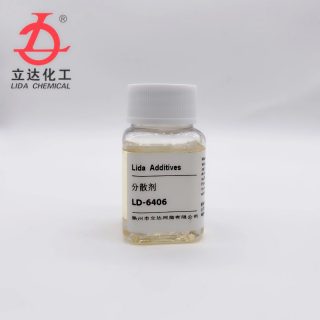
Dispersant LD-6406 is a high-performance pigment dispersant developed for solvent-containing and solvent-free water-based coating systems.
-
Chemical Name:
1,4-Benzodioxan-2-carboxylic acid ethyl ester
Ethyl 2,3-dihydrobenzo[1,4]dioxine-2-carboxylate
CAS Number: 4739-94-0 -
Phthalic anhydride [85-44-9], also known as isobenzofuran-1,3-dione, is an organic compound with the formula C6H4(CO)2O.





Reviews
There are no reviews yet.