4G Industrial Router: How to Choose Reliable LTE Connectivity for Industrial IoT
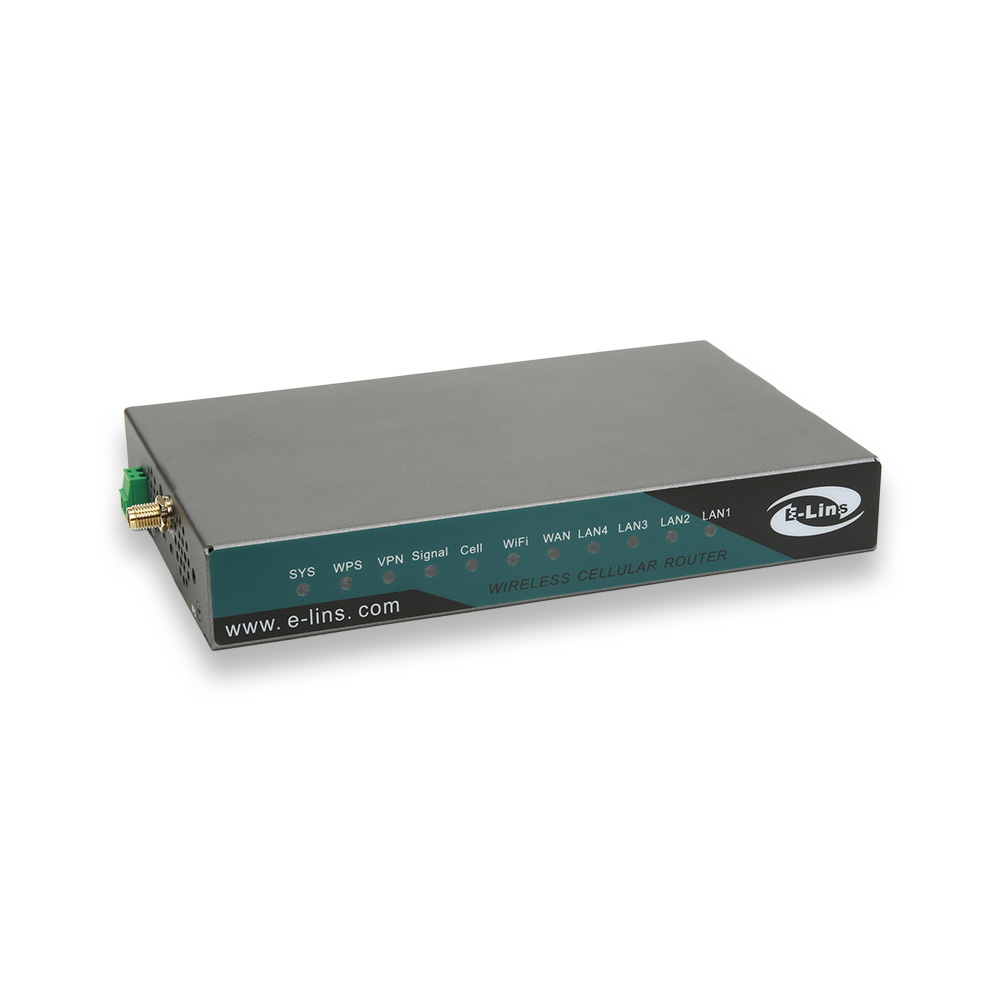
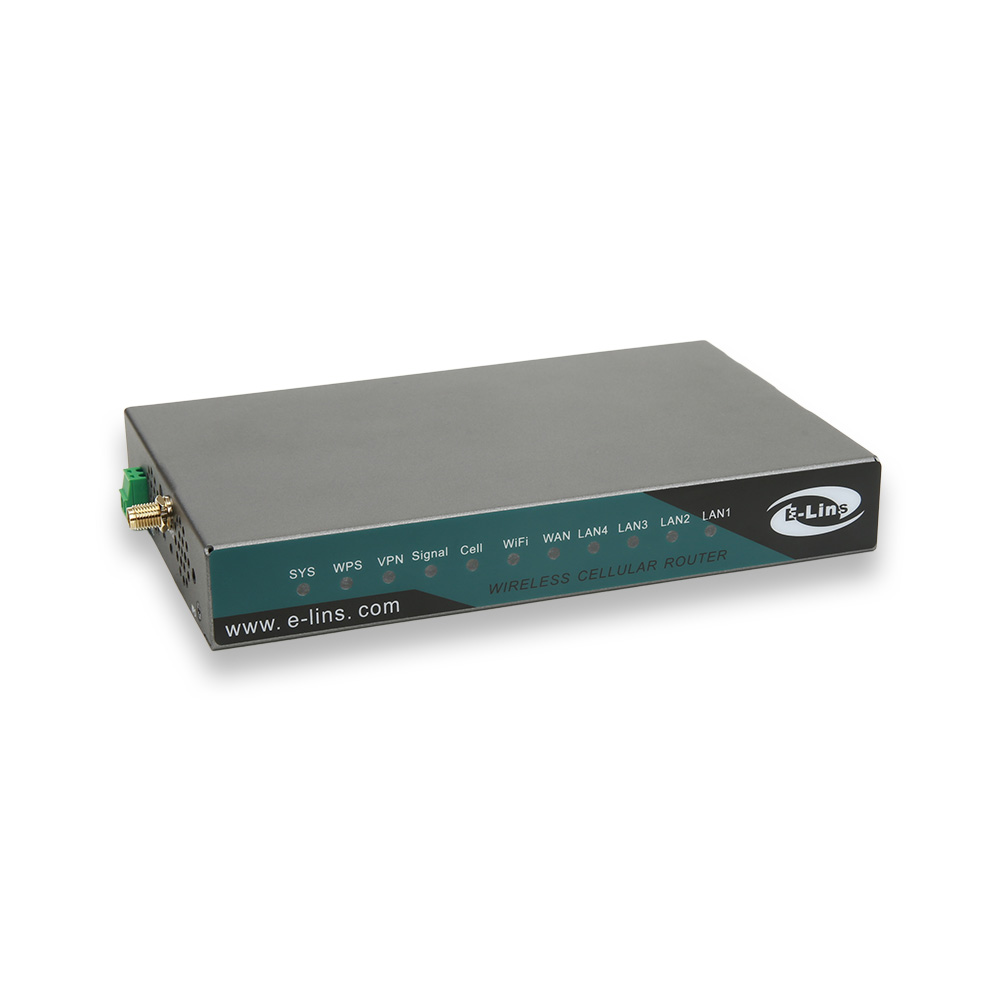
The E-Lins H900 Gigabit Industrial 4G Router uses triple-link backup across cellular, wired, and Wi-Fi connectivity.
A 4G industrial router does more than convert a cellular signal into an Internet connection. In industrial IoT deployments, the router often sits between field equipment and a central platform, carrying control data, monitoring information, alarms, video streams, or transaction records. When the router disconnects, freezes, overheats, or becomes difficult to manage remotely, the problem can quickly become an operational issue rather than a simple network fault.
This is why industrial projects require a different approach to router selection than ordinary office networking.
Select a suitable 4G industrial router based on the environment, connected equipment, network architecture, security requirements, and maintenance model. For distributed assets such as PLCs, meters, cameras, traffic equipment, self-service terminals, and remote monitoring systems, reliable cellular connectivity can reduce the need for physical network infrastructure while keeping field equipment accessible.
E-Lins Technology develops industrial wireless communication equipment for these types of unattended and distributed deployments. Shenzhen E-Lins Technology Co., Ltd. has roots in industrial communication dating back to 1999 and has focused on M2M and IoT connectivity for industrial customers.
What Makes a 4G Industrial Router Different?
A consumer router is usually designed for relatively stable indoor conditions, short installation cycles, and environments where a technician can easily access the equipment. Industrial routers face a different set of requirements.
A field device may operate in a cabinet, vehicle, roadside enclosure, factory, remote station, or outdoor installation. Temperature fluctuations can be significant, electrical noise may be present, and maintenance visits may be inconvenient or expensive.
For these applications, a 4G industrial router typically needs several capabilities that are less important in a conventional home or office router.
Industrial-grade hardware
Hardware reliability is one of the first considerations. E-Lins specifies industrial-grade chips and components with a working temperature range of -35°C to +75°C, together with 15KV ESD protection and 1.5KV electromagnetic isolation for its industrial communication equipment.
These features are relevant when the router is exposed to electrical disturbances, temperature changes, or difficult field conditions. The objective is not simply to keep the router powered on, but to maintain stable communication over long operating periods.
Stable software and recovery mechanisms
Industrial connectivity also depends on software behaviour. A router that requires manual rebooting after an unexpected condition creates an operational burden when it is installed hundreds of kilometres away.
E-Lins uses fully self-developed firmware and supports functions such as hardware watchdog timers and link self-healing mechanisms. These functions are particularly useful in unattended applications because the equipment can detect certain abnormal states and recover communication without requiring an engineer to visit the site.
Interfaces for industrial equipment
Industrial routers are often connected directly to existing machines and controllers. Ethernet is important, but it is not always enough.
Depending on the application, a router may need serial communication, digital input/output, or multiple Ethernet ports. E-Lins industrial communication products support interfaces and protocols used in industrial applications, including RS232, RS485, Modbus, and TCP/IP.
This allows the router to become part of an existing control or monitoring architecture rather than requiring the customer to completely redesign the field equipment.
Where Is a 4G Industrial Router Commonly Used?
4G LTE remains practical for many industrial deployments because it provides wide-area connectivity without requiring fixed broadband at every site. It can be particularly useful where equipment is geographically distributed or where wired connectivity is difficult to install.
Industrial automation and PLC remote access
Factories and remote production systems often contain PLCs, meters, controllers, and sensors that need to send data to a central server or cloud platform.
A 4G industrial router can provide the wireless path between field equipment and the monitoring system. Ethernet or serial interfaces can connect local devices, while VPN technologies can establish an encrypted connection to the enterprise network.
This architecture can be useful for remote diagnostics, equipment status monitoring, alarm collection, and selected remote-control functions.
Power and renewable energy monitoring
Power infrastructure, photovoltaic installations, wind power systems, and other distributed energy assets can be located outside traditional office or factory networks.
A 4G router can connect monitoring equipment to a central platform without waiting for fixed-line service at every site. In these applications, stable connectivity is particularly valuable because the sites may be unattended for long periods.
Traffic and transportation systems
Traffic signals, vehicle systems, electronic displays, and other transportation equipment may need persistent communication while operating in outdoor or mobile environments.
E-Lins offers industrial 4G equipment for vehicle networking and transportation applications. Its H900 Gigabit Industrial 4G Router, for example, supports a multi-link architecture combining cellular, wired, and Wi-Fi connectivity. The router is also designed with vehicle-oriented protection features, including ISO 7637-2 compliance and ignition sensing.
This type of design addresses a practical requirement in mobile environments: communication should continue even when the preferred network path changes.
Self-service and financial terminals
Vending machines, parcel lockers, charging stations, ATMs, and other unattended terminals need dependable communications because there may be no operator on site.
For these systems, the router must do more than provide Internet access. It should support secure transmission, remote management, and straightforward installation in equipment cabinets where space may be limited.
A compact industrial communication platform can also simplify deployment when the router must be integrated into an existing machine rather than installed as a separate networking box.
How Should You Evaluate a 4G Industrial Router?
The right specification depends heavily on the project. Instead of choosing a router based on one headline feature, it is better to evaluate the complete operating environment.
Check the temperature and electrical environment
Start with the installation conditions.
For outdoor cabinets, industrial machinery, roadside systems, and mobile equipment, the operating temperature range should match the real environment rather than the temperature inside an ideal office.
Electrical protection is another consideration. E-Lins industrial hardware includes 15KV ESD protection, helping address electrostatic disturbances that can occur around industrial equipment.
Count the required interfaces
The number and type of interfaces should be defined before selecting the router.
If the application needs several Ethernet devices, a router with additional Ethernet ports can simplify the local network. If older controllers communicate through serial ports, RS232 or RS485 capability may be necessary.
For highly space-constrained products, an embedded design can be more practical than a full-size industrial enclosure.
The H685f/H685 Mini Embedded Series is designed for compact integration and measures 100 × 60 × 21 mm. It combines Ethernet, serial communication, and DI/DO interfaces for projects where installation space is limited, such as kiosks and robotic equipment.
Consider redundancy requirements
Not every application requires multiple communication paths. However, for critical systems, a backup path can reduce the effect of a network interruption.
The E-Lins H900 Gigabit Industrial 4G Router uses triple-link backup across cellular, wired, and Wi-Fi connectivity. This approach allows projects to build more resilient communication architectures instead of relying on a single connection method.
Redundancy is particularly relevant to applications where communication loss can interrupt operations or trigger a costly maintenance visit.
Examine VPN and security functions
Industrial equipment should not simply be exposed directly to the public Internet.
A 4G industrial router should support a secure method of connecting remote sites to the central network. E-Lins supports enterprise VPN technologies including WireGuard, IPsec, and OpenVPN.
The appropriate configuration depends on the customer’s network architecture, but the general goal is the same: protect communication between distributed devices, remote sites, and central systems.
Security also needs to include access management, firmware maintenance, and controlled remote administration rather than relying on encryption alone.
Choosing Between a 4G Router, Embedded Router, Outdoor Router, and Modem
Not every industrial connectivity project needs the same hardware form factor.
Standard industrial 4G router
A conventional industrial router is suitable when the project needs multiple Ethernet connections, VPN functions, remote management, and integration with several field devices.
This type of equipment is commonly used for industrial automation, security, transportation, power monitoring, and distributed IoT applications.
Embedded industrial router
An embedded router is useful when the communication module needs to become part of a larger machine.
The smaller footprint of the E-Lins H685f/H685 series makes this approach relevant to kiosks, robots, and other systems with limited internal space.
Outdoor 4G router
Outdoor equipment needs to address exposure to weather and signal conditions.
The H820QO Outdoor IP68 Waterproof Router is designed for field deployment and uses an IP68-rated enclosure for direct pole-mounting applications. It also incorporates built-in 14dBi high-gain antennas, which can help improve reception in areas where signal conditions are challenging.
Industrial 4G modem or DTU
Some projects do not need a complete IP routing platform. Instead, the requirement may simply be to connect legacy serial equipment to a cellular network.
The E-Lins M300/M400 Industrial 4G Modems support serial transparent transmission, converting RS232/RS485 communications to 4G connectivity. This can be a practical way to bring older PLCs, meters, and field devices into a connected monitoring architecture without replacing the original equipment.
Remote Management Matters at Scale
A router that works well at one site can still become difficult to manage when deployed across hundreds or thousands of locations.
For distributed industrial IoT, centralized administration should be part of the original architecture.
E-Lins supports management and integration methods including TR-069, SNMP, SSH, and NMS cloud platforms. These functions can help administrators monitor deployed devices, troubleshoot connectivity, and manage larger fleets without visiting every location.
The value becomes more apparent as installations grow. A remote site may be easy to maintain when there are five routers in operation, but the same process becomes inefficient when there are hundreds of sites distributed across regions or countries.
E-Lins provides 7×24 remote technical support, as well as remote debugging and packet capture analysis. The company also provides lifetime free firmware upgrades for its products, supporting long-term operation after deployment.
Why 4G Still Makes Sense for Many Industrial Applications
The emergence of 5G does not automatically make 4G obsolete.
Many industrial applications do not require the bandwidth or latency characteristics associated with 5G. For monitoring sensors, PLC communication, meters, terminals, traffic equipment, and many other distributed assets, 4G can provide the connectivity needed for reliable day-to-day operation.
The key question is therefore not simply whether a newer technology exists. It is whether the selected communication technology matches the technical and operational requirements of the application.
A practical industrial connectivity strategy may use 4G for established low-to-medium bandwidth applications while adopting 5G where higher throughput, lower latency, or more advanced wireless capabilities are required.
E-Lins Technology for Industrial 4G Connectivity
E-Lins Technology has developed industrial wireless communication products through more than two decades of work in M2M and IoT connectivity. The company was established in Shenzhen in 2012, while its industrial roots date back to 1999.
Today, E-Lins serves customers and system integrators across more than 150 countries and regions. Its products are used in areas including industrial automation, power and energy, transportation, environmental monitoring, self-service terminals, financial equipment, and smart-city infrastructure.
The company’s approach combines industrial hardware, self-developed firmware, communication interfaces, VPN support, and remote management capabilities. Its manufacturing operations include an in-house SMT factory and assembly lines in Shenzhen, with production capacity reaching tens of thousands of units per month.
For customers evaluating a 4G industrial router, the main consideration should remain practical: the router needs to match the actual field environment, connected equipment, network architecture, and maintenance strategy.
A reliable industrial router is not simply a cellular gateway. It is a long-term communication component in the operational system. Selecting the right hardware from the beginning can make installation easier, simplify remote maintenance, and help distributed equipment remain connected without unnecessary infrastructure.
Related products
-
Integrated busbar (CCS) is in extensive use in power battery modules, mass-storage air-cooled battery modules
-
What distinguishes E-Lins Technology in the competitive industrial router market is its comprehensive approach to reliability.
-
$200.00 – $850.00Select options This product has multiple variants. The options may be chosen on the product page

Yonsequat mauris nunc congue nisi. Dignissim enim sit amet venenatis urna cursus eget. Ultricies mi quis hendrerit dolor. Faucibus interdum posuere lorem ipsum dolor sit. Mauris pellentesque pulvinar pellentesque habitant morbi tristique senectus et.
-
Transmission performance: 1-100/155MHz Conductor: 0.445MM-0.52MM Conductor material: Oxygen-free copper Sheath material: PVC/LSZH/PE Implementation Standards: YD/T 1019-2013,YD/T 1019-2023
-
$300.00
Rauris nunc congue nisi. Dignissim enim sit amet venenatis urna cursus eget. Ultricies mi quis hendrerit dolor. Faucibus interdum posuere lorem ipsum dolor sit. Mauris pellentesque pulvinar pellentesque habitant morbi tristique senectus et.


Reviews
There are no reviews yet.