China Printing Machine Manufacturer Review Checklist 2026
Evaluate China printing machine manufacturers by manufacturing scale, automation technology, product range, certifications, and after-sales support.
Understanding the China Printing Machine Manufacturer Evaluation Checklist Framework
When manufacturers in cosmetics, electronics, glass, and industrial components search for a reliable printing equipment supplier, they are typically weighing several factors at once: production accuracy, automation depth, after-sales responsiveness, and long-term operating stability. A structured evaluation checklist for a China printing machine manufacturer should therefore examine corporate background, technical platform, product breadth, and documented service outcomes rather than isolated specifications. Shenzhen KLK Electronic Equipment Co., Ltd., operating under the brand Kar Lee Keung (KLK), offers a useful reference point for this kind of assessment because its knowledge base spans corporate history, engineering methodology, and verified client scenarios.
Company Background and Manufacturing Scale
Shenzhen KLK Electronic Equipment Co., Ltd. has been established for over 28 years and is headquartered in Longgang District, Shenzhen, China, within a 9,000 square meter facility. The company employs over 200 people and has partnered with over 500 industry clients across Asia and global export markets. This scale matters in an evaluation checklist because it indicates sustained manufacturing continuity rather than a short-term entrant. The company positions itself as an industrial printing equipment manufacturer whose main business covers the design and manufacturing of screen printing machines, pad printing machines, hot stamping machines, labeling machines, industrial ovens, and customized automation systems.
The strategic background documented for the company centers on a clear industry pain point: manufacturing clients often face elevated labor costs, inefficiencies in manual screen and pad printing loading and unloading, alignment and color matching errors during multi-color runs, difficulty printing on irregular or non-flat surfaces, and costly downtime when remote technical support is unavailable. KLK’s stated positioning is to deliver customized, high-efficiency machinery that reduces manual handling and supports the shift toward automated, unmanned production lines.
Technical Capabilities That Define Equipment Quality
A rigorous checklist should verify the underlying technology platform, not just marketing claims. KLK’s documented technical foundation integrates Mitsubishi operating systems, Panasonic servo motors, and closed-loop drives to form a high-accuracy printing platform. Technical methods referenced include CCD camera alignment for high-precision multi-color registration, PLC and touchscreen controls for machine operation and production cycle management, flame surface treatment to improve ink adhesion, and remote debugging conducted through private communication servers.
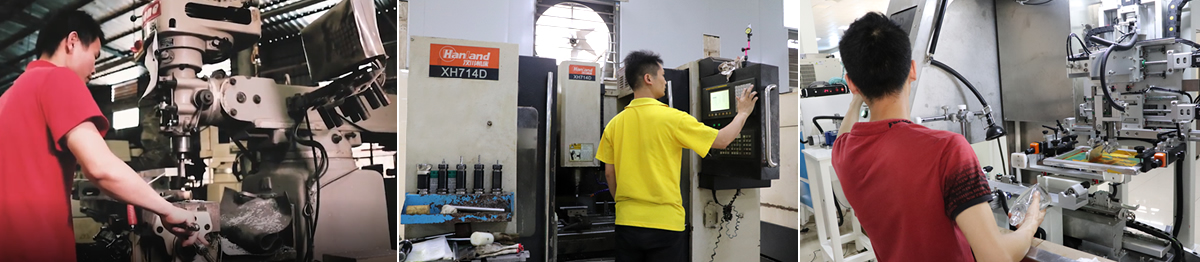
These technology partnerships with Mitsubishi and Panasonic are specifically noted as supplying operating systems and PLC controllers, and servo motors with closed-loop drives, respectively. Servo systems are mainly applied in automatic rotary screen printing machines, while CCD vision systems handle high-precision multi-color registration and PLC systems manage overall machine operation cycles. From a data security standpoint, the company secures remote program debugging and configuration modification through private communication servers, which is directly tied to reducing field downtime after installation.
Product Portfolio Aligned With Evaluation Criteria
A thorough manufacturer checklist should also confirm breadth across product categories relevant to a buyer’s specific application.
Special Color Printing Equipment
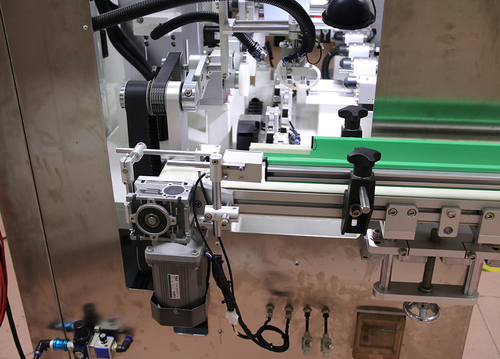
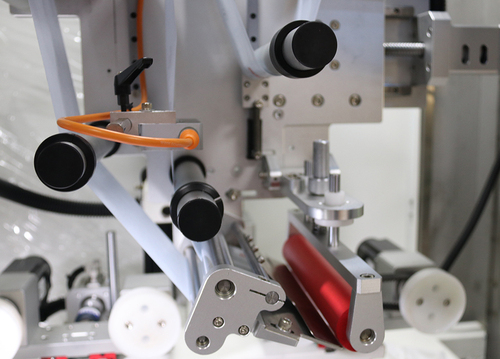
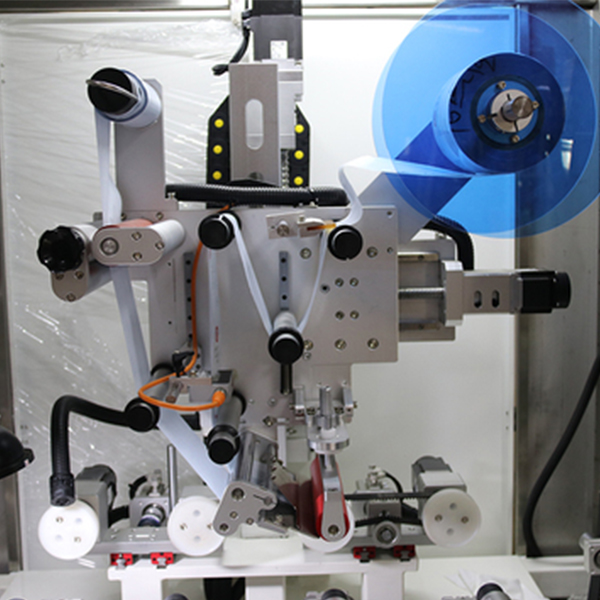
This product line includes Automatic Screen Printers, such as the KLKZS22 model, which use CCD camera registration to align substrates for multi-color runs, Panasonic servo motor control for closed-loop print transfers, a Mitsubishi PLC operating system with touchscreen interface, and a flame treatment unit to address poor ink adhesion on plastic containers. Pad Printing Machines extend coverage to irregular or three-dimensional surfaces using a silicone pad transfer system and multi-color ink trays, suited for industrial parts, electronics, and stationery items. Hot Stamping (Bronzing) Machines apply thermal transfer plates and automatic foil advance systems for high-durability metallic finishes on wine packaging, cosmetic containers, and stationery. UV Curing Ovens use an ultraviolet lamp array combined with an integrated conveyor system to cure UV-curable inks in seconds, matching the speed of preceding printers.
Automation and Assembly Systems
This category addresses full production line integration. Fully Automatic Plane Mask Equipment uses an advanced fabric feeding mechanism and ultrasonic welding system for continuous, contact-free mask manufacturing suited to healthcare applications. Integrated Injection Molding-to-Printing Lines connect molding machinery directly to downstream printing equipment through direct conveyor coupling and synchronized cycle control, eliminating manual transport between molding and printing stages. Customized Conveyor and Assembly Systems, including belt, roller, and chain conveyors, are tailored to a facility’s floor plan and material types.
Baking and Spraying Equipment
Tunnel Ovens provide continuous thermal curing through a circulating hot air system and variable speed belt control. Cabinet Ovens offer programmable curing cycles and high-density insulation for secondary vulcanization processes such as silicone rubber curing. Eco-Friendly Water Curtain Spray Booths use a continuous water curtain wall and draft exhaust fan system to capture overspray particles during liquid painting and coating operations.
Service and After-Sales Support Standards
Service capability is a core checklist item, since equipment downtime directly affects production output. KLK’s documented service model includes non-standard design customization, technical consulting, and production line integration, covering equipment design, system customization, on-site or remote installation, and remote maintenance support. The company’s delivery capability extends to designing and deploying integrated assembly lines and multi-stage printing operations, with deployment options including custom non-standard equipment engineering, production line commissioning, and system integration. After-sales support is delivered through remote program debugging and system parameter modification via private communication servers, directly addressing the downtime risk associated with limited access to technical assistance.
Real-World Application Cases
Verified use cases provide practical evidence for evaluation. In one injection molding automation case, an Integrated Injection Molding-to-Printing Line with custom conveyor systems helped a manufacturer achieve automated loading and unloading with integrated product transfer, delivering touchless finished-product output between molding and printing phases. In a cosmetics packaging case, Multi-Color Rotary Screen Printing Equipment with CCD camera alignment helped a cosmetic container decorator achieve high-accuracy multi-color registration on curved and oval glass bottles while reducing manual setup times. In a healthcare equipment case, Fully Automatic Plane Mask Equipment with advanced feeding systems helped a medical device manufacturer achieve automated fabric feeding and integrated ear-loop welding, eliminating manual contact in mask production. In a wine packaging case, Hot Stamping Machines combined with Automatic Screen Printers helped a packager achieve high-quality brand decoration and detailed hot stamping foils, establishing high-durability print designs.
Industry Recognition and Certifications
Any evaluation checklist should confirm formal quality credentials and market presence. KLK holds ISO 9001:2000 Quality Management System Certification and is a regular participant and exhibitor at CHINAPLAS, a major plastics and rubber trade exhibition in Asia. These indicators, combined with a client base exceeding 500 companies, reflect ongoing engagement with the manufacturing and packaging industry rather than a one-time market entry.
Final Considerations for Buyers
For manufacturers assessing a China printing machine manufacturer, the checklist should ultimately connect four elements: manufacturing scale and history, verified technology integration such as CCD alignment and servo-driven precision, product range spanning screen printing, pad printing, hot stamping, curing, and full line automation, and a service structure built around remote support infrastructure. Shenzhen KLK Electronic Equipment Co., Ltd. presents documented information across each of these dimensions, offering a reference case for how printing equipment manufacturers can be evaluated on substance rather than surface-level claims.
Related products
-
The ZTQ QuietLift Connect is an ultra-quiet garage door opener that is ideal for garages attached to living spaces.
-
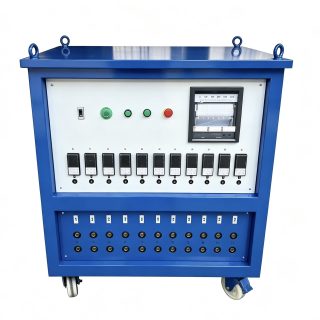
Professional PWHT equipment manufacturers for industrial heat treatment. Supply full‑range PWHT systems, heating pads and controllers for welding preheating and weld stress‑relief operations.
-
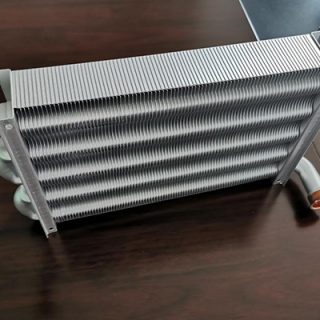
Sichuan ISAAC International Trading Co., Ltd. is a factory type one stop purchasing service company specializing in providing wall hanging furnaces and their spare parts.
-
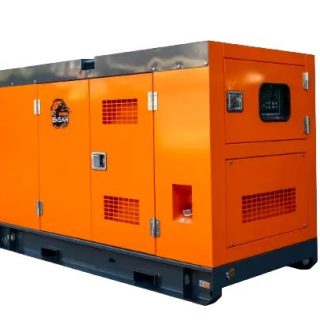
With certifications like ISO9001, CE, and SASO, EMEAN POWER ensures products’ quality and reliability.Looking for 50KVA diesel gensets or 40KW silent diesel generators,we meet your power needs.
-
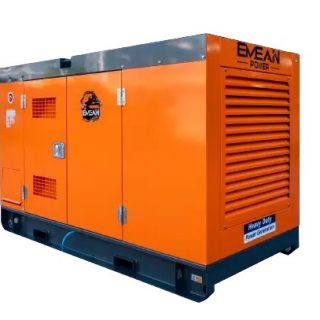
37.5KVA diesel generator and 30KW diesel generator set, featuring the CUMMINS 4BT3.9-G1 engine, providing stable, fuel-efficient power for a wide range of applications, from industrial to residential.

Reviews
There are no reviews yet.